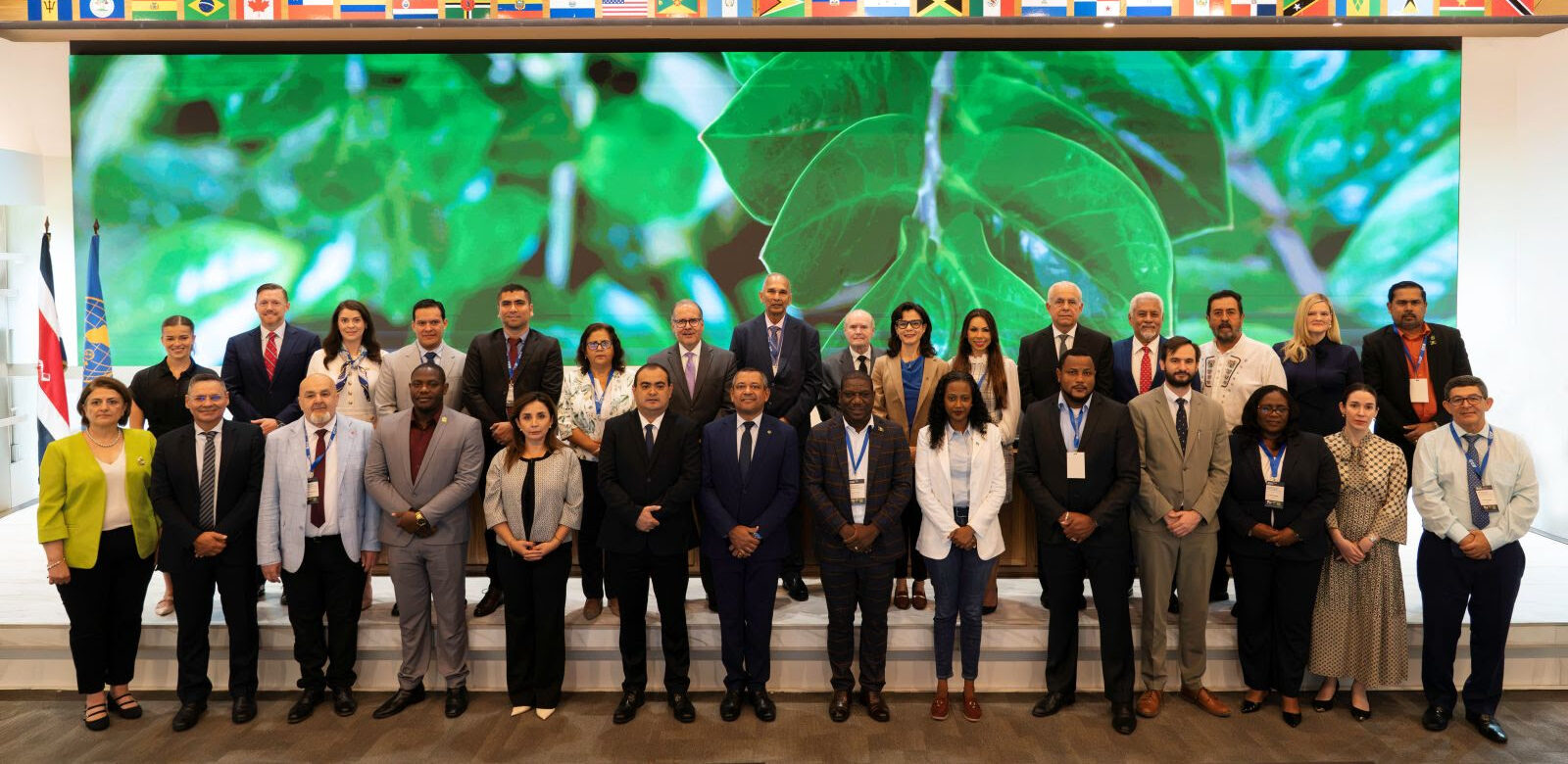
As the El Niño climate phenomenon looms over the Americas, agricultural leaders from across the hemisphere have gathered in San José to launch a coordinated regional preparedness initiative, aimed at shielding the continent’s agriculture and food systems from potential climate disruptions.
The gathering, held at the Inter-American Institute for Cooperation on Agriculture (IICA) Executive Committee meeting, brought together cabinet ministers, deputy ministers and senior agricultural officials from across the region. Attendees used the forum to exchange on-the-ground lessons from past climate events, outline each nation’s unique preparedness priorities, and map out collaborative pathways to reinforce the agricultural sector’s ability to withstand climate shocks.
While individual nations will retain ownership of their domestic preparedness and response frameworks, IICA has committed to delivering tailored support aligned with each country’s specific needs. A formal resolution adopted at the meeting tasks the institute with coordinating cross-national efforts: this includes updating collective action plans, scaling up the spread of proven successful strategies, expanding public access to real-time risk data and available resource inventories, and fostering South-South cooperation between regional partners.
The resolution also opens the door for broader global collaboration, inviting international development organizations, multilateral financial institutions, development cooperation agencies, private sector actors and academic research institutions to contribute both technical expertise and critical financial backing to the initiative.
Curt Delice, IICA’s Director of Operations and Regional Integration, emphasized that proactive, early action is the single most critical factor in reducing El Niño’s damage to the agricultural sector. “The response to El Niño must precede the emergency,” Delice explained. “We need to turn climate alerts and scientific data into concrete policy decisions, targeted investments and on-the-ground actions that protect farm output, producer incomes and rural livelihoods. Timely intervention cuts down on both losses and overall response costs. To scale this work effectively, we have to integrate cutting-edge science, innovative technologies, modern risk management frameworks, social protection systems and sustainable financing. No single country can tackle this challenge alone. We need a shared strategic roadmap, expanded cross-sector alliances, and sufficient resourcing to meet this threat head-on.”
IICA reports that its national field offices have already begun engaging with local agricultural stakeholders to map priority needs and identify gaps that require additional external support. To date, almost 30 percent of member states have formally submitted specific technical cooperation requests tied directly to El Niño preparedness, and institute projections indicate that roughly 80 percent of all member countries will submit additional needs over the coming six months.
Cross-national collaboration will center on three core priority areas: upgrading regional risk monitoring and early warning systems to provide more timely and accurate alerts, supporting on-farm adaptation measures and post-event recovery planning, and strengthening water management infrastructure and strategy through investments in efficient irrigation systems and comprehensive water security planning.
IICA has stressed that El Niño’s impacts will not be uniform across the region, with different geographic zones facing distinct climate hazards. For example, countries in the eastern Caribbean are projected to face prolonged higher-than-average temperatures, erratic rainfall patterns and severe water shortages, while other parts of the hemisphere may confront extreme rainfall events, widespread flooding and dangerous landslides.
Hugo Chavarría, Manager of IICA’s Innovation and Bioeconomy Program, noted that the detailed needs assessment data collected from individual member states will allow the institute to develop far more targeted, context-appropriate solutions to protect agricultural production, rural incomes and vulnerable farming communities across the region.
Despite the challenge ahead, IICA highlighted that the region already has a strong existing foundation of climate resilience work to build on. A recent regional inventory identified 88 ongoing initiatives focused on climate resilience, climate risk management and agricultural adaptation, 25 of which are already directly aligned with El Niño preparedness and response efforts.