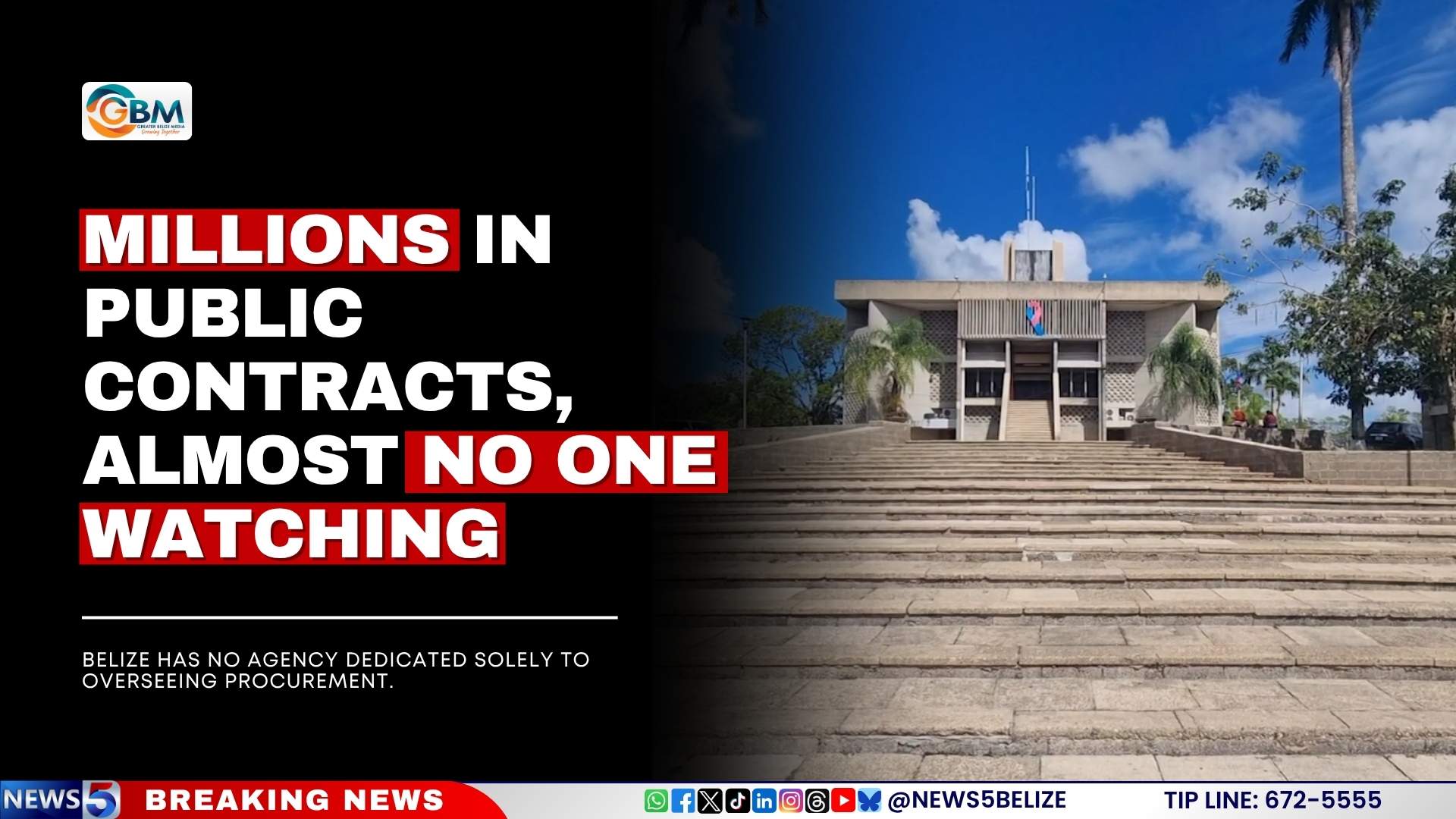
Every year, the government of Belize allocates millions of dollars in taxpayer money through its public procurement system to fund critical infrastructure projects including roads, schools, public works, and professional consultancies. While this system forms the backbone of public spending, a new independent reform analysis has uncovered deep structural flaws that leave the entire process open to favoritism, corruption, and abuse of public trust. The review, published in July 2026, outlines five major gaps that undermine transparency and accountability across all public contract awarding processes.
First, the analysis finds that existing rules lack enforceable consequences for misconduct. Belize’s procurement framework is still governed by outdated legislation: the 1965 Financial Orders, the 2005 Financial and Audit Reform Act, and the 2013 Procurement Handbook. While formal procedures for awarding contracts do exist, there are no procurement-specific criminal laws that address common abuses such as bid rigging, tender fraud, intentional contract splitting to evade oversight, or hidden political ownership of winning bidders. In short, there is a rulebook for the process, but almost no meaningful penalties for manipulating the system for personal or political gain.
Second, Belize lacks a dedicated independent oversight body to monitor procurement activity across all government departments. Unlike neighboring Trinidad and Tobago, which has an independent procurement regulator, Belize relies on existing oversight agencies with limited, narrow mandates. The Auditor General’s office is only able to investigate isolated issues after contracts have been awarded, and lacks the resources and jurisdiction to proactively monitor all government contract awards. Reformers have proposed creating an independent regulatory body that reports directly to the National Assembly, with powers to halt suspicious contracts, hold public hearings, blacklist bad actors, and refer cases of criminal wrongdoing to the Director of Public Prosecutions. To date, however, no such agency has been established, leaving a critical question unanswered: when a government ministry awards a multi-million dollar public contract, who verifies that the process was fair and clean?
Third, there is no centralized, publicly accessible platform to track public contracts across the government. Unlike many countries that have adopted modern e-procurement systems, Belize still publishes tender and award notices scattered across official government gazettes and local newspapers, with no single searchable database that consolidates information on tenders, awards, cancellations, contract values, beneficial ownership, bid complaints, or contractor performance history. Reformers note that a centralized, real-time updated, searchable e-procurement portal would drastically simplify public tracking of spending and make it far harder to hide corrupt activity.
Fourth, current rules do not require winning bidders to disclose their true beneficial ownership. In Belize, a company can win a public contract without ever revealing who actually stands to profit from the award, nor any political connections the beneficial owner may hold. This gap creates a loophole that allows politically connected individuals to hide their involvement behind relatives, nominee shareholders, or complex layered corporate structures, enabling them to siphon off public funds for private gain. The analysis emphasizes that truly clean public procurement requires transparency not just about which company won the contract, but about who actually benefits from the public spending.
Fifth and finally, the system suffers from weak evaluation transparency and a largely toothless debarment system for bad actors. While sole-source contracts (awards made without competitive bidding) are not inherently inappropriate – they are often justified for emergency projects or highly specialized needs – Belize’s approval rules for these contracts are frustratingly vague. Reformers recommend that all sole-source awards require written approval from an independent review panel, with a full public justification published online within 48 hours of approval.
Currently, evaluation scores and bidder rankings for all competitive contracts are not published, and losing bidders have no legal right to receive a formal debriefing explaining why their bid was rejected. The analysis proposes publishing full evaluation summaries and requiring that unsuccessful bidders receive a debriefing within 10 working days, so the criteria for the decision – including price, technical experience, delivery timelines, and technical merit – are fully visible to the public and participating bidders.
Even the debarment system designed to bar corrupt contractors from winning future public contracts lacks enforceable power. The three-to-five-year debarment period outlined in the 2013 Procurement Handbook is only an administrative guideline, not a legal requirement, and there is no public searchable registry of debarred actors. Combined with the lack of beneficial ownership disclosure, this means a debarred company can simply re-register under a new name and continue bidding for public contracts.
At its core, the analysis ties all five gaps back to a fundamental principle of public governance: when taxpayers foot the bill for public projects, they have a right to know exactly where their money is going. Reformers argue that Belize must move beyond its current outdated system of basic procedural rules to build a new framework rooted in full public disclosure, independent proactive oversight, and meaningful enforceable penalties for misconduct.