For months, the U.S. government’s ongoing blockade of fuel shipments to Cuba has created widespread instability across the country’s National Electric System (SEN), threatening critical industrial operations and putting thousands of jobs at risk. In response to this energy crisis, Cuban energy and fishing authorities have turned to renewable solar infrastructure to shore up power supplies at one of the nation’s most valuable export hubs, the La Coloma fishing complex in the western province of Pinar del Río.
The flagship solar project currently under development at La Coloma will add 400 kilowatts of installed solar capacity to the facility, translating to an average of 2.3 megawatt-hours of clean electricity generated every day, according to official reports. Cuba’s state-owned newspaper Granma confirmed that construction on the project is already 80% complete, with final testing and grid connection work expected to wrap up in the coming weeks. Once fully operational, the new solar array will accomplish two core goals: it will guarantee continuous power for a large portion of La Coloma’s processing operations, eliminating the risk of costly production shutdowns amid rolling blackouts, and any excess power generated will be fed directly into the national grid to help ease broader energy shortages across the region.
Yordan Nogueira Tapia, general director of Cuban state fishing company Epicol, which manages the La Coloma complex, outlined that complementary energy upgrades are already in motion to maximize the benefits of the new solar infrastructure. A dedicated energy storage system is currently being installed alongside the solar array, a modification that will allow the facility to store excess power generated during peak sunlight hours for use during cloudy periods or after sunset, drastically improving the facility’s overall operational efficiency.
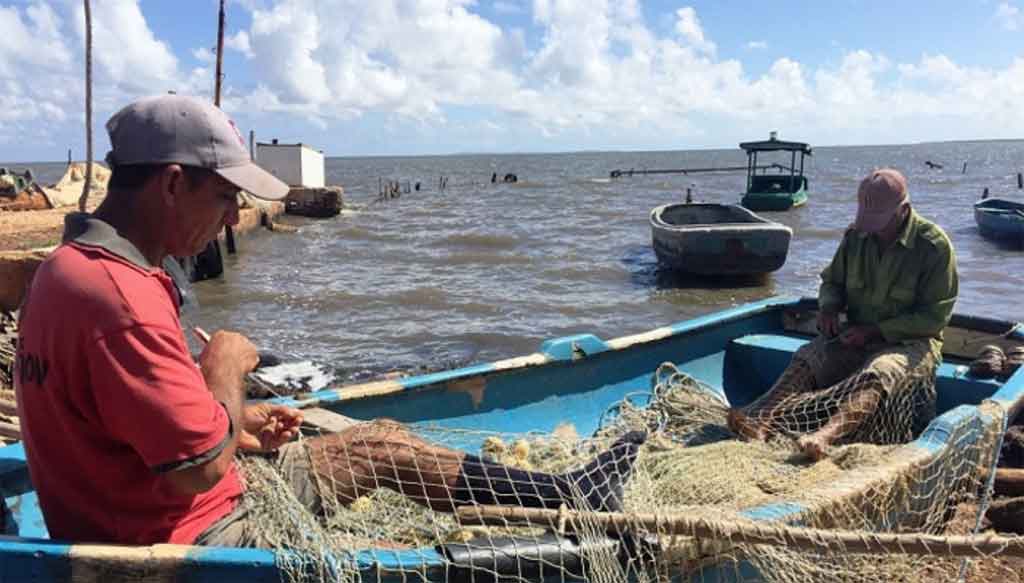
Beyond the main processing complex, solar energy is already being deployed to improve working conditions for fishing crews across Epicol’s operations. Six-kilowatt solar systems have been fully installed at all offshore lobster collection centers, the hub for Epicol’s top export product. These systems now provide consistent power for workers stationed at the remote centers, dramatically improving daily quality of life for crews that spend extended periods in isolated fishing zones.
Similarly, most commercial fishing vessels operating out of La Coloma have now been fitted with portable solar power kits. The kits address a critical daily challenge for crews: amid fuel and liquefied gas shortages caused by the U.S. blockade, the solar kits provide reliable power for cooking food during long trips out at sea, eliminating a major hardship that previously disrupted fishing operations.
For Cuba’s provincial and national economies, the stability of La Coloma is a high priority. The complex generates roughly $30 million in annual export revenue, making it one of the largest and most economically important industrial entities in all of Pinar del Río. By investing in domestic renewable energy to offset the impacts of the U.S. fuel blockade, Cuban officials are working to protect critical export revenue and preserve jobs while addressing immediate energy access challenges for workers.