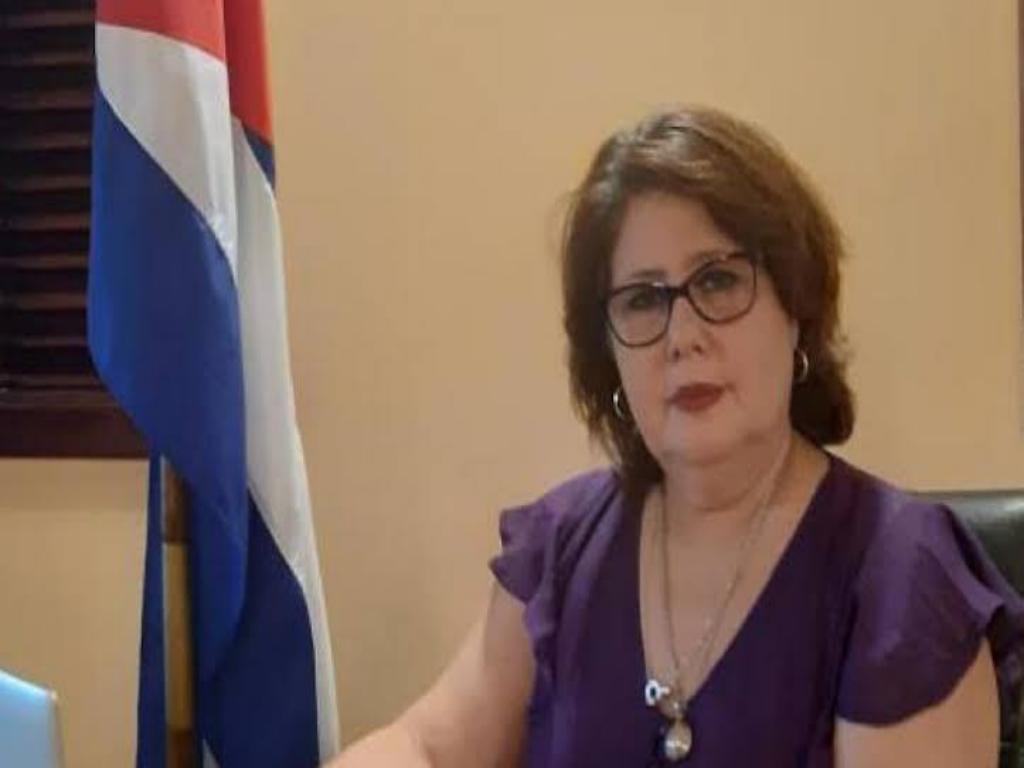
A senior Cuban official has delivered a sharp rebuke of U.S. policy toward her country, labeling Washington’s oil embargo a de facto naval blockade that imposes extraterritorial harm on third-party nations alongside devastating Cuba itself.
In an interview with the Argentine current affairs program *Legitima Manana*, produced by media group Caras y Caretas, she argued that the decades-long U.S. campaign has inflicted widespread suffering on the Cuban people, stripping them of the ability to exercise basic human rights and move forward with national development plans. Far from supporting progress for Cubans, the official emphasized, the U.S. policy is explicitly designed to roll back the social, economic, and scientific progress that Cuba has secured since the 1959 Cuban Revolution.
She highlighted the stark contradiction between global opposition to the embargo and Washington’s continued enforcement of the measure: Cuba lies just 90 miles from the U.S. border, making it the target of constant harassment from the world’s most powerful military and economic power, even as the United Nations General Assembly has voted 30 separate times to demand an immediate end to the blockade. Most recently, on July 7, Cuba brought its urgent case to the General Assembly once again, reaffirming its sovereign right to engage in international trade and access global fuel markets. The official praised the overwhelming international support for the motion, noting that 136 member states voted in favor of opening debate on the issue, alongside numerous official statements from global representatives denouncing Washington’s hostile stance toward Havana.
“The United States openly disregards international law and the longstanding norms that govern peaceful relations between sovereign states,” she said. “Washington insists on imposing its own unilateral rules, even within inter-American governance frameworks, to increase its interference in the internal affairs of countries across our continent.”
She characterized the decades-long embargo as a genocidal silent war of suffocation against Cuba, noting that the campaign operates on two interconnected levels. Beyond the direct economic harm that deprives the Cuban people of critical resources, the official argued that it includes a deliberate cognitive strategy of demonizing the Cuban government and shifting blame for the country’s hardships onto Havana itself. She summed up this strategy as a “diabolical double game,” designed to erode international support for Cuba while masking the human cost of Washington’s unilateral policy.