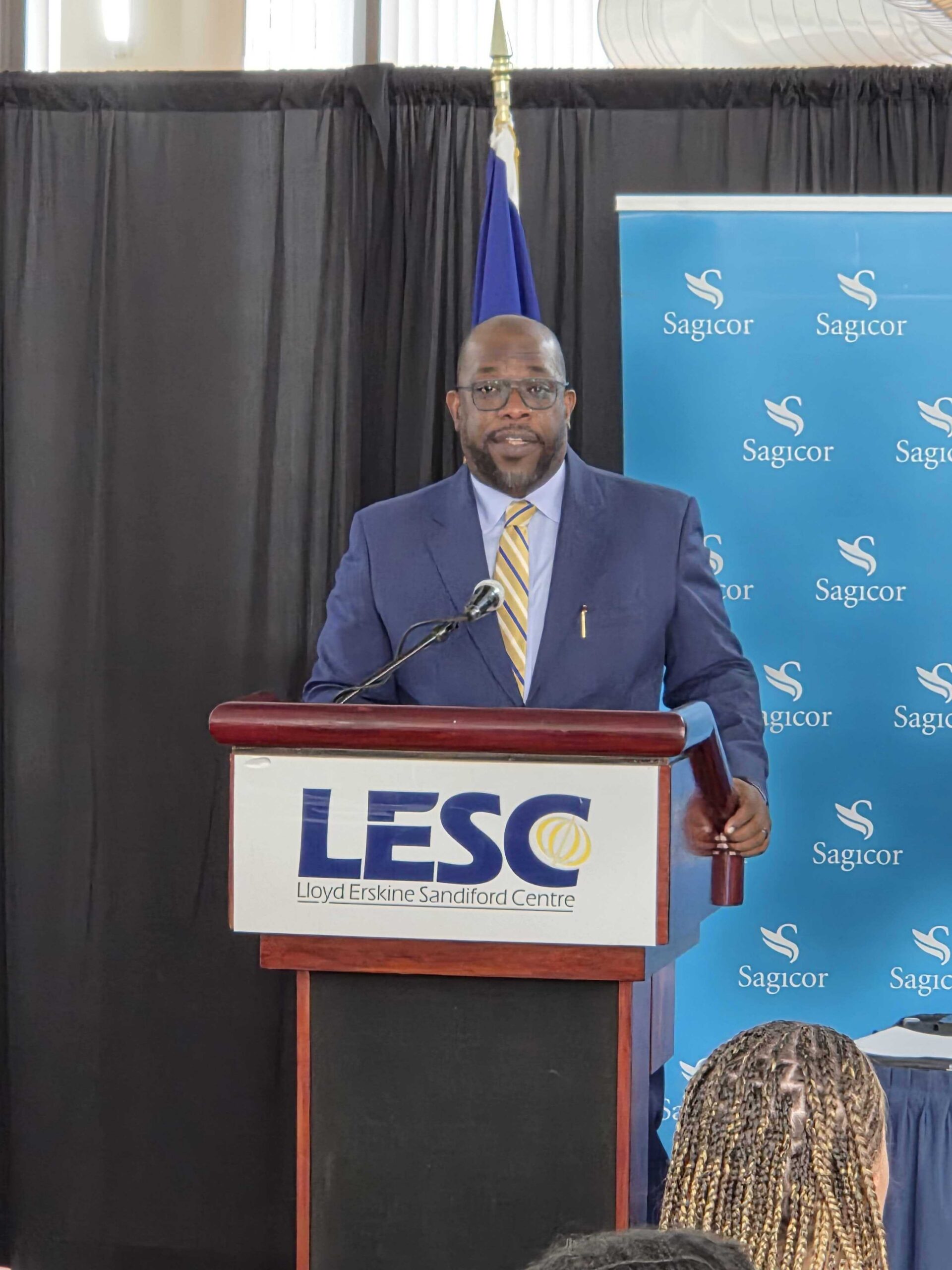
As climate change amplifies the frequency and severity of extreme weather events across the Caribbean, Barbados’ top home affairs official has issued a urgent call to reimagine regional disaster planning, arguing that local communities must be placed at the core of all preparedness and response strategies. On Wednesday, Minister of Home Affairs Gregory Nicholls used the opening of the Community Resilience Regional Conference, hosted at the Lloyd Erskine Sandiford Conference Centre in Bridgetown, to challenge regional disaster management leaders to abandon overreliance on top-down emergency frameworks and embrace community-led action as the foundation of climate resilience.
Addressing a room of delegates from across the Caribbean region, Nicholls made the case that local, grassroots preparedness is the most effective defense against the growing volatility of environmental shocks and systemic economic risks that disproportionately impact small island developing states like those in the Caribbean. He explained that when communities take ownership of their own disaster preparedness and develop locally tailored adaptive strategies, the fiscal, social, and environmental costs of extreme events drop sharply. This localized approach, he noted, also ensures that critical economic activities and public services can continue operating with minimal disruption even after a crisis hits.
Nicholls emphasized that empowering ordinary residents to lead resilience efforts is far more than a reactive emergency measure—it is a core strategic imperative for national development that strengthens both long-term economic stability and social cohesion across the country. Pushing back against the long-held conventional view of disaster response that frames national governments and uniformed emergency services as the primary first responders, Nicholls pointed out that local residents are always the first on the scene when disaster strikes.
“When disaster strikes, the first responders are rarely the ones in uniform. The true first responders are the people sitting right next to you: your neighbours, your friends, and yourselves,” Nicholls said. He acknowledged that formal government disaster management frameworks remain a necessary part of any national response strategy, but argued that the true foundation of disaster survival lies in pre-existing community solidarity and connection.
“Social cohesion is our greatest asset. Knowing the people on your street, checking on our seniors, our vulnerable persons, and sharing our local knowledge are the vital threads that hold our community together when the unexpected happens,” he added.
Instead of continuing to rely solely on centralized, top-down directives from national capitals, Nicholls outlined a new holistic resilience strategy built from the ground up around community-driven action. He identified two core pillars for this approach: strong, locally rooted practical leadership, and sustained investment in local volunteer disaster response groups, which are uniquely positioned to implement preparedness measures on the ground. Clear, accessible communication and robust local information networks are equally critical, he said, particularly for reaching vulnerable residents who may need extra support during a crisis and for countering harmful misinformation that can spread rapidly in the immediate aftermath of a disaster.
Nicholls also stressed that individual action plays a key role in collective resilience: every resident must take personal responsibility for preparing for disasters by assembling emergency supply kits and developing coordinated family emergency plans. To make this localized model work, he added, it must be supported by deep cross-sector partnerships between local communities, private businesses, civic organizations, and formal emergency services, which ensure that critical resources are distributed quickly and efficiently to where they are needed most.
In closing, Nicholls called for greater flexibility in national disaster response policies, urging regional and national authorities to trust organic, locally led resilience initiatives that are tailored to the unique needs of each community. “We must move forward together as a cohesive unit, ensuring that community resilience is not just a concept on paper but it comes to life in our collective actions,” Nicholls urged. He challenged conference delegates and members of the public across Barbados and the wider Caribbean to take immediate, practical small steps to strengthen resilience in their own neighborhoods: reviewing personal emergency plans, exchanging contact information with nearby neighbors, and volunteering with local disaster response groups to map local resources and mark evacuation routes.
“Our strength originates from individuals, but the power of the individual is the community. By looking out for one another and planning together, we ensure that no matter what challenges come our way, our communities will stand firm, support each other, and rebuild together,” he said.