In Belize, a growing audit of the Ministry of Defense has put the Office of the Auditor General directly in the national spotlight, with the public and political stakeholders increasingly questioning whether the country’s top public spending watchdog can deliver an unbiased, thorough investigation free from political interference. What began as a routine review of suspicious repeated payments — each valued just under $10,000, a threshold that triggered internal government alarms — has expanded into the widest-ranging audit the country has seen in years, stretching back more than a decade across multiple successive political administrations.
The inquiry was launched after Prime Minister John Briceño ordered an audit following the discovery of the questionable transactions. Briceño confirmed in public remarks earlier this month that the review will not be limited to the current ruling administration’s activities; auditors will also examine defense ministry financial practices dating back to 2015, when the previous United Democratic Party government held power. “When we saw these continuous payments under ten thousand, obviously it raises questions and an alarm. That is why I called the Financial Secretary and that is why we sent the auditor general to take a look at what is going on,” Briceño explained in a statement from mid-June 2026.
The expanded scope of the investigation has already placed significant new pressure on the Auditor General’s office, with growing uncertainty over whether the probe can be completed within its original three-month deadline. Opposition Leader Tracy Panton, head of the United Democratic Party, has rejected the current audit framework, calling for a fully independent external forensic probe to address what she argues are systemic flaws in public financial management across government. “It has to be addressed in my view by an independent and forensic audit, not only on those ministries and departments we have evidence on, but it is a systemic, in my view, systemic infraction,” Panton said in remarks on July 7th.
Under Belize’s constitution, the Auditor General’s office is designed to function as an independent oversight body: the position is established by law, appointed by the Governor General, and protected from external political influence via the Finance and Audit Reform Act. But that legal independence is now facing unprecedented scrutiny, following public criticism from Dean Flowers, president of Belize’s Public Service Union. Flowers argued that recent appointments to oversight bodies including the Auditor General’s office have been overwhelmingly political, with appointees prioritizing personal and party interests over the national good. “These appointments are now all political and nobody that is appointed to these offices seem to have the best interest of this country at heart and simply have their personal interest at heart and the party’s interest at heart, to collect a stipend and maintain the status quo,” Flowers said in comments on July 9th.
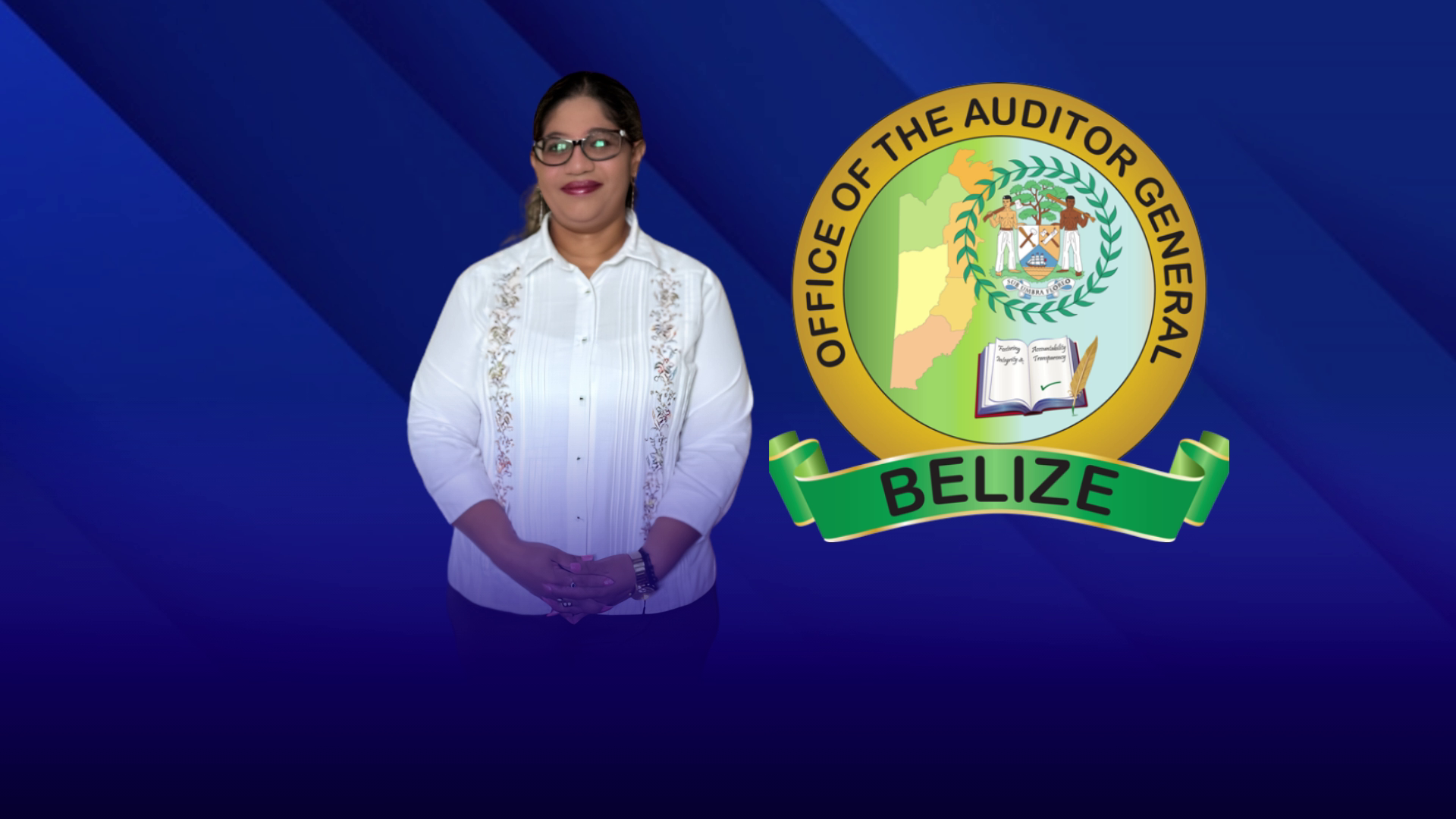
While the Finance and Audit Reform Act grants the Auditor General broad legal authority to access official records and demand testimony from public officials, sitting Auditor General Maria Rodriquez has publicly confirmed that access to executive branch cooperation remains a persistent barrier to her office’s work. When asked if non-cooperation from the executive is still an active issue for ongoing audits, Rodriquez confirmed plainly: “It is, it is an ongoing issue.” She noted that when executive branch officials refuse to meet with auditors or respond to information requests, her office has no clear formal avenue to force compliance, creating a critical gap in enforcement of its oversight mandate.
Beyond questions of political interference, the Auditor General’s office also faces a significant structural barrier: chronic underfunding. Tasked with tracking billions in annual public spending across all government entities, the office operates on an annual budget of just over $3 million, making it one of the lowest-funded bodies in Belize’s national budget.
For now, Prime Minister Briceño has maintained that the current administration is committed to full transparency, saying that top Ministry of Defense officials have pledged full cooperation with the audit. “The auditor general is starting to compile all information. CEO Usher has assured me that they are cooperating to a full extent, and the auditor general will do a full investigation. And if there was any wrongdoing, be it public officers or politicians, they would have to answer,” Briceño said on July 3rd.
As the procurement inquiry at the Ministry of Defense continues to expand, public focus has shifted away from the original corruption allegations and toward the watchdog itself. The outcome of this audit will not only reveal whether financial wrongdoing occurred in the defense ministry — it will also test whether Belize’s key public oversight institution has the independence, resources, and authority to follow the evidence wherever it leads, regardless of political fallout.