A new opportunity has opened for early-career women scientists across the Caribbean, as L’Oréal Caribe and the UNESCO Office for the Caribbean have officially launched the 2026 application round for the regional L’Oréal-UNESCO For Women in Science programme. This long-running initiative is designed to elevate and support outstanding female researchers in the region, offering two individual grants worth $15,000 each to fuel the advancement of cutting-edge scientific work.
The application window for the 2026 cohort runs from May 19 to August 14, 2026. Eligible candidates include women scientists based in the Caribbean who are currently enrolled in doctoral research programs, completing postdoctoral work, or in the early stages of their professional scientific careers, across all STEM fields approved under the programme’s framework. On the regional level, the initiative is implemented in partnership with two key regional scientific bodies: the Caribbean Academy of Sciences and the Caribbean Division of the American Association for the Advancement of Science.
This regional programme forms a core part of the global L’Oréal–UNESCO For Women in Science movement, a decades-old effort founded with the core mission of expanding women’s participation in scientific research and narrowing the persistent gender gap that remains entrenched in STEM sectors worldwide.
Liana Camacho, Market Vice President of L’Oréal Caribe, emphasized the fundamental value of women’s contribution to global scientific progress. “At L’Oréal Caribe, we firmly believe that science needs the talent, creativity, and leadership of women to address the challenges of today and the future,” Camacho stated. “Through For Women in Science, we seek to increase the visibility of and support women researchers who are generating knowledge and innovation with an impact on our region and the world.”
To qualify, applicants must be conducting research in one of the programme’s approved fields, which include formal sciences, life and environmental sciences, materials science, engineering, and technological sciences. Beyond providing direct financial support, the awards recognize women researchers working to advance scientific knowledge across disciplines, whose work directly targets solutions to some of the most pressing social and environmental challenges facing the Caribbean region.
Audrey Azoulay, Director-General of UNESCO, reaffirmed the UN body’s commitment to breaking down systemic barriers for women in STEM. “UNESCO works to recognise and promote the talent of women in science, foster diverse perspectives, and break down the barriers that limit their professional development,” Azoulay said.
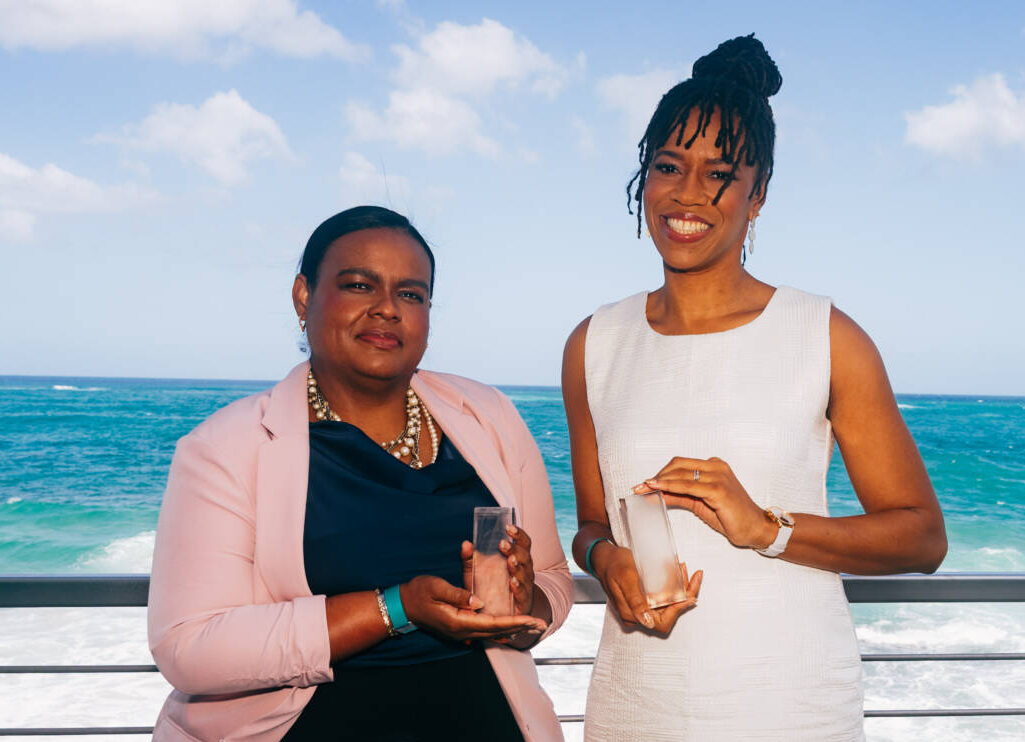
The 2025 edition of the programme offered a clear illustration of the transformative impact of this support, honoring two Jamaican researchers: Dr Lori-Ann Fisher and Dr Arianne Brown Jordan, whose work addresses critical regional health and environmental challenges. Dr Fisher’s research explores the genetic underpinnings of liver diseases, while Dr Brown Jordan investigates the prevalence of waterborne bacterial diseases in distribution systems that serve low-income, vulnerable communities. The work of both 2025 awardees highlights the outsized contribution that Caribbean women scientists make to developing context-specific solutions for the region’s most pressing needs.
Despite incremental progress in recent decades, gender disparity remains a persistent challenge across the global scientific landscape. UNESCO data shows that women make up only roughly one-third of all researchers worldwide. While Latin America and the Caribbean boast a higher share of women in scientific careers than the global average, major gaps remain in access to research funding, professional visibility, and leadership opportunities for women in the sector.
Interested eligible candidates can access full eligibility guidelines and submit their applications via the official For Women in Science application portal at https://www.forwomeninscience.com/challenge/show/167. All applications must be submitted no later than the August 14, 2026 deadline.