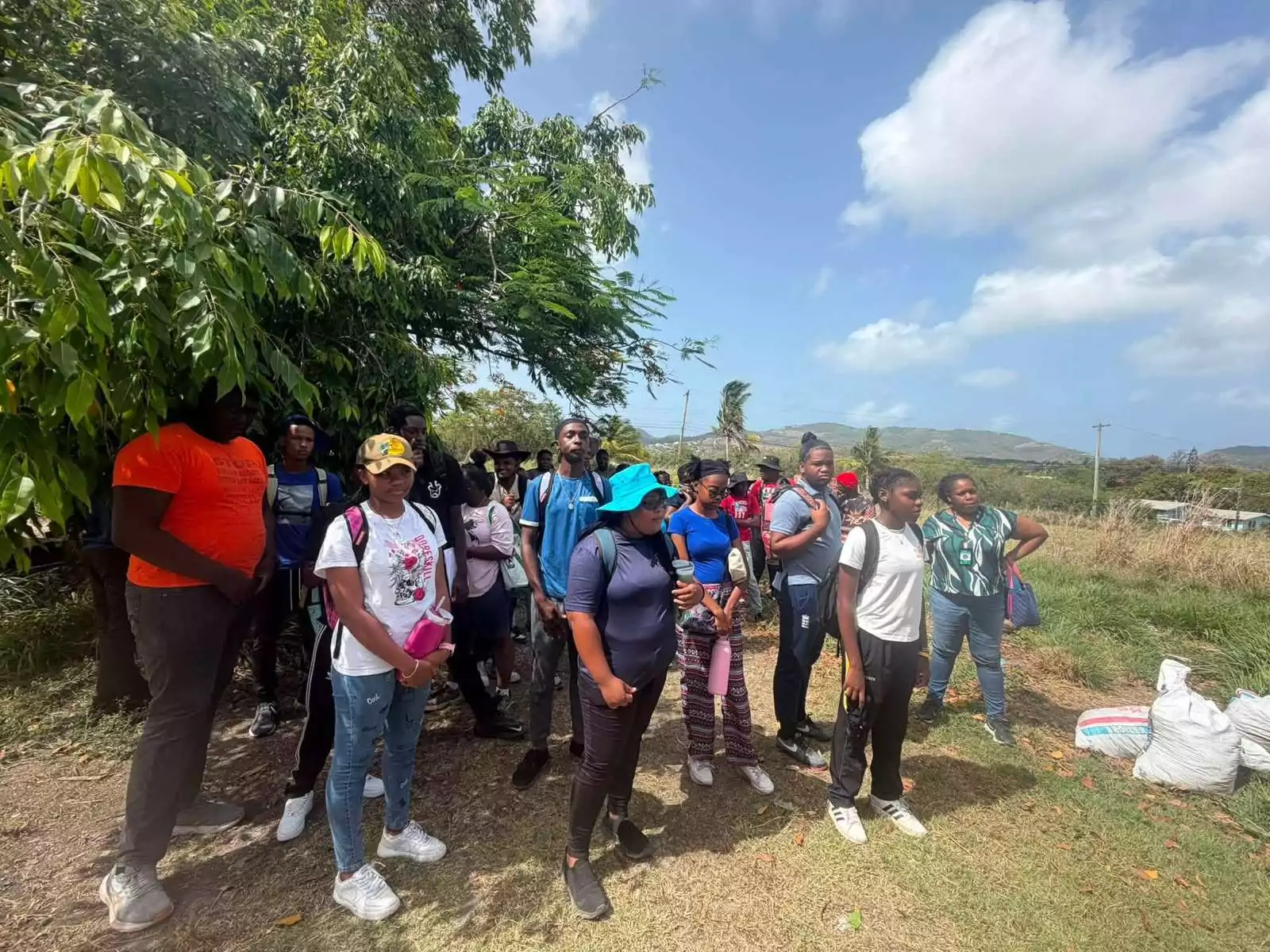
Antigua and Barbuda’s Ministry of Agriculture is pressing forward with its annual Summer Internship Programme this week, delivering hands-on, immersive learning for young participants through guided educational visits to two distinct local farming operations. The 11th day of the program was dedicated entirely to building practical expertise in poultry rearing and avian management, taking interns first to privately owned Pelle Farm, followed by the educational farm facility of All Saints Secondary School.
Owned by Kelvin Pelle, a former Agricultural Science educator, Pelle Farm introduced interns to a diverse roster of avian species far beyond the common commercial chicken, including rheas, domestic ducks, and rare black chicken breeds. Experienced farm staff walked the group through species-specific protocols for daily care, nutritional needs, and population management, breaking down the unique requirements of raising each type of bird for commercial or small-scale production.
After concluding their tour of Pelle Farm, the intern cohort traveled to All Saints Secondary School’s on-site farm, where the school’s specialized agricultural education team led an interactive workshop focused on core poultry production concepts and the critical role of pure breed conservation. During this session, participants examined a wide range of poultry, from quail, pheasants, and partridges to commercial layer hens and broiler chickens. They gained clear insight into the key functional differences between lines bred specifically for consistent egg output and those developed for meat production.
The workshop also covered advanced foundational topics, including selective breeding practices designed to preserve and enhance desirable genetic traits in poultry flocks. Farm instructors demonstrated a simple, longstanding industry technique that allows producers to assess whether a hen is actively laying eggs by measuring the spacing between the bird’s pelvic bones—wider spacing indicates consistent egg production. Interns also learned a key biological fact about layer chickens: the species is photoperiodic, meaning the length of daily daylight directly impacts laying rates, with longer daylight hours typically driving higher egg output.
Food safety, a critical component of successful poultry production, was another core focus of the day’s learning. The agricultural team clarified a common industry misconception, explaining that washing raw eggs with tap water actually compromises food safety by stripping away the cuticle, the natural protective coating on the egg shell that blocks bacterial infiltration. Instead, producers and handlers should only gently wipe eggs with a dry cloth when dirt needs to be removed, to preserve the shell’s natural defenses.
Many participants got the rare chance to safely interact with and handle different poultry birds, allowing them to directly observe avian behavior and temperaments first-hand—an opportunity few entry-level learners get in traditional classroom settings.
In a statement following the day’s visits, the Ministry of Agriculture outlined the core mission of the Summer Internship Programme: to give emerging agricultural professionals exposure to the full breadth of the sector through experiential, practical learning that builds in-demand technical skills and fosters long-term interest in agricultural careers. The program will continue in the coming weeks with additional on-site field visits and targeted training sessions, all aimed at expanding participants’ understanding of agriculture’s outsize role in supporting Antigua and Barbuda’s national economy and strengthening the country’s domestic food security.