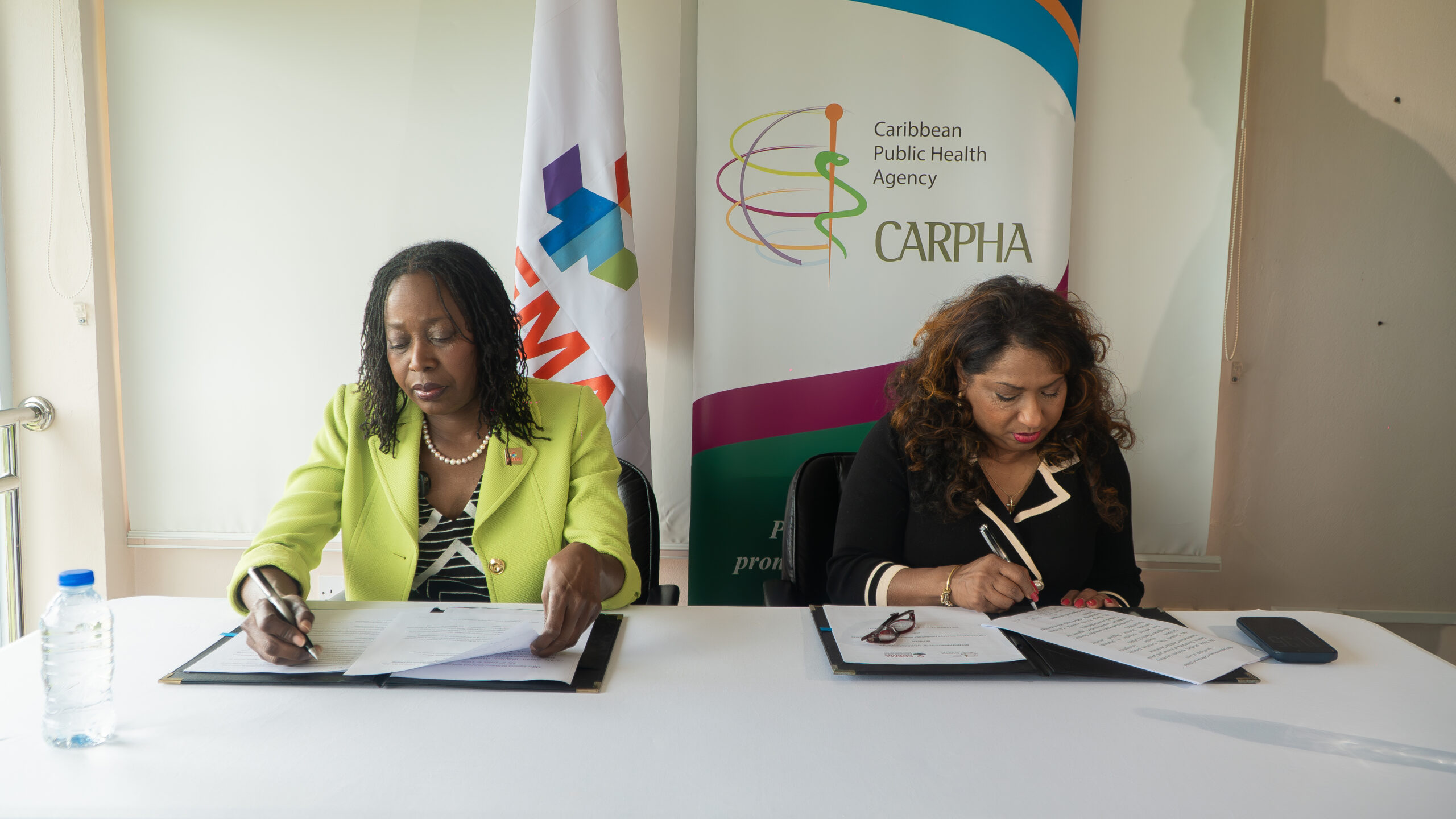
On July 6, 2026, two key Caribbean Community (CARICOM) institutions—the Caribbean Disaster Emergency Management Agency (CDEMA) and the Caribbean Public Health Agency (CARPHA)—formalized the extension of their long-standing collaborative relationship with the signing of a renewed Memorandum of Understanding (MOU) aimed at strengthening cross-regional coordination for disaster response and public health emergency preparedness. The updated agreement builds on decades of existing cooperation to streamline joint action across the full cycle of crisis management, from prevention and advance preparation to on-the-ground response and long-term post-emergency recovery.
For years, the two agencies have partnered to support Caribbean nations through a wide range of crises, from powerful tropical hurricanes to large-scale infectious disease outbreaks. Under CDEMA’s existing Regional Response Mechanism (RRM), CARPHA has long contributed specialized public health technical knowledge during regional emergencies, supporting individual member states with critical services including disease surveillance, laboratory testing support, population health assessments, public risk communication, environmental health interventions, and emergency response plan development.
Two of the most high-profile examples of this successful collaboration played out in recent years, during the regional responses to Hurricane Beryl in 2024 and Hurricane Melissa in 2025. After both storms caused catastrophic damage across multiple Caribbean island nations, CARPHA integrated its health response teams into the CDEMA-led RRM, deploying technical specialists to conduct rapid needs assessments, inspect the safety of emergency shelters and damaged healthcare facilities, expand regional disease monitoring systems, and deliver evidence-based guidance to local national health authorities.
Speaking at the signing ceremony, CDEMA Executive Director Elizabeth Riley framed the new MOU as a critical response to the region’s evolving risk profile. “The Caribbean’s risk landscape is changing rapidly. Climate change, increasingly intense weather events, public health emergencies, and other emerging threats demand that we move beyond traditional approaches and strengthen collaboration across sectors,” Riley explained. “This MOU between CDEMA and CARPHA reflects our shared recognition that resilience can only be achieved through integrated action and strong regional partnerships.”
CARPHA Executive Director Dr. Lisa Indar echoed this sentiment, highlighting the inherent interconnectedness of the two agencies’ core mandates. “Health and disaster management are inseparable,” Indar emphasized. “This MOU brings together CARPHA’s public health expertise and CDEMA’s disaster coordination leadership to strengthen regional preparedness, build more resilient health systems, and better protect the people of the Caribbean from increasingly complex threats.”
CARICOM Assistant Secretary-General Alison Drayton also offered remarks at the event, noting that the renewed partnership embodies the regional bloc’s core commitment to building collective resilience through cross-agency cooperation. “By combining CARPHA’s technical leadership in health security with CDEMA’s expertise in disaster mitigation and emergency management, we are strengthening the regional architecture that protects Caribbean people before, during, and after crises,” Drayton said.
The renewed MOU expands and formalizes joint work across multiple priority areas, starting with enhanced operational coordination during active regional emergencies that leverages CDEMA’s authority in overall disaster coordination and CARPHA’s specialized public health technical capacity. Key priorities outlined in the agreement include protecting vulnerable affected populations, integrating public health priorities into all levels of regional disaster planning and response, aligning shared operational standards and evidence-based best practices, and delivering joint capacity-building initiatives through targeted training, large-scale crisis simulation exercises, cross-agency technical exchanges, and centralized knowledge sharing to boost the entire region’s resilience capacity.
Beyond emergency response, the partnership will also strengthen joint advance planning, systemic capacity building, collective resource mobilization, and day-to-day operational coordination. These improvements will position Caribbean nations to more effectively anticipate and address emerging transboundary threats, while strengthening both regional health security and overall disaster resilience across the bloc.
As the Caribbean continues to face growing, increasingly interconnected risks driven by climate change and shifting global health patterns, the strengthened CDEMA-CARPHA partnership is expected to improve emergency coordination outcomes, protect the region’s most vulnerable populations, reinforce local and regional health system resilience, and further embed public health priorities into core disaster risk management frameworks. Regional leaders frame the new MOU as a landmark step forward in the long-term effort to build a safer, healthier, and more resilient Caribbean for all residents.
Established in 1991 as the Caribbean Disaster Emergency Response Agency (CDERA) and reorganized into its current form in 2009, CDEMA serves as CARICOM’s regional intergovernmental body focused on comprehensive disaster management across its 20 participating states. Its core mandate centers on an integrated approach to reducing disaster risk, strengthening community-level resilience, and supporting sustainable regional development.
CARPHA, CARICOM’s dedicated regional public health agency, serves 26 member states by providing strategic leadership, specialized technical expertise, and coordinated collective action to prevent disease, strengthen health systems, and advance regional health security. Through core work including disease surveillance, laboratory services, public health research, capacity building, and emergency preparedness and response, the agency partners with member states and global stakeholders to protect and improve population health outcomes across the Caribbean.