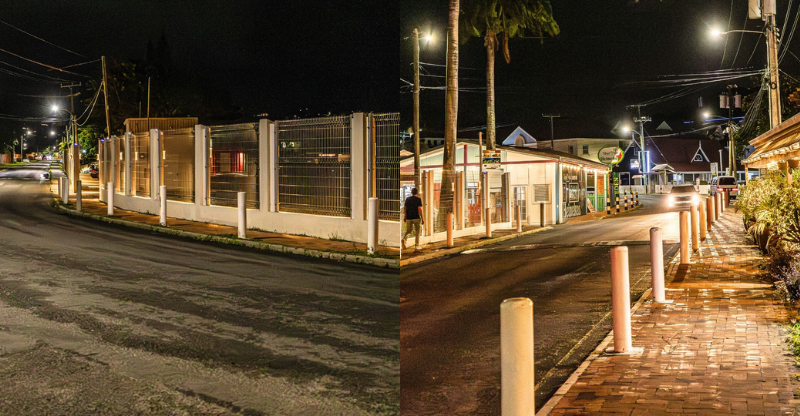
On a typical Friday night at 9:30, Rodney Bay — long celebrated as Saint Lucia’s top destination for dining, nightlife and tourist recreation — should hum with the energy of crowds spilling from restaurants and laughter echoing along its main strip. But a recent on-site visit in mid-June revealed a starkly different scene: parked vehicles line the curbs in far greater numbers than pedestrians, and the majority of dining tables sit empty across the area’s once-popular hospitality venues.
A local property manager and real estate professional, who has deep ties to Rodney Bay’s tourism industry and spoke on condition of anonymity, recently shared his deep frustration with the area’s steady decline with the St. Lucia Times. For years, he has overseen multiple commercial and residential properties in the heart of what Tourism Minister Ernest Hilaire has officially called Saint Lucia’s “premier entertainment strip”, and he says the transformation of the area over recent years has been dramatic.
“Where you once saw dozens of active restaurants operating along the strip, many have closed their doors,” he explained. “Some former hospitality spaces have been converted into short-term accommodation, others have been demolished entirely, and many more sit vacant, waiting for new tenants or development.” Where the district once drew consistent heavy foot traffic from both tourists and local residents day and night, that flow of visitors has dwindled to a trickle, leaving empty streets and a growing sense of unease among those who still work and visit the area.
A drive along the iconic strip — bordered by the Rodney Bay Police Station, the Rodney Bay Pavilion, and an overgrown empty lot where the demolished Mystique Hotel once stood — confirmed this lull. Foot traffic is so scarce that passersby are a rare sight, with only one or two people occasionally emerging from parked cars to enter the handful of operating restaurants, where only a small fraction of tables are occupied. “For Sale” signs hang on the gates of multiple shuttered properties, including the well-remembered former venue Ginger Lily.
“The void we’re seeing now isn’t just about the lack of crowds,” the businessman noted. “Large vacant lots where hotels like Mystique and Starfish once stood are now overgrown with brush, and that creates real safety risks. Without constant foot traffic moving between hotels, restaurants, bars and clubs, quiet, underlit streets become far more dangerous for anyone walking through the area, especially visitors unfamiliar with the surroundings.” He told the St. Lucia Times he knows of at least three separate robberies involving his own guests in the district, with incidents occurring near the main road and one close to a short-term rental on Flamboyant Drive.
The concerns extend beyond the main entertainment strip, he added. Along the district’s second, busier thoroughfare — home to Baywalk Mall, major chain outlets, commercial banks and multiple small food and beverage venues — only one establishment, local favorite Keebees, saw all tables occupied during the Friday night visit, as patrons gathered to watch a World Cup match.
What has changed most, the businessman argued, is the district’s core character, which has been altered by the rise of unregulated informal vendors selling goods from car trunks and roadside stands. “You have men sitting in open spots selling cigarettes and rum informally, and there’s speculation that other illicit substances are also being sold here,” he said. “This doesn’t just look unprofessional — it creates an unsafe atmosphere, and it attracts people who are more likely to engage in unsavory activities. I’ve seen vendors make inappropriate comments to women in groups of passing families, and that’s not the experience any tourist comes to Saint Lucia for.”
To reverse these declines, the businessman has called for two key changes: increased uniformed police presence across the district, and stricter regulation of informal vending to crack down on unlicensed activity.
Official police data confirms that concerns over tourist safety in Rodney Bay are not unfounded. Most recently, on June 30, police reported a robbery targeting two tourists near a hotel entrance in the district. The Royal Saint Lucia Police Force (RSLPF) has also confirmed that 2025 saw a measurable spike in robberies targeting visitors across the Rodney Bay area.
Eldeen Henry, Superintendent in Charge of the RSLPF Northern Division, outlined the trend during a July 2 press conference: “We saw two clear peaks in incidents against tourists in 2025. The first was a sharp spike between January and March, and we saw another resurgence between October and December of last year.”
Back in March 2025, RSLPF joined with local tourism and business stakeholders to clear overgrown brush across high-risk vacant lots in Rodney Bay, as a targeted crime prevention measure. “For a crime to occur, you need three elements: a suitable location, a potential victim, and a motivated offender. Clearing brush removes the cover offenders rely on, so this cuts down on opportunity,” then-Northern Superintendent Stephen Victorin explained to the St. Lucia Times at the time.
This week, Henry reported that targeted interventions have driven down robbery reports since early 2025. “We implemented intelligence-led operations across the Gros Islet area, which includes Rodney Bay, and those efforts led to the arrest of multiple individuals, several of whom are now in remand or facing court proceedings,” he said. “This intervention has led to a significant drop in the number of these incidents.” In the June 30 hotel robbery case, Henry added, a multi-station police operation intercepted suspects traveling in a vehicle in Anse La Raye, and all stolen property was recovered. The suspects remain in custody as investigations continue.
Responding to concerns around unregulated vending and potential illegal drug activity, Henry confirmed that police maintain consistent active patrols and surveillance across the Rodney Bay district, and credit the RSLPF Rangers Unit — which patrols area beaches — for helping drive a sharp drop in drug-related offenses across 2025.
Even with increased policing driving down crime, however, questions remain about whether law enforcement action alone can restore the vibrant atmosphere that once made Rodney Bay a top tourist draw. The local businessman notes that the district’s physical landscape still requires major intervention: large vacant lots that once housed popular hotels are still overgrown and unused, serving as constant visual reminders of the area’s stagnation.
Full revitalization through redevelopment is still on the horizon, however. Both the former Starfish Resort and Mystique by Royalton hotels were demolished years ago, and two new hospitality properties are planned for the sites. Tourism Minister Hilaire told the St. Lucia Times that developers are currently finalizing construction designs to submit to the Development Control Authority (DCA), with full construction expected to break ground before the end of 2026.
Hilaire acknowledged that widespread public concern about Rodney Bay’s declining experience has prompted the government and private sector to prioritize the district’s revitalization. “We have received a lot of complaints from people saying that the visitor experience at Rodney Bay — our premier entertainment strip, home to most of the island’s top restaurants — just isn’t what it used to be,” he said. “We recognize that Rodney Bay deserves renewed focus. Developers have agreed to lead the redevelopment of the entire Rodney Bay Strip, and we have a clear master plan in place to elevate and revitalize the entire area for visitors and locals alike.”