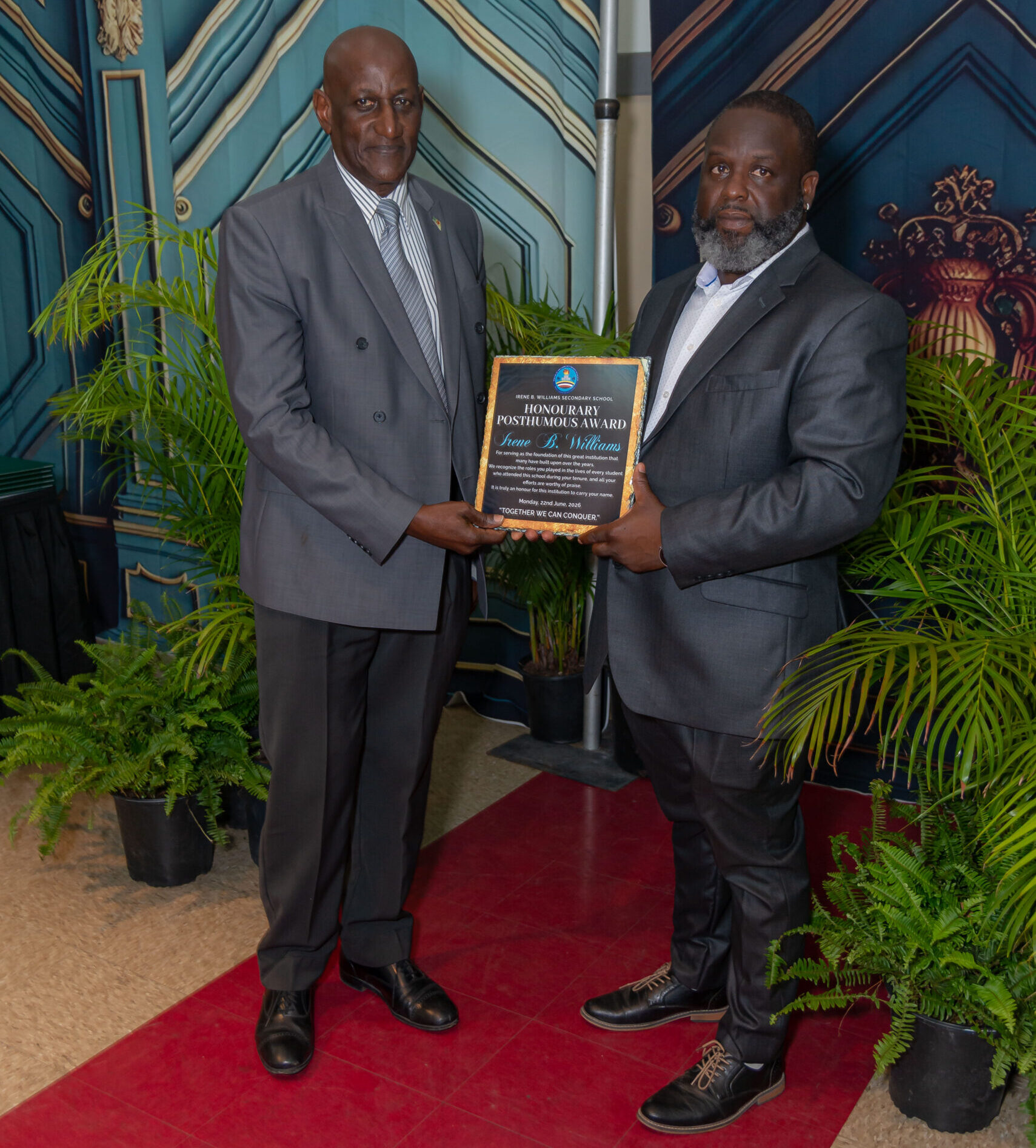
On June 22, 2026, the Irene B. Williams Secondary School in Antigua and Barbuda honored one of the nation’s most beloved trailblazers in education and community development: Irene B. Lady Williams, bestowing an Honorary Posthumous Award to recognize her extraordinary contributions to learning, public life and national progress.
The ceremony paid tribute to a woman whose vision, steady leadership, and unshakable commitment shaped countless generations of Antiguans and Barbudans, and whose life’s work continues to motivate every student who walks the halls of the campus that carries her name. The award’s official citation framed Lady Williams as the very foundation on which the school was built, highlighting her immeasurable impact on national education and emphasizing that the institution considers itself privileged to bear her legacy.
His Excellency The Rt. Hon. Sir Rodney Williams, Governor-General of Antigua and Barbuda and Lady Williams’ son, could not attend the event due to scheduled overseas official duties. Deputy Governor-General Sir Clare K. Roberts stood in for the Governor-General, while Ewart Lee Williams, Lady Williams’ youngest son, accepted the honor on behalf of the entire Williams family. For the family, the award was far more than a ceremonial gesture: it was a deeply moving confirmation that Lady Williams’ decades of selfless service are still cherished and remembered by the school community and the nation she dedicated her life to.
Born into an era of limited opportunity for women in education, Lady Williams’ 40-plus year career in education began at just 15 years old, made possible by her exceptional academic talent. After graduating from the Antigua Teachers’ Training College, she took up a teaching post in neighboring Montserrat before returning to her home country, where she served at multiple government primary schools including Swetes, All Saints, and Liberta. She eventually returned to Swetes Government School as its principal, leading the institution with tremendous distinction. That campus would eventually grow into the Irene B. Williams Secondary School, a permanent monument to her life’s work.
Beyond her role as an educator, Lady Williams earned a reputation as a firm but caring disciplinarian, lifelong life coach, and dedicated humanitarian. She held firm to the belief that education was the single most powerful pathway to social and economic opportunity, and devoted every part of her life to ensuring that no child was denied the chance to succeed. She often went above and beyond the walls of the classroom: she would seek out children working long hours in local agricultural fields, meet with their parents to emphasize education’s importance, and persuade families to send their children back to school. Many of those young people grew to become successful professionals, educators, public servants, and community leaders, all of whom credit Lady Williams with altering the course of their lives for the better.
Her service extended far beyond education. Affectionately nicknamed the “Village Nurse,” Lady Williams provided basic care to hundreds of local families, treating minor injuries and ailments when formal medical care was hard to access, while offering compassionate advice to all who sought her help. Local parents trusted her not just with minor medical care for their children, but for the moral guidance and disciplined upbringing that she was known for providing.
A devout Christian, Lady Williams also poured her energy into the spiritual and social development of her community. She founded a Women’s Fellowship, a community support group, a church choir, and a village community choir. She taught home economics and culinary skills to young women, served as her parish’s Red Cross representative, and organized community initiatives like village garden competitions to strengthen family and community bonds.
Lady Williams also held an unwavering commitment to justice and personal accountability. She never shied away from confronting young men who fathered children but refused to provide financial or emotional support, convinced that personal responsibility was the bedrock of strong families and strong communities. Her firm but empathetic approach earned her widespread respect, and led to tangible positive change in the lives of everyone she counseled.
Renowned for her honesty, integrity, compassion, and boundless love for her community, Lady Williams led by example. Her strength of character and unwavering dedication to service won her the admiration of everyone who met her, and her outsized influence in Swetes Village earned her the affectionate title of de facto Mayor of Swetes, a reflection of the deep respect the community held for her.
Speaking after the ceremony, Ewart Lee Williams expressed profound gratitude to Principal Ursula Willock, the school’s staff, current students, alumni, and the entire school community for their work to honor and preserve Lady Williams’ extraordinary legacy. He also extended the family’s thanks to Sir Clare K. Roberts for standing in for the Governor-General during his official overseas trip.
Today, the award stands not just as a recognition of one woman’s extraordinary achievements, which transformed thousands of lives across Antigua and Barbuda. It also serves as a powerful reminder that true greatness is measured not by formal titles or public honors, but by a lifetime of devotion to lifting up others. For every student who passes through the school’s gates, the name on the building is more than just an institutional label: it is a permanent tribute to a remarkable woman who dedicated her life to educating, inspiring, and uplifting generations, and whose legacy continues to shape the future of Antigua and Barbuda. Under the leadership of Principal Willock, the school remains committed to upholding Lady Williams’ values by nurturing academic excellence, strong moral character, and a commitment to community service among every cohort of students.