A mysterious mass fish die-off in Suriname’s Saramacca River has left environmental authorities without immediate answers, as an initial inspection has failed to uncover any obvious triggers for the ecological event, according to Minister of Oil, Gas and Environment Patrick Brunings. The incident, first reported last Friday, is concentrated along the river’s middle reach near the Kamp area, around 100 kilometers from the river’s mouth and an equal distance north of Brokopondo.
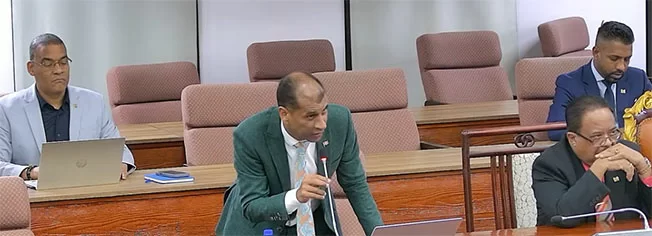
During a briefing to the National Assembly following calls from multiple assembly members for government attention to the crisis, Brunings outlined that the affected region has almost no major ongoing economic activity, with the only exception being small-scale gold mining operations in the broader Brokopondo area. This lack of industrial activity makes the large-scale fish mortality particularly unusual, requiring urgent in-depth investigation to identify its source.
Within hours of receiving the first public report of dead fish, two national bodies—the National Environmental Authority (NMA) and the National Disaster Management Coordination Center (NCCR)—deployed teams to the area to conduct on-site assessments. Brunings confirmed that the first inspection found no visible pollution sources or obvious irregularities that could explain the die-off. Interviews with local residents also failed to generate any concrete leads about what may have caused the event.
Environmental teams did collect samples of both river water and affected fish, which were immediately transported to a certified laboratory for comprehensive testing. Analysts will examine the samples for the presence of chemical contaminants, toxic substances, and other forms of pollution that could be responsible for the mass mortality.
First test results are projected to be released no earlier than Monday, with a potential delay to Tuesday as laboratories process the samples. While authorities await these results, a public health warning remains in effect for all communities along the Saramacca River. Local residents are strongly advised against catching, consuming, or selling any dead or visibly diseased fish from the waterway. They are also urged to avoid using river water for drinking, cooking, or other household uses, and to minimize direct skin contact with the water until further notice.
Brunings confirmed that the government has already mobilized emergency resources to provide clean, safe drinking water to all affected communities in the region. The NMA, NCCR, district commissioners, and traditional local leaders are maintaining continuous, close monitoring of the situation to track any spread of the event.
Officials are also currently conducting additional surveys to determine whether the fish mortality is limited to the affected middle stretch of the river or has spread further upstream. Speaking to lawmakers, Brunings emphasized that while it is too early to draw firm conclusions about the cause or scale of the incident, authorities are prioritizing a rapid, thorough response. “It is still too early to draw conclusions, but we are on top of the situation,” the minister stated.