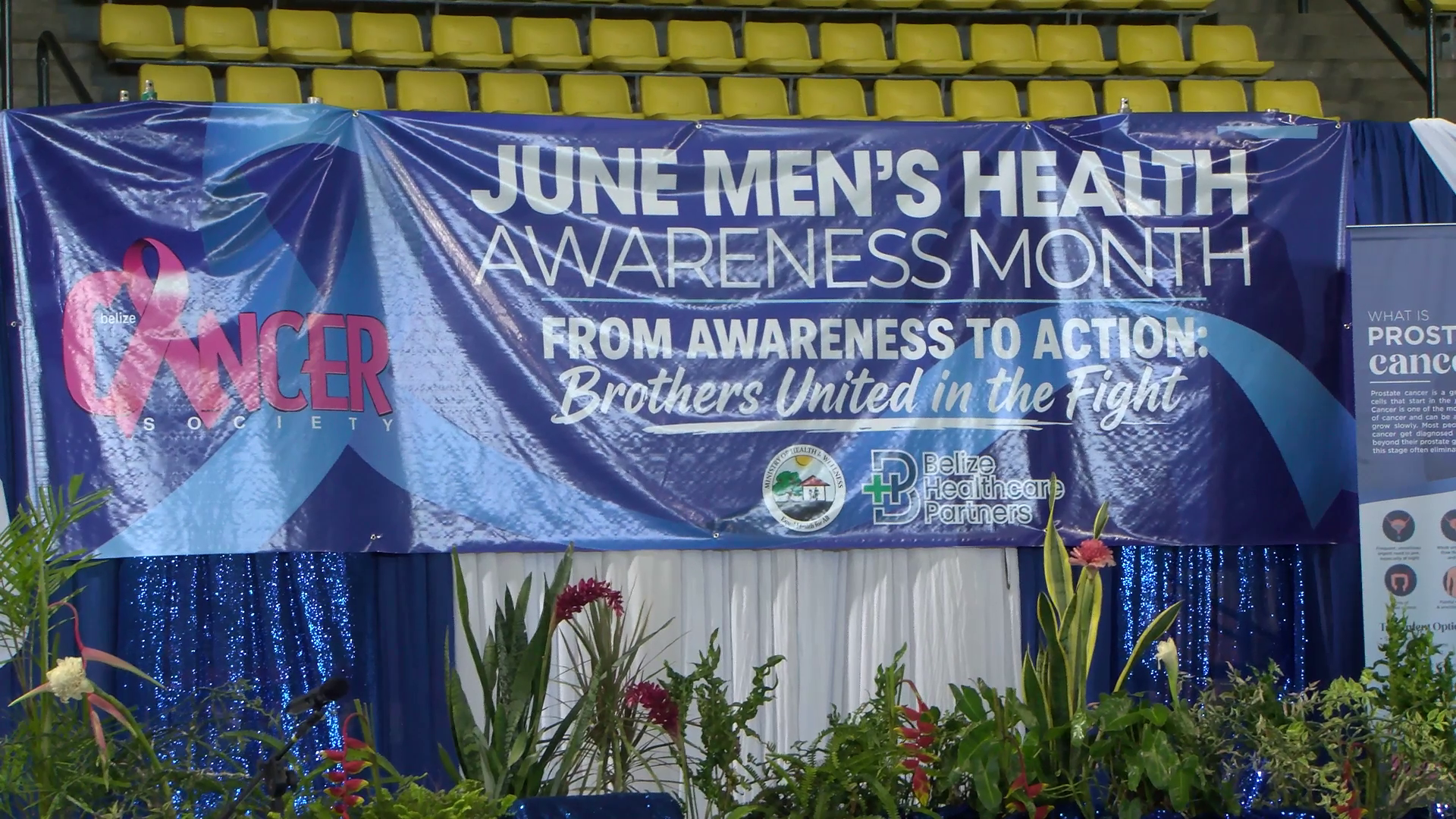
On June 26, 2026, more than 150 Belizean men gathered at the Belize Civic Center for the annual Men’s Health Forum, an event organized by the Belize Cancer Society and its partner organizations aimed at moving beyond general health awareness and encouraging tangible, life-saving action around preventive care. For decades, public health data across Belize has shown that men in the country consistently delay routine health screenings and avoid seeking medical care until conditions reach advanced, hard-to-treat stages – a trend that has driven higher mortality rates for preventable conditions like prostate cancer, the most common cancer among Belizean men over 40. The forum was designed to confront the cultural and psychological barriers that fuel this trend head-on.
Opening the day’s discussions, Dr. Irvin Gabourel, a leading local health professional, addressed one of the most common reasons men avoid prostate cancer screenings: widespread anxiety about the traditional digital rectal exam. He walked attendees through newer, far less intimidating alternative screening options, easing concerns and opening a raw, honest conversation about screening accessibility for men across age groups. Current medical guidelines recommend that all men over 40 complete an annual prostate cancer screening, but public health workers say the biggest hurdle is not the exam itself – it’s convincing men to walk through the doors of a medical clinic in the first place.
Dr. Claudina Cayetano, a mental health advisor with the Pan American Health Organization, unpacked the deep-rooted cultural stigma that keeps men from seeking care. She explained that harmful gender norms have long taught Belizean men to frame emotional and physical vulnerability as weakness, expecting men to act as constant protectors who never need support. This social conditioning leads many men to view routine checkups or seeking early care as a failure of masculinity, a mindset that ultimately leaves them far more vulnerable to advanced, untreatable disease. “What we want them to know is that seeking help is what a strong man does,” Cayetano emphasized. “A strong man wants to be healthy, and being healthy means that it’s okay to ask for help to take care of themselves.”
The event centered personal testimonies from survivors to drive this message home, including that of Earl Jones, a former chief executive of the Kolbe Foundation and Secretary General of Belize’s Football Federation, who is now a cancer survivor after seeking early diagnosis. Jones told attendees that early testing and proactive lifestyle changes were the key to his survival, crediting his faith with helping him maintain mental resilience through his treatment journey. “Early testing is very important. A change of lifestyle is also very important, But most importantly is to put your trust in the Lord and Savior Jesus Christ,” Jones said, adding that his faith helped him manage stress and anxiety throughout his treatment. When asked how his faith supported his recovery, Jones noted, “My faith helped me to remain sane. I trusted in the Lord, I placed my burdens at His feet, and I worried less. That helped me through tremendously.”
Jones also issued a stark warning to men who have put off preventive care: “This is the time to start thinking about taking care of yourself if you have not been doing so before because cancer is nothing – nothing nice. It takes away your finances and after it’s done it kills you.”
Dr. Hugh Sanchez, a longtime pathologist and member of the Belize Cancer Society, said he hopes survivor stories like Jones’ will cut through cultural silence and encourage more men to schedule routine screenings. He noted that even men who feel perfectly healthy can develop asymptomatic, early-stage cancers that only screening can detect, making annual checkups non-negotiable for long-term health. “From the testimony by Mr. Jones in regards to his journey, I would hope that that was enough to sensitize us to be mindful that even though you may appear to be well, you still need to do your yearly checks and do your screening for those diseases or cancers that are prevalent among men,” Sanchez said. “And the Society is always there and the Men’s Forum panelists is always at the Society, and we are there to advise, encourage and to be a part of the journey with you.”
Beyond prostate cancer screening, the full-day forum included interactive discussions on a range of men’s health topics, from primary care access and nutritional health to mental wellness and men as family caregivers. Across every session, the core message remained consistent: preventive care is not a sign of weakness – it’s an act of responsibility that saves lives. Organizers plan to expand the forum’s outreach in coming years, targeting rural communities where access to screening and health education is even more limited, to reduce Belize’s rate of preventable cancer deaths among men.