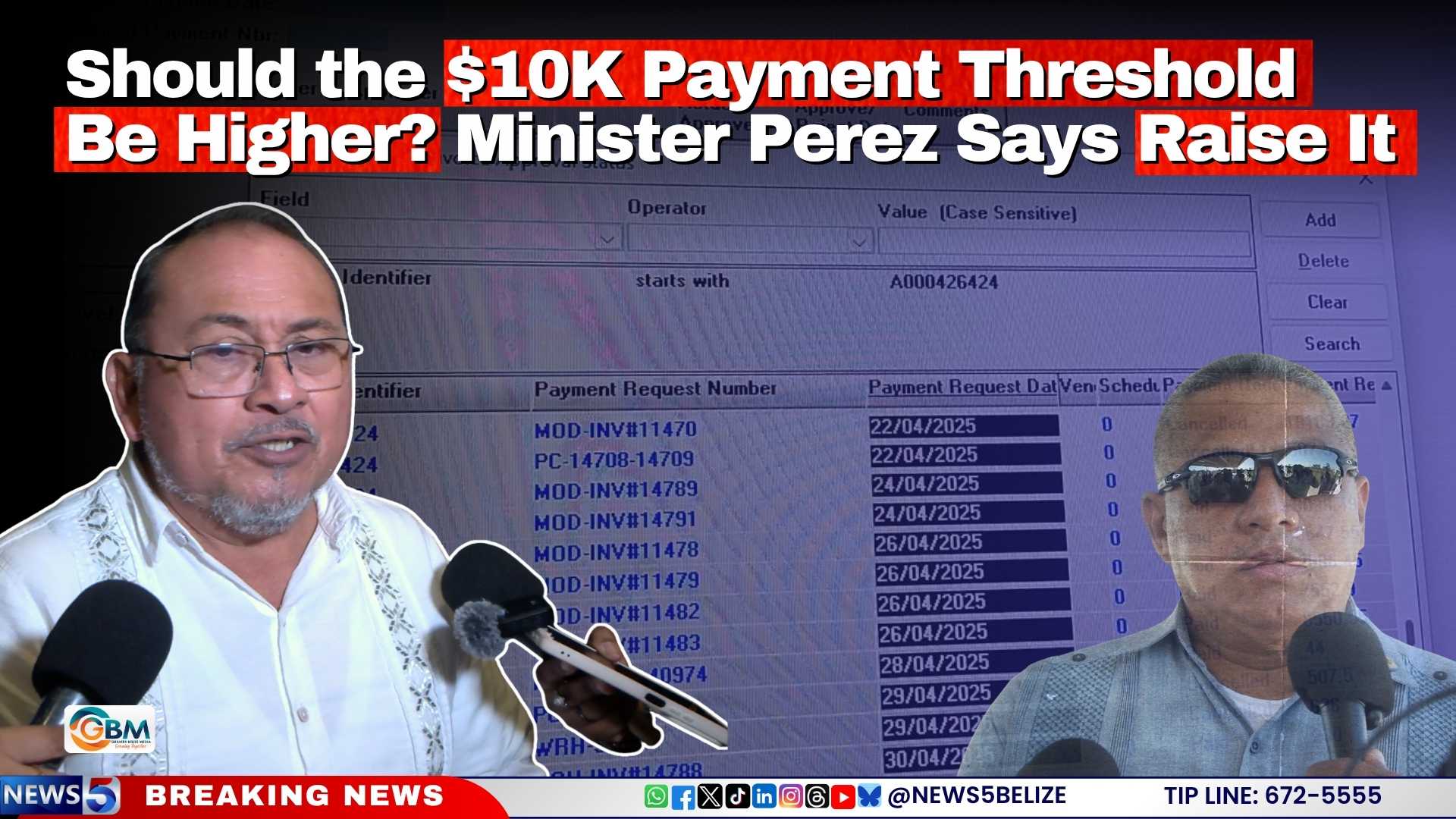
A public rift has emerged between two top Belizean government financial officials over a key regulatory payment threshold, unfolding against the backdrop of a corruption investigation that has already forced a sitting minister to step back from his duties. On June 25, 2026, Blue Economy Minister Andre Perez waded into the ongoing controversy around the ‘Mira Millions’ probe, calling for the current $10,000 mandatory processing threshold for government payments to be raised to between $15,000 and $20,000. His position directly contradicts comments made just one day earlier by Financial Secretary Joseph Waight, who framed the existing threshold as a key loophole exploited to evade treasury oversight in the ongoing investigation.
Waight told reporters earlier this week that structured payments clustered just under the $10,000 limit, uncovered during the Mira Millions probe, were inherently suspicious. He argued the pattern suggested deliberate effort to avoid formal review, saying ‘Either somebody dropped the ball, fell asleep, or worse, they moved together on it. This case looks cute to me.’ The investigation centers on payments linked to the family of former Minister Oscar Mira, who has requested and been granted a leave of absence from his cabinet position pending the outcome of the probe.
Speaking at the Fourth Blue Economy Climate Resilience Forum, Perez pushed back against the critique of the threshold itself, arguing that years of economy-wide cost inflation have rendered the $10,000 limit outdated and unworkable for modern government operations. From a practical administrative perspective, he explained, rising costs across all public sector activities mean routine payments now regularly approach or exceed the current limit, creating unnecessary bottlenecks for government accounting teams. ‘From a business standpoint, ten thousand is low,’ Perez said. ‘If I’m going to be engaging my accounting unit, and payments are getting bigger, the increase of cost on just about everything, then it’s time for us to look at maybe increasing the threshold from ten to fifteen or twenty thousand dollars.’
When asked directly whether the structured payments under investigation tied to Mira’s family amounted to intentional abuse of the existing regulatory framework, Perez declined to speculate, saying independent auditors should be allowed to complete their work without political interference. ‘Let the audit department do what they need to do,’ he said. ‘Let’s not get into the realm of speculation.’
The disagreement comes as the full cabinet moves to overhaul outdated financial regulations that have remained largely unchanged for more than half a century. During a Tuesday cabinet meeting, members formalized acceptance of Mira’s request for leave and approved an accelerated timeline for a comprehensive review and update of the government’s entire procurement rulebook. The current core financial regulations date back to 1965’s Financial Orders, while the framework governing government stores dates to 1968’s Stores Orders, provisions that many officials argue are ill-suited to 21st century public spending.
A official cabinet press briefing confirmed the decision, noting ‘Cabinet discussed and examined the existing Government Procurement Rules and considered that the current process of comprehensively reviewing and updating these Procurement Rules (including the Financial Orders 1965, the Stores Orders 1968), must be fast-tracked. Cabinet therefore directed that the new draft Procurement Rules be submitted for its consideration within the next three months.’