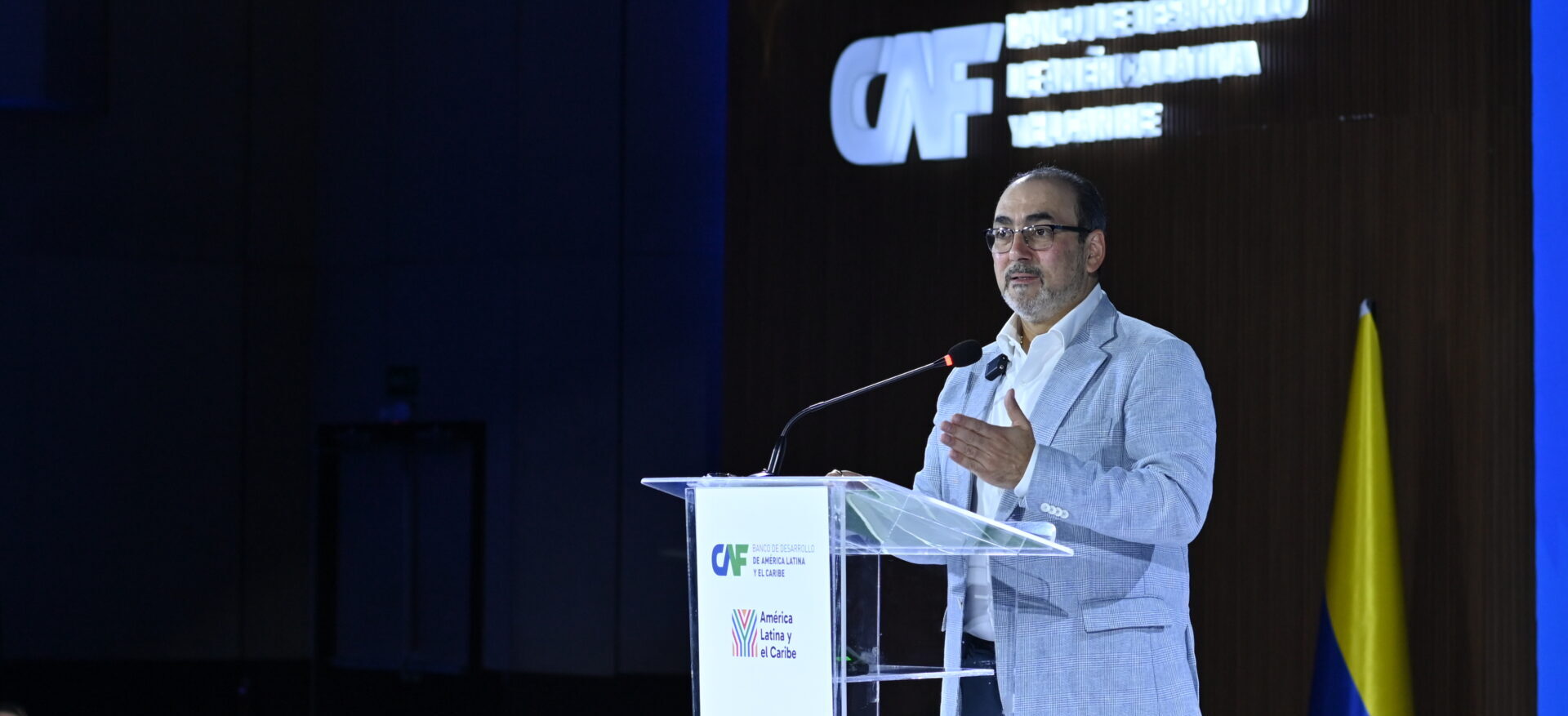
Against a backdrop of rising global geopolitical instability, shifting trade patterns, and economic volatility, the Development Bank of Latin America and the Caribbean (CAF) has announced a landmark $10 billion investment initiative set to run through 2031, aimed at accelerating deepened regional integration across Latin America and the Caribbean (LAC).
The commitment was formally revealed by CAF Executive President Sergio Díaz-Granados at the conclusion of the International Forum on Regional Integration, hosted by CAF in the Colombian coastal city of Cartagena in May. The high-level gathering assembled a diverse cross-section of stakeholders: senior government officials, leaders from multilateral development bodies, private sector executives, academic experts, and regional development partners to collectively chart actionable strategies for advancing cross-border cooperation across the LAC region.
Caribbean stakeholders took a prominent role in the forum’s discussions, with senior representatives in attendance including Timothy Antoine, Governor of the Eastern Caribbean Central Bank; Ambassador Wayne McCook, Assistant Secretary-General of the Caribbean Community (CARICOM); Ian Durant, Director of Economics at the Caribbean Development Bank; Martín Portillo, Chief Engagement Manager for Central America and the Dominican Republic at the Caribbean Catastrophe Risk Insurance Facility (CCRIF); and Natalie McGuire, Curator at the Barbados Museum & Historical Society.
Per CAF’s official announcement, the $10 billion allocation will be directed to eight high-priority sectors critical to integration: cross-border physical and digital infrastructure, intra-regional trade expansion, food security, renewable energy transition, sustainable tourism, technological innovation, logistics network modernization, and cross-border mobility. The overarching goals of the investment are to close persistent development gaps between regional economies, upgrade connectivity across the region, and strengthen LAC’s global competitiveness at a time of unprecedented global economic uncertainty.
Díaz-Granados framed deepened regional integration as a non-negotiable strategic imperative for LAC nations to build long-term resilience, drive shared growth, and improve their global positioning. In his remarks at the forum, he noted that growing geopolitical frictions, fragmented global trade systems, volatile financial markets, and widespread macroeconomic uncertainty have sharply increased the urgency for coordinated regional action. He emphasized that closer integration will empower LAC countries to secure stronger positions in global value chains, speed up the transition to low-carbon energy systems, strengthen domestic and regional food security, and adapt to rapidly shifting global production trends.
“Integration is the answer to protecting our strategic ecosystems, creating jobs, addressing informality, and defending the democratic values that underpin our coexistence, freedom, and future,” Díaz-Granados stated.
A key deliverable from the Cartagena forum was the signing of the *Declaration on the Convergence of the Processes and Mechanisms of Integration of Latin America and the Caribbean* by 15 major regional institutions. Signatories included the Economic Commission for Latin America and the Caribbean (ECLAC), the Amazon Cooperation Treaty Organization (OTCA), the Organization of Ibero-American States (OEI), and the Latin American Energy Organization (OLADE), among others. The declaration calls for a more coordinated, strategic approach to integration by aligning the priorities, resources, and expertise of existing regional bodies, eliminating redundant efforts, and unlocking new opportunities for cross-organization collaboration.
CAF’s new investment pledge builds on the institution’s 30-year track record of backing regional integration efforts. To date, the development bank has approved 118 credit operations totaling $16.73 billion for integration-focused projects across the region. Over the past five years alone, CAF has scaled its support to target priority areas including cross-border physical connectivity, productive sector development, digital transformation, regional energy integration, and environmental conservation.
In closing, Díaz-Granados stressed that the region must move beyond strategic planning and accelerate the delivery of tangible integration projects. “Regional integration has already achieved important progress, but it must now enter a more ambitious phase of implementation. Fewer barriers, more infrastructure. Fewer diagnoses, more projects,” he said.