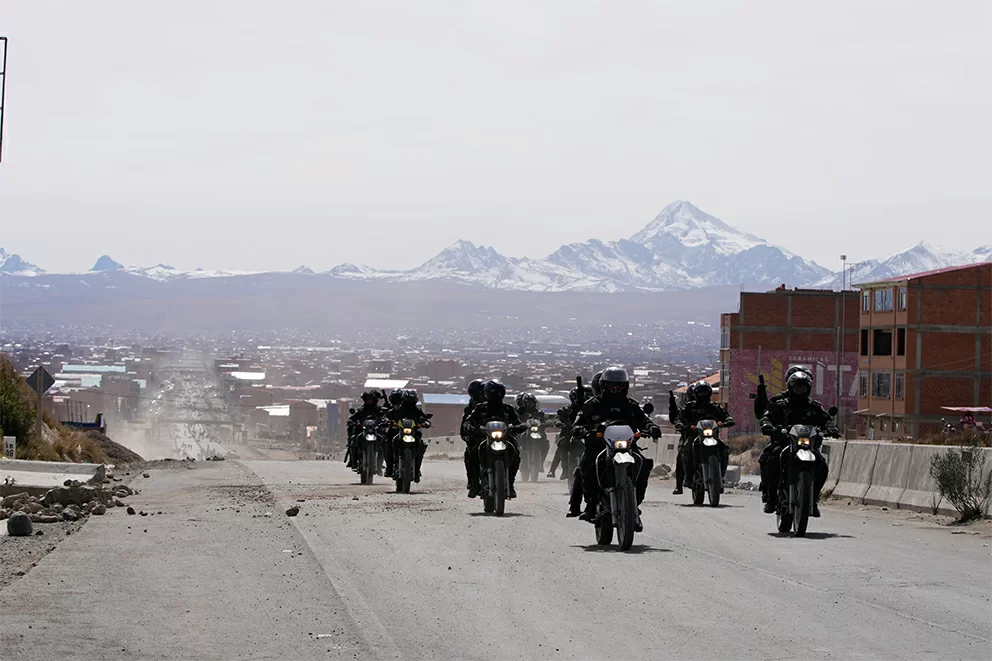
Five weeks of mass anti-government protests have pushed Bolivian President Rodrigo Paz to declare a national 90-day state of emergency, granting the military expanded authority to clear crippling road blockades that have cut off critical supply lines to the capital La Paz and other major urban centers.
The unrest, which has rocked Paz’s centrist administration just seven months after he took office, stems from public anger over sweeping austerity measures, most notably the elimination of long-standing fuel subsidies. What began as peaceful demonstrations has escalated into violent clashes between protesters armed with explosives and riot police, leaving at least 37 people injured and prompting more than 365 arrests, according to official government data.
The human cost of the crisis has grown far steeper, however. Bolivia’s ombudsman’s office and independent human rights groups confirm at least 17 deaths have been linked to the unrest, most caused by lack of access to urgent medical care after blockades isolated entire communities. The Bolivian government alone has recorded seven deaths directly tied to delayed or unavailable medical treatment, as critical routes into La Paz remain barricaded, triggering acute shortages of fuel, food, and even medical oxygen in hospitals. Vehicles have been left stranded across the country, and patients requiring routine and emergency care have been unable to reach care facilities.
In a nationally televised address defending the executive order, Paz emphasized that the state of emergency is not intended to restrict civil liberties, but to restore the freedoms ordinary Bolivians have been denied by the ongoing blockades. As stores shuttered and supermarket shelves emptied amid the supply collapse, public pressure for a forceful response to restore order has mounted rapidly.
Progress toward de-escalation remains fragmented. On Friday evening, Paz secured an agreement with one major labor union, whose leadership has since called for protesters to lift their roadblocks. But hardline factions of the movement, who are demanding Paz’s immediate resignation, have rejected negotiations and refused to stand down.
Under the terms of the emergency decree, blocking public roads that disrupt transport and supply chains is formally prohibited, and the military is authorized to temporarily support police operations to clear routes, reestablish public order, and protect civilian populations. Paz’s administration has stressed that constitutional protections and due process remain in effect, and that ordinary citizens will still be able to carry out their daily activities without widespread restrictions. The 90-day state of emergency can be ended early if violence and threats against civilians cease, the government added.
Paz, who took office last November after ending nearly 20 consecutive years of rule by the left-wing Movement for Socialism (MAS), campaigned as a centrist reformer. He ran on promises to resolve pre-existing fuel shortages, shore up the struggling national treasury, and preserve critical social safety net programs for vulnerable populations. But his austerity pivot, particularly the cuts to fuel subsidies, has sparked rampant inflation and deepened public discontent across the country.
The protest movement is led by highland Indigenous communities and rural workers, many of whom are former MAS supporters who accuse Paz of disregarding their core economic and social interests. Politically, the president faces mounting pressure from all sides: the conservative parliamentary majority and the left-wing opposition, led by ex-president Evo Morales who is backing the protests from exile and calling for snap new elections.
On the international stage, Paz has secured formal backing from the United States, which has pledged additional emergency aid and logistical support to alleviate shortages caused by the blockades. U.S. officials have condemned the unrest as an attempted coup against Bolivia’s democratically elected legitimate government, and warned that bad actors are seeking to exploit the chaos to destabilize the broader Andean region.