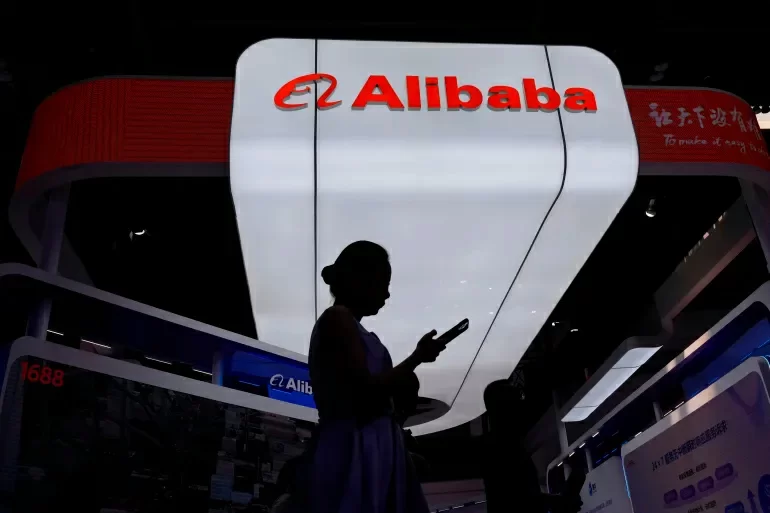
Less than a month after U.S. President Donald Trump and Chinese President Xi Jinping met for a high-profile summit in Beijing aimed at de-escalating ongoing trade and technology disputes, Washington has taken a provocative new step that threatens to upend the fragile detente between the two global powers. On June 9, the U.S. officially added three of China’s most prominent commercial and technology giants—e-commerce leader Alibaba, search engine and AI pioneer Baidu, and electric vehicle manufacturer BYD—to its annual updated blacklist labeled as “Chinese military companies.”
The expansion brings the total number of Chinese firms on the list to 188, a major jump from the 134 entries recorded in 2025. The Pentagon, which maintains the registry, defines blacklisted Chinese military companies as entities either owned or controlled by the People’s Liberation Army of China, or those that contribute to Beijing’s civil-military fusion strategy—a policy that integrates civilian and defense-oriented technological research and development. To qualify for inclusion, firms must also maintain some level of business operations within U.S. jurisdiction.
This latest round of additions marks a notable expansion of the blacklist’s scope, as all three firms are leading players in mainstream civilian industries that have little public association with China’s defense sector. They are not the first major Chinese technology brands to face this designation; industry giant Tencent was added to the list in a previous update.
Chinese officials have swiftly pushed back against the move. The Chinese Embassy in Washington issued a strong condemnation, labeling the new designations as discriminatory. A spokesperson accused the U.S. of overstretching the definition of national security risks to target legitimate Chinese businesses, emphasizing that all Chinese companies operating globally comply with the laws and regulations of their host countries. The statement called on the U.S. to abandon discriminatory practices and create a fair, unbiased operating environment for Chinese enterprises operating in the country. As of the report’s publication, none of the three added companies have issued an official response to their inclusion on the blacklist.
Under existing U.S. regulations, firms placed on the list are barred from eligibility for contracts with the U.S. Department of Defense, a restriction that could significantly limit their commercial opportunities within the U.S. market. However, some national security experts question the practical effectiveness of this broad approach to blacklisting.
Dennis Wilder, a veteran national security analyst with previous experience at the Central Intelligence Agency and the U.S. National Security Council, argues that the broad brush designation is unlikely to deliver meaningful results. He points out that many U.S. firms already have deep, intertwined commercial partnerships with the three Chinese companies, and these businesses are unlikely to sever ties voluntarily without the imposition of harsh, mandatory sanctions. According to Wilder, such broad restrictive measures will only have limited impact unless the U.S. fully decouples its economy from China or convinces other major global economies to join the sanctions regime.
Analysts widely note that the timing of the blacklist expansion, coming just weeks after the leaders of the two countries met to cool tensions, puts the fragile post-summit balance of bilateral relations under new strain, with potential ripple effects across trade, technology, and diplomatic engagement between Washington and Beijing.