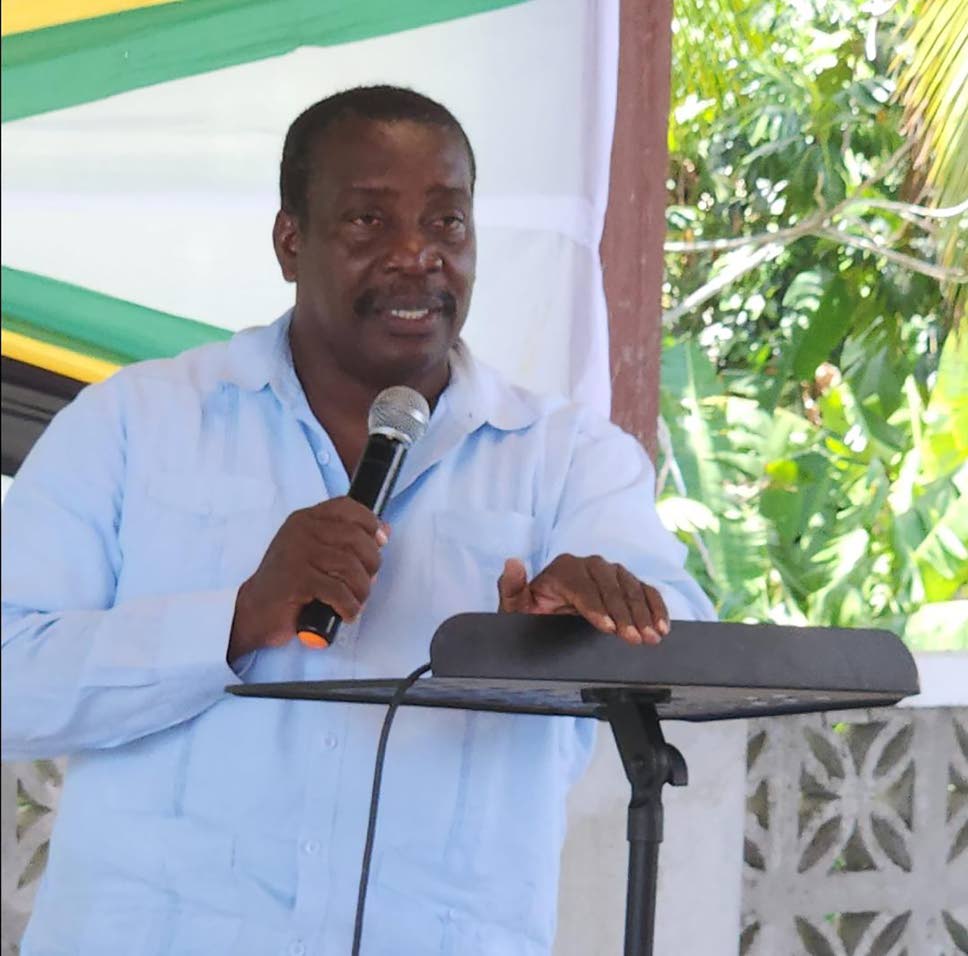
Jamaica’s senior government official has sounded the alarm on the country’s decades-long land titling backlog, projecting that full resolution of the systemic issue could take up to two decades even with full public cooperation. Robert Montague, the minister responsible for Land and Titling, laid out the scope of the challenge during his address to the House of Representatives’ sectoral debate on Tuesday, emphasizing that delays will stretch even longer without widespread public buy-in for the government’s reform agenda.
According to official valuations, Jamaica currently counts just under 1 million parcels of registered land across the island. Of that total, only 550,000 parcels hold active formal titles. Montague explained that pervasive informal subdivision practices have created a cascading set of problems: the majority of untitled parcels lack formal documentation entirely, while many titled parcels remain registered under the name of previous owners rather than current occupants.
Across 379 formal and informal land settlements, which collectively include 62,690 designated parcels, government audits have found that roughly 35 percent have been split into smaller plots through unregulated, informal channels. Factoring in untitled land, unregistered subdivisions, out-of-date ownership records, and unprocessed claims in settlements, Montague estimates the country needs to issue roughly 600,000 new formal titles to completely resolve all existing land challenges.
The crisis has already inflicted tangible harm across Jamaican society, the minister told lawmakers. Without clear formal titles, land cannot be smoothly transferred between generations, leading to frequent property disputes that have in some cases resulted in fatal violence and fractured families. Beyond social harm, the lack of clear titling also blocks economic potential: the government cannot collect accurate property taxes to fund public services, while communities without formal land documentation are locked out of access to basic amenities including regular garbage collection, fire department response, and public street lighting.
To tackle the deeply entrenched problem, Montague’s ministry has unveiled a sweeping suite of coordinated reforms. The first major shift is elevating the land titling portfolio to full Cabinet level to prioritize the issue at the highest levels of government. The administration has also secured a landmark partnership with the South Korean government to build a specialized training institution for land sector professionals, a $9 million project fully funded by South Korea. The new school will train a new generation of surveyors, draftsmen, document verifiers, and other core land management specialists, expanding Jamaica’s limited pool of trained experts while introducing modern digital land management technologies from South Korea.
Montague noted that the investment in human capital will directly increase the government’s capacity to process and issue new titles at a faster pace. The government has also partnered with the globally recognized Certified Commercial Investment Member Institute (CCIMI) to deliver advanced certification training for local real estate professionals, bringing Jamaican industry standards in line with 31 other leading countries around the world. Accredited workshops for legal practitioners focused on streamlining land application processes are also being rolled out on a regular basis.
Other procedural reforms include expanding the number of local adjudication committees tasked with resolving land claims, with plans to route most adverse possession applications to these local bodies to cut down on processing backlogs in the national court system. A core pillar of the long-term modernization push is full digitization of all land management processes, including property surveys. Starting in September of next year, the ministry will begin issuing electronic land titles (e-titles) through a partnership with global tech firm Fujitsu, which is supporting the digitization of decades of existing paper land records to create a secure, searchable national database.
Montague projected that once the e-title system is fully operational, Jamaica will be able to process up to 30,000 or more new titles each year, a dramatic increase from current output. The new digital system will also include a built-in property protection service: landowners will receive automatic alerts any time a third party submits a title application for their registered property, cutting down on fraudulent attempts to claim land through adverse possession. The optional property watch alert service will be available for a small user fee, the minister confirmed.