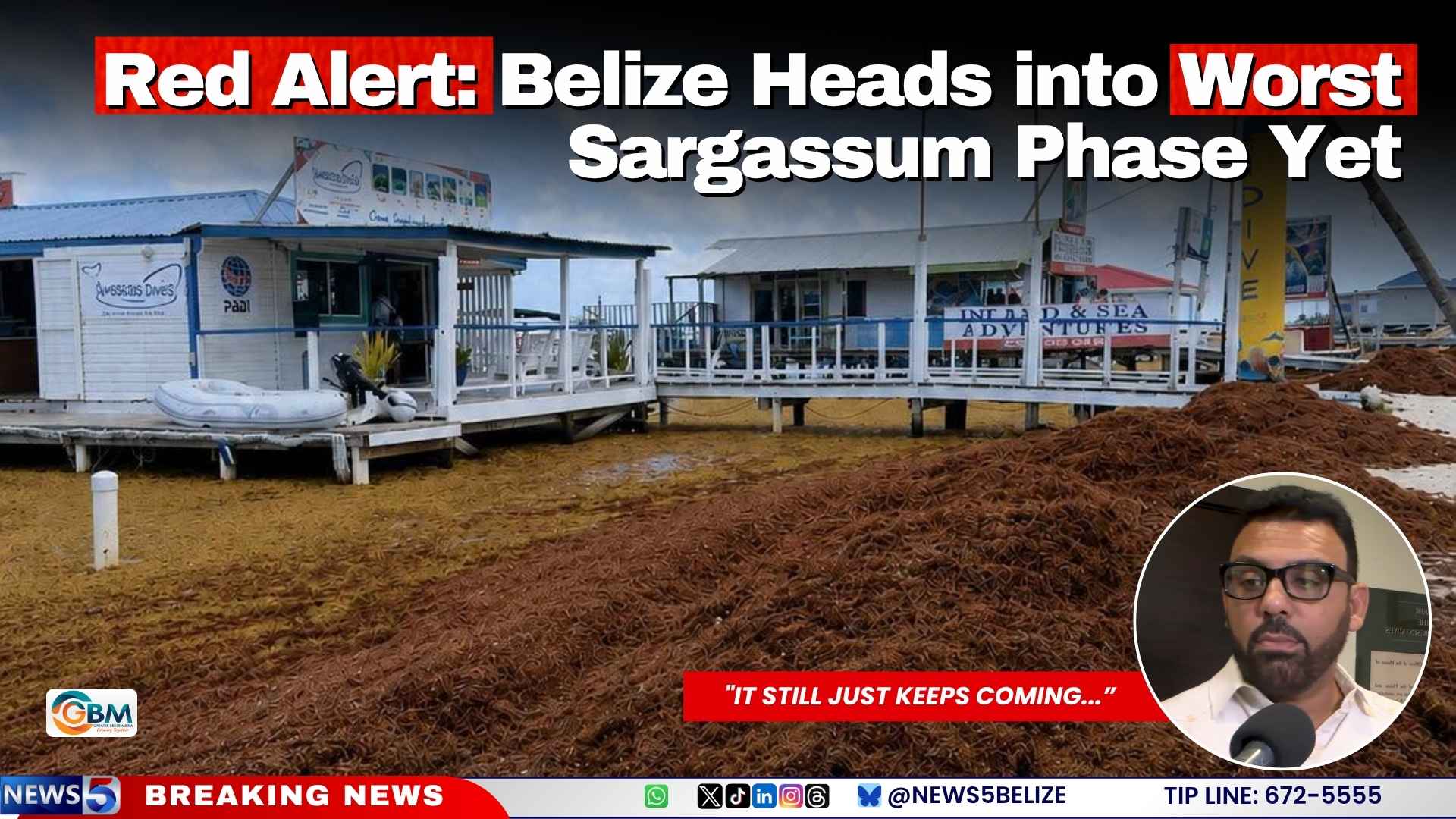
A state of emergency has been declared over the massive sargassum inundation hitting Belize, with officials warning the country is bracing for the most damaging algal bloom event in its history. Even as coastal communities and local authorities mobilize every available resource to clear the impacted shorelines, projections indicate the crisis is set to worsen in the coming days.
The San Pedro Town Council officially issued the red alert in a public statement released this Monday, laying out a comprehensive multi-pronged response strategy currently underway. Cleanup teams have been working extended 12-hour shifts, deploying heavy machinery including tractors and dump trucks alongside upgraded specialized equipment to clear rotting algal mats off public beaches. The municipality has also expanded its cleanup workforce to handle the increased volume, and has begun establishing temporary composting sites as part of efforts to reclaim impacted sand areas.
Local officials are currently negotiating with private landowners to secure permanent long-term deposition sites for the collected sargassum, a critical piece of infrastructure needed to manage the ongoing inflow of algae. The council confirmed it is also actively lobbying national government bodies for additional financial and logistical support to scale up the response.
Speaking last Thursday at a meeting of the cabinet’s sargassum subcommittee, Belize Tourism Minister Anthony Mahler openly addressed the gaps in regional coordination that have left countries ill-prepared to tackle the growing transboundary crisis. “I don’t think we as a region have taken this problem seriously enough,” Mahler said. “We have not collaborated collectively, backed by scientific research, to develop long-term strategies to address this issue.”
Mahler pointed to the ongoing massive sargassum outbreak currently overwhelming neighboring Mexico to illustrate the sheer scale of the threat facing the entire Caribbean region. “We got lucky over the past month,” he explained. “Most of the migrating algal masses drifted north to Mexico, and they are taking the full brunt of the crisis right now. Even with a far larger cleanup budget, active Coast Guard support, and a fully mobilized response, Mexico still cannot keep up with the inflow.”
Despite Belize’s unprecedented mobilization of resources, including a steadily increasing cleanup budget allocated specifically to addressing the persistent thick algal mats washing ashore daily, Mahler noted the problem shows no sign of slowing. “It just keeps coming,” he said. “By the time crews finish clearing beaches at the end of one day, another full boatload of sargassum will wash up overnight, ready to be cleared again the next morning.”