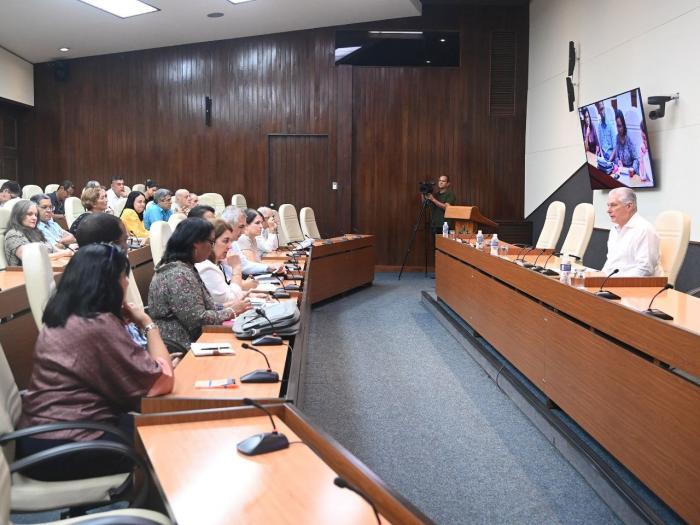
On the afternoon of May 27, 2026, Cuban President Miguel Díaz-Canel Bermúdez, who also serves as First Secretary of the Central Committee of the Communist Party of Cuba, chaired a regular meeting of health sector experts and scientists at Havana’s Palace of the Revolution. The gathering’s most anticipated highlight was an update on HEBERSaVax, a groundbreaking Cuban-developed therapeutic vaccine candidate for treating multiple types of malignant tumors, a development that has already sparked early optimism for global cancer care.
During the session, Díaz-Canel extended formal congratulations to HEBERSaVax lead scientist Yanelys Morera Díaz, a full member of the Cuban Academy of Sciences, and her entire research team. Following the conclusion of the meeting, Morera spoke to state press about the vaccine’s mechanism and developmental progress, outlining how the innovative candidate works to stop cancer progression.
Morera explained that HEBERSaVax functions as a form of active immunotherapy, targeting two critical aspects of tumor growth. First, it prompts the body to produce specific antibodies that block the blood supply tumors need to access nutrients and oxygen for expansion. Second, it reactivates the patient’s own immune system to recognize and attack cancer cells, creating a multi-functional approach to treatment.
After completing all preclinical testing, including early trials in laboratory animal models, the candidate has advanced to Phase II clinical trials focused on specific tumor types. Morera emphasized that early safety data shows the therapy has a strong tolerability profile, with only mild, manageable adverse effects. This low toxicity profile allows HEBERSaVax to be combined with conventional cancer treatments without increasing harmful side effects, opening the door for broad clinical applications. While the candidate remains in active research, Morera noted that many trial participants have already reported meaningful improvements to their quality of life, with some patients with advanced-stage cancer achieving complete responses to treatment. Moving forward, the research team must continue compiling clinical evidence to meet Cuba’s rigorous national regulatory standards before advancing to later trial phases. Morera expressed confidence that the candidate will successfully complete all required testing and eventually become a core tool in global cancer treatment, with long-term plans to integrate the therapy into primary care settings.
Other members of the research team echoed Morera’s cautious optimism. Julio César Hernández Perera, an internal medicine specialist, full member of the Cuban Academy of Sciences and clinical researcher on the project, described HEBERSaVax as a one-of-a-kind achievement of Cuba’s robust biotechnology sector, built on decades of targeted research. He noted that the candidate could eventually be used to treat a wide range of solid tumors, which often rely on the specific protein targeted by the vaccine to grow and spread. Its low toxicity makes it a viable option even for patients living with multiple chronic conditions, a major advantage over many conventional aggressive treatments. Like Morera, Hernández Perera called for continued research investment, but stressed that the candidate already opens new, previously unreachable frontiers in cancer care.
Young clinical researcher Adriana Felinciano Pozo, another internal medicine specialist on the team, added that HEBERSaVax’s simple subcutaneous administration makes it easy to deploy in a wide range of care settings. Early trial results across multiple hard-to-treat solid tumor types — including colorectal cancer, hepatocellular carcinoma, ovarian cancer, and kidney cancer, all in advanced patient populations — have delivered consistent positive responses. Felinciano Pozo emphasized that cancer remains one of the leading global causes of death and long-term disability, making accessible, low-toxicity new therapies a critical global public health need.
The report frames HEBERSaVax’s development as a testament to Cuba’s enduring commitment to protecting the fundamental human right to health and life, even amid long-standing external economic pressure that has strained the country’s resources. The work of the HEBERSaVax research team exemplifies how Cuban biotechnology continues to advance life-saving innovation despite significant challenges.