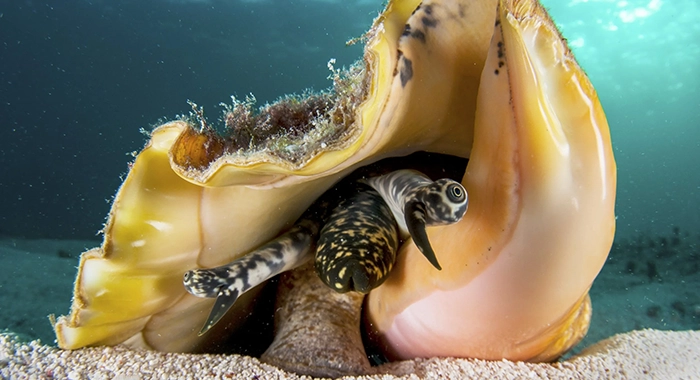
On May 25, 2026, Fisheries Minister Conroy Huggins used the platform of the country’s 49th Fisherman’s Day celebrations, held in Little Tokyo, Kingstown, to lay out an ambitious new agenda for the nation’s fisheries sector and blue economy, while sounding an alarm over accelerating declines in two of the region’s most valuable marine species: queen conch and lobster.
Huggins outlined positive recovery trends for the broader fishing industry in the wake of 2024’s Hurricane Beryl, noting that 2025 total fish landings bounced back to roughly 1.93 million pounds, with an estimated market value exceeding EC$16.3 million. This marks a clear uptick from 2024’s post-hurricane totals of 1.7 million pounds and EC$14.7 million. However, the improvement across the sector masks troubling declines for high-value commercial species: conch landings dropped 17.6% year-over-year, translating to more than EC$0.2 million in lost revenue, while lobster earnings fell 27% for an estimated loss of EC$0.3 million.
“These realities… remind us that the sea is generous, but its resources are not unlimited,” Huggins told attendees, stressing that the new policy framework will center on science-backed, sustainable resource management to reverse current declines. This marks the second consecutive year that a senior fisheries official has flagged the downward trend in conch populations: last year, then-minister Saboto Caesar announced plans to implement a mandatory closed conch season starting in 2026, alongside broader revisions to the country’s Fisheries Act to establish protected marine replenishment zones. Caesar had already secured government approval for the closed season before Hurricane Beryl made landfall in July 2024, framing the move as an intergenerational responsibility to preserve marine resources for future Vincentian communities.
To address the conch decline head-on, Huggins announced a new queen conch recovery initiative that will include the construction of a purpose-built conch hatchery and nursery unit on Union Island, with construction set to break ground before the end of 2026. Complementing this project, ongoing coral reef restoration work is underway across all of St. Vincent and the Grenadines through regional and international collaborative partnerships, designed to rebuild critical marine habitats, boost wild fish populations, and strengthen the country’s overall climate resilience. “Where science tells us resources are declining, we must act responsibly. Conservation today is production and sustainability for tomorrow,” Huggins said.
Funding for the new slate of initiatives comes from the 2026 national budget, which allocates approximately EC$14.3 million to the Ministry of Fisheries, Marine and Land Conservation and Climate Resilience. More than EC$8.4 million of that allocation is earmarked for capital expenditure, targeted at upgrading fisheries infrastructure, expanding marine conservation work, boosting climate resilience, and scaling up emerging blue economy projects. As an island nation with a marine exclusive economic zone 90 times larger than its total landmass, Huggins emphasized that St. Vincent and the Grenadines is well-positioned to unlock the vast untapped economic potential of ocean-based industries.
A holistic, long-term sector strategy to guide all future policy, infrastructure development, resource management, climate adaptation, investment planning, and institutional strengthening is currently in development, with many of the upcoming initiatives tied to the World Bank-supported Unleashing the Blue Economy of the Caribbean (UBEC) programme. Key projects outlined by Huggins include retrofitting existing fishing vessels to improve catch quality and on-board safety, strengthening monitoring and enforcement systems to crack down on unreported and illegal fishing, building out national food safety and seafood inspection frameworks, and supporting aquaculture development for high-value species including sea moss, conch, and lobster. Additional plans cover the refurbishment of fisheries facilities, jetties, and boat ramps, the construction of climate-resilient storage infrastructure to protect fishers’ assets, investment in vessel monitoring systems and cold storage networks, and expanded access to affordable financing for small-scale fishing operations.
Beyond infrastructure and conservation, the ministry is rolling out targeted training and capacity-building programmes for both working fishers and fisheries sector staff, covering critical topics including open sea safety, seafood quality control, best practices for fish handling and processing, boatmaster certification, and adoption of modern fishing technologies. New inclusive initiatives will specifically open up opportunities for youth and women through fisheries skills training and seafood product development, pushing back against narratives that the fishing industry is in decline. “Fisheries is not a dying industry. Fisheries is a sector of innovation, entrepreneurship, science, technology, and opportunity,” Huggins said. Closing his address, the minister called for shared collective responsibility across all sectors of society: he urged fishers to comply with sustainable harvesting regulations, and called on local communities to participate in protecting critical coastal ecosystems including reefs, mangroves, beaches, and seagrass beds that underpin long-term fisheries health.