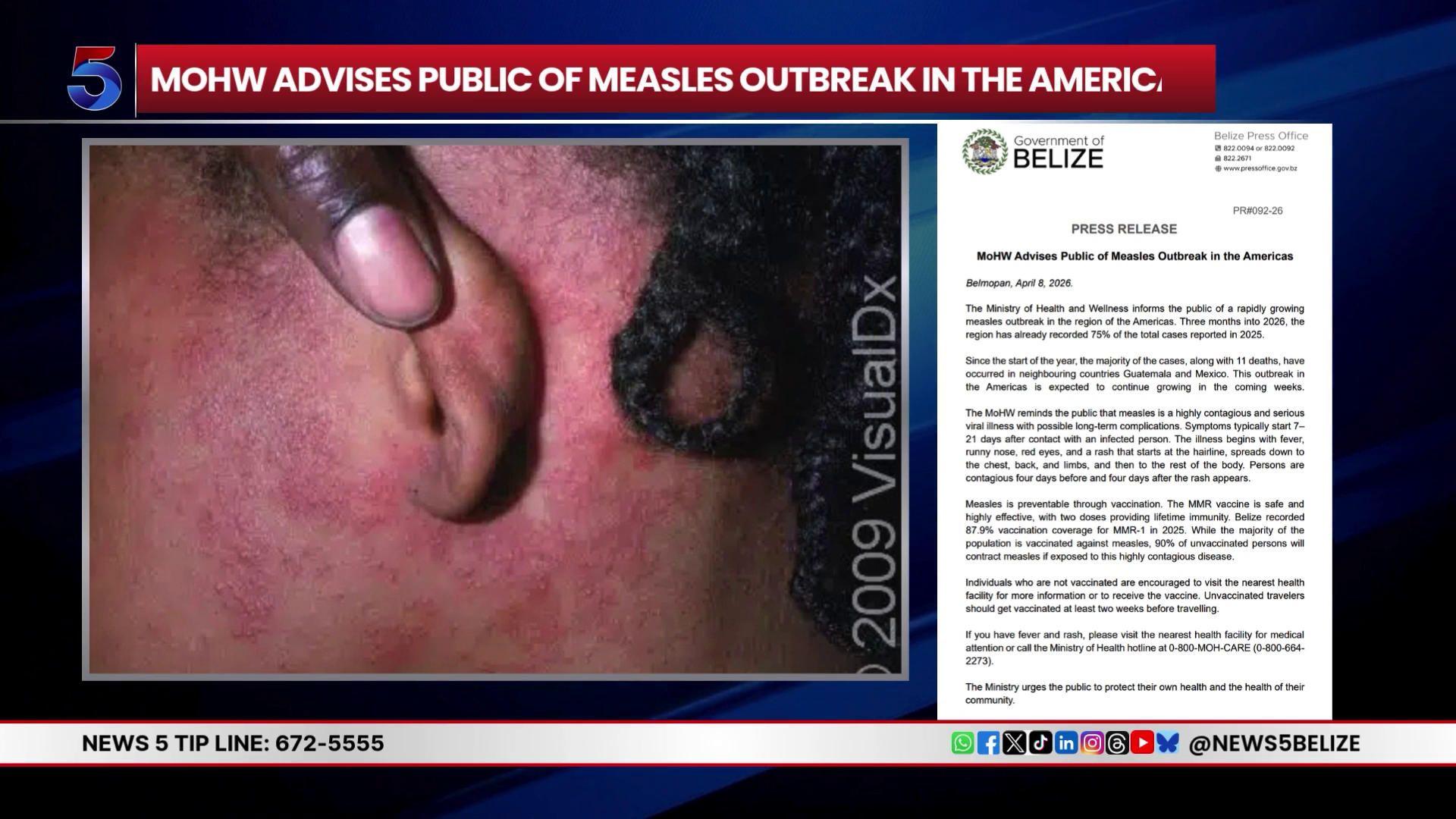
As of May 22, 2026, the Central American nation of Belize has entered a state of heightened public health vigilance after local health authorities officially confirmed 12 positive cases of measles across multiple regions of the country. Confirmed infection clusters have been identified in three distinct areas: the southern town of Punta Gorda, the inland Cayo District, and the country’s largest urban center, Belize City.
Public health investigators have traced nearly all confirmed cases back to cross-border travelers returning from neighboring Guatemala, where a rapid spike in measles infections has been ongoing since early April 2026. The cross-border connection has prompted urgent warnings about the risk of sustained community transmission, as unvaccinated populations remain vulnerable to the highly contagious virus.
In response to the outbreak, Belize’s Ministry of Health has rolled out comprehensive nationwide public health measures, including enhanced passive and active surveillance for new cases and mandatory isolation protocols for confirmed infections. The early impact of the outbreak is already disrupting community activities: one primary school in Belize City was forced to cancel its annual sports day after a student was identified as a suspected case, as a precaution to prevent potential spread among unvaccinated attendees.
In an official statement, Laura Friesen, Acting Deputy Director of Belize’s Public Health and Wellness department, clarified the current epidemiological situation to the public. She emphasized that all documented cases to date are directly linked to imported infections from Guatemala, and there is currently no conclusive evidence of sustained local transmission within Belize. However, she warned that repeated introduction of the virus through cross-border travel creates a persistent risk of a larger national outbreak if vaccination coverage remains low.
Friesen issued a broad public call for urgent vaccination, targeting both international travelers and residents with no planned travel. “Brief, unrecognized exposure can happen anywhere: in a crowded market, on public transit, or in any shared public space,” she explained. “The measles vaccine preps your immune system to recognize and fight the virus before an infection can take hold, which is the single most effective protection we have.”
She further highlighted the unique risks the virus poses to households with unvaccinated members: even with immediate isolation of an infected individual, the high contagiousness of measles means unvaccinated people living in the same home face very high exposure risk. To date, the outbreak has resulted in one hospitalization, though all current patients are in recovery, according to official updates. Health officials have reminded the public that while many cases resolve, measles can cause severe long-term health complications, including permanent neurological damage, particularly in young children and immunocompromised individuals.
This report is adapted from a transcript of an evening television newscast originally published online by local Belizean media.