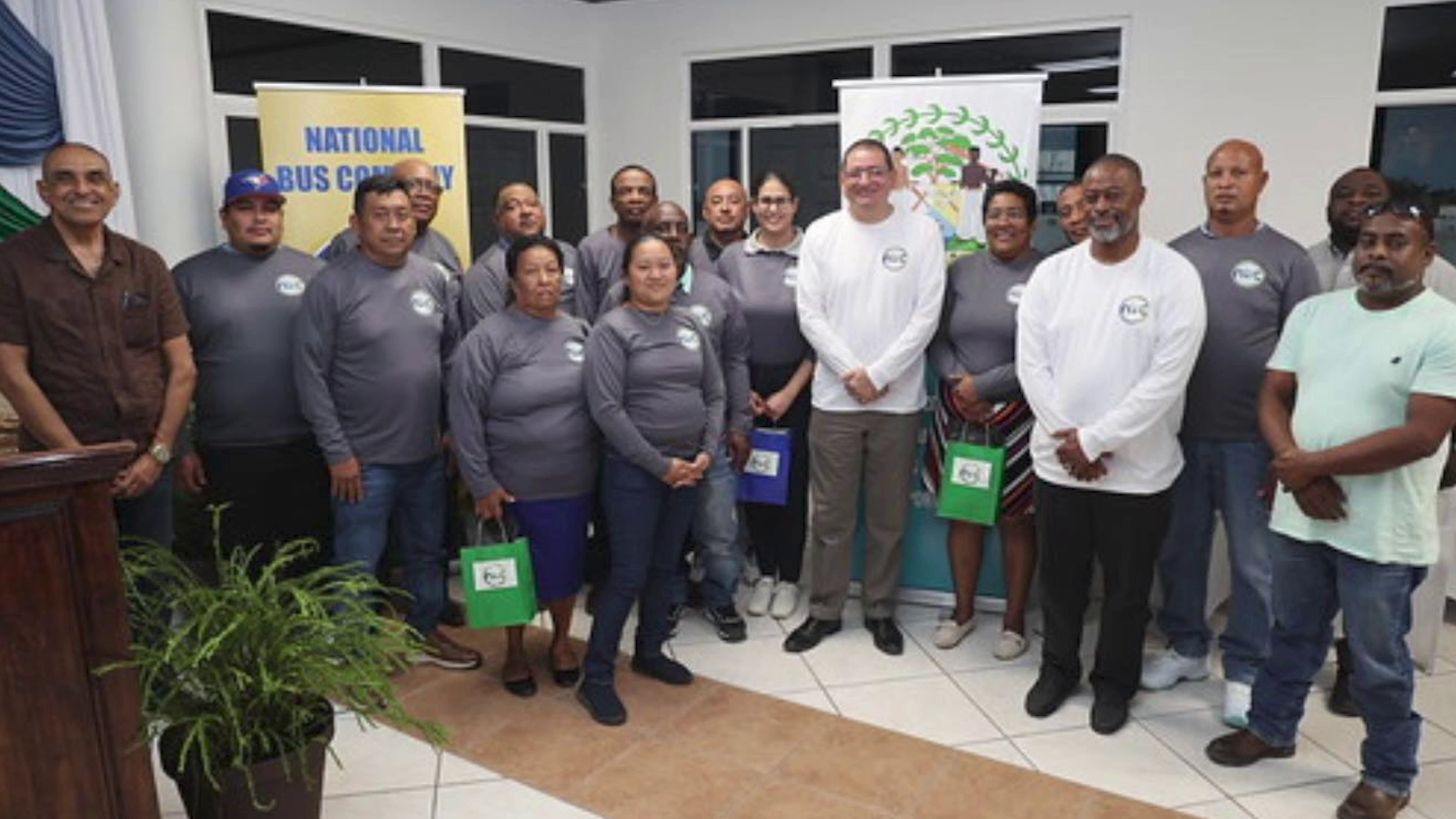
Belize’s National Bus Company (NBC), a relatively new public-private transit venture, is on track to meet its early financial projections – and that means operating firmly in the red, company leadership confirms. Months after launching the partnership, which brought private operator Sergio Chuc and his Westline Bus Company into the venture, leadership says early losses were always part of the long-term growth strategy, with profitability targeted by the close of 2026.
When the partnership was first structured, Chuc and other stakeholders knew the initial operating period would bring financial headwinds. Chuc, a key shareholder in NBC, emphasized that the current negative cash flow is no surprise to the project’s leadership team. “It has been going, just as the plan showed it would be going. In the first six months, it is going to be rough. The company will continue losing money initially, however as the phase of introducing the electric buses starts coming in, we will be leveling in,” Chuc explained in an interview.
The core linchpin of NBC’s path to profitability is a planned transition to an all-electric bus fleet, a shift that Chuc says will slash operating costs by cutting expensive fuel expenses and ultimately widen profit margins. Unlike traditional diesel fleets that carry ongoing high fuel and maintenance costs, electric buses are expected to deliver long-term cost savings that will stabilize the company’s finances.
“Our projections show that by the end of the year we should be afloat. Actually, we were prepared for this. We knew it was going to start bumpy and all in all it was no surprise. We know what we are doing. I think the board of directors has some very good people that are extremely knowledgeable in the industry and so they are steering the company in the right direction,” Chuc added.
For Chuc and other investors, NBC is explicitly structured as a long-term play, prioritizing sustained growth and future returns over quick short-term profits. “I am ok with it. I think my investment is fairly safe. It is a long-term investment. I definitely did not think I was going to make money immediately, but when all the chips fall in place, I think it is going to be very welcoming for myself and extremely welcoming for the commuters,” Chuc said.
Beyond financial gains, Chuc noted that the electric bus transition will also deliver tangible improvements to Belize’s public transit network, upgrading service quality and bringing world-class equipment to local riders. “The service is getting better. The equipment will be world class but for that we need a few months for those buses to start rolling in,” he explained.
Belize’s Minister of Transport Dr. Louis Zabaneh has confirmed the timeline for the new fleet, stating that the first electric buses are on track to arrive in the country by the end of 2026, matching the company’s internal projections for financial stabilization.