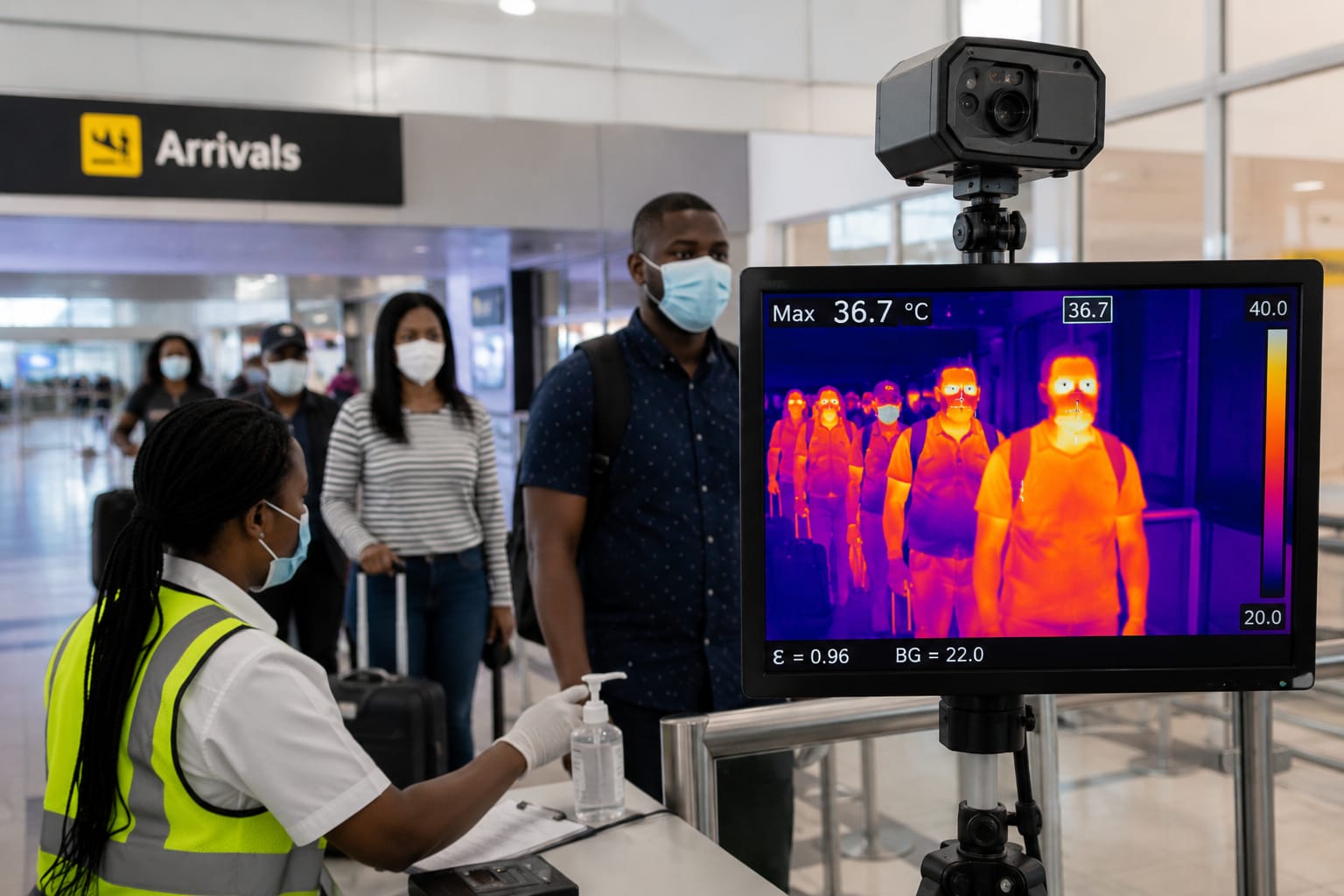
Against a backdrop of rising international alarm over an expanding Ebola outbreak in several African regions, the twin-island nation of Antigua and Barbuda is moving to reactivate robust border health screening measures, including thermal scanners at its main international airport, the country’s top health official has announced.
Speaking at a publicly broadcast press briefing held Friday, Health Minister Michael Joseph outlined that the Ministry of Health is currently conducting a comprehensive review of a suite of precautionary interventions designed to tighten public health surveillance across all of the nation’s ports of entry. A central pillar of the revised plan is the return of infrared thermal scanning technology, which allows officials to quickly detect elevated body temperatures—one of the earliest hallmark symptoms of Ebola infection—among all incoming international travelers.
“We are actively moving forward to reinstate thermal scanners and put in place additional layered monitoring protocols at our borders,” Joseph confirmed during the briefing. He was quick to emphasize that as of the announcement, not a single confirmed case of Ebola has been detected within Antigua and Barbuda’s borders, helping to calm early public anxiety over the threat.
Beyond the return of temperature screening, Joseph noted that public health authorities are also evaluating more stringent travel history disclosure requirements. One key proposal under discussion would require all incoming travelers to share detailed information about any travel they have undertaken within the 45-day period before their arrival in the country, a longer window than many standard current screening protocols.
Early detection of potential cases is core to the country’s preparedness strategy, Joseph explained. By implementing temperature testing and expanded monitoring systems, local health teams can flag potential infection risks at the earliest possible stage, cutting down the time needed to implement isolation and contact tracing measures should a suspected case arrive.
The minister also made clear that if the global Ebola situation continues to worsen and spread beyond the currently affected African nations, the Ministry of Health will not hesitate to put forward formal proposals for targeted travel restrictions on passengers originating from areas with documented community transmission. “If the outbreak escalates, we will put forward evidence-based recommendations for appropriate travel restrictions from affected regions,” he said.
Throughout the ongoing monitoring of the evolving outbreak, Joseph stressed that Antigua and Barbuda has aligned its response protocols with official guidance issued by the World Health Organization (WHO) and the Pan American Health Organization (PAHO), two leading global public health bodies.
A key advantage the nation holds in responding to this new threat is the existing infrastructure built up during the COVID-19 pandemic. Many of the border surveillance and rapid response systems developed and activated over the course of the coronavirus public health emergency remain in place, Joseph said, and can be quickly adapted to address Ebola and other emerging infectious disease threats. “We are making active preparations right now to ensure all our systems are fully ready to respond if needed,” he added.
In a bid to counter growing public misinformation that was already beginning to circulate on local social media platforms, Joseph sought to reassure residents about the basics of Ebola transmission. He clarified that the virus can only spread through direct physical contact with the bodily fluids of an infected person, and is not an airborne pathogen, a common misconception that has fueled unnecessary panic in other countries facing similar outbreak scares.
He also issued a formal appeal to local residents to avoid sharing unconfirmed, misleading information about the outbreak online, and encouraged all members of the public to only rely on official updates issued directly by national health authorities.
Finally, Joseph confirmed that frontline healthcare workers and border public health personnel have already completed updated training on the latest protocols for identifying potential Ebola cases, isolating suspected patients appropriately, and mounting a rapid coordinated response to any confirmed infection that arrives in the country.