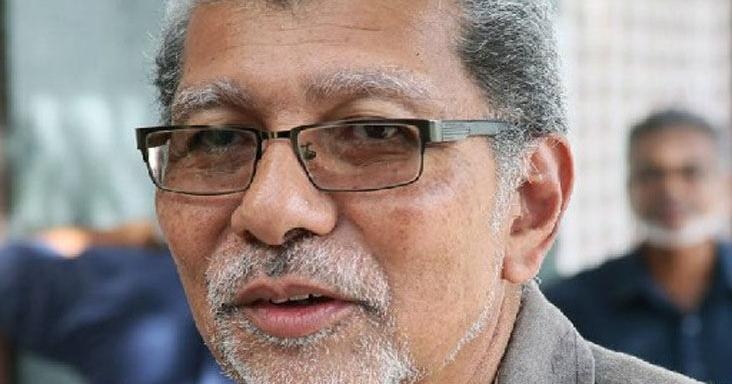
A top opposition political figure in Trinidad and Tobago has publicly criticized the Trinidad and Tobago Police Service (TTPS) over its disjointed, confusing rollout of information regarding arrest warrants for Kaia Sealy, arguing the botched communications strategy has further eroded already fragile public trust in the country’s law enforcement agency.
David Abdulah, political leader of the Movement for Social Justice, laid out his critique in comments delivered yesterday, breaking down how a fragmented 12-hour sequence of announcements left the public misinformed and uneasy. The timeline began with a Thursday morning press conference led by Police Commissioner Allister Guevarro, who confirmed that arrest warrants were forthcoming in a high-profile case but stopped short of naming any suspects or confirming that any arrests had already been carried out. At that stage, Abdulah noted, many members of the public held out hope that the warrants would target police officers implicated in the incident, a development many saw as a long-overdue step toward accountability.
That public optimism shifted dramatically by Thursday evening, when the TTPS issued a surprise follow-up release naming Sealy as the sole suspect, charging her with manslaughter, attempted shooting of police officers, and a slate of other criminal offenses. The abrupt, uneven reveal left many members of the public confused and unsettled, Abdulah said. “One moment people felt police officers may be charged, next moment the headlines were saying ‘shocking development,’” he explained, adding that the disjointed rollout “didn’t sit right” with many observers. He questioned why Commissioner Guevarro did not disclose Sealy’s name and the specific charges during the initial morning briefing, arguing the uncoordinated release raised serious red flags about internal communication protocols within the TTPS.
In the wake of the conflicting announcements, Abdulah said the TTPS now bears the full burden of proving its case against Sealy, noting that attorneys, criminologists, and social media users have all raised widespread questions about the charges. “The question now is on the police to be able to prove and provide proper evidence of what happened,” he stressed.
Abdulah tied the communication failure to deeper, long-standing issues of public distrust in the TTPS, pointing to two high-profile recent incidents that have shaken public confidence: last month’s theft of firearms from the San Fernando Municipal Police Station, and the fatal shooting of acting corporal Anuska Eversley at that same facility. He also argued that the Sealy case highlights ongoing concerns around police-involved civilian killings, specifically calling out the framing language used to describe these incidents. Phrases like “police-involved shootings,” he argued, intentionally skew public perception of events where officers kill unarmed civilians, softening the impact of the harm caused.
To address the gap in transparency, Abdulah renewed long-standing calls for the mandatory use of police body cameras during all confrontational interactions between officers and civilians. He argued that relying solely on officer testimony to investigate police-involved incidents is insufficient to maintain public trust. “We cannot rely simply on the words of police officers,” he said, adding that body camera footage would dramatically improve transparency and help rebuild public confidence in investigations into police shootings. He clarified that his call for greater transparency is not an indictment of all officers, noting that most serve honorably, but that systemic transparency is a non-negotiable requirement to reverse the ongoing collapse of public trust in the TTPS.
Abdulah also called for sweeping legislative reform of the country’s Police Complaints Authority (PCA), the independent body tasked with investigating police misconduct. Currently, he noted, the PCA lacks the legal authority to conduct independent forensic investigations into police-related incidents, as its investigators are not legally permitted to handle firearms, ammunition, or spent bullet casings as part of their work. This leaves the PCA entirely dependent on the TTPS itself to turn over evidence in cases of alleged police misconduct, creating an inherent conflict of interest that undermines the body’s independence. To fix this structural flaw, Abdulah is calling for amendments to the PCA’s governing legislation that would grant the authority full power to conduct its own independent forensic examinations of evidence connected to police investigations. “We need to amend the Act related to the PCA to give the PCA the power to do its own independent forensic investigation,” he said.