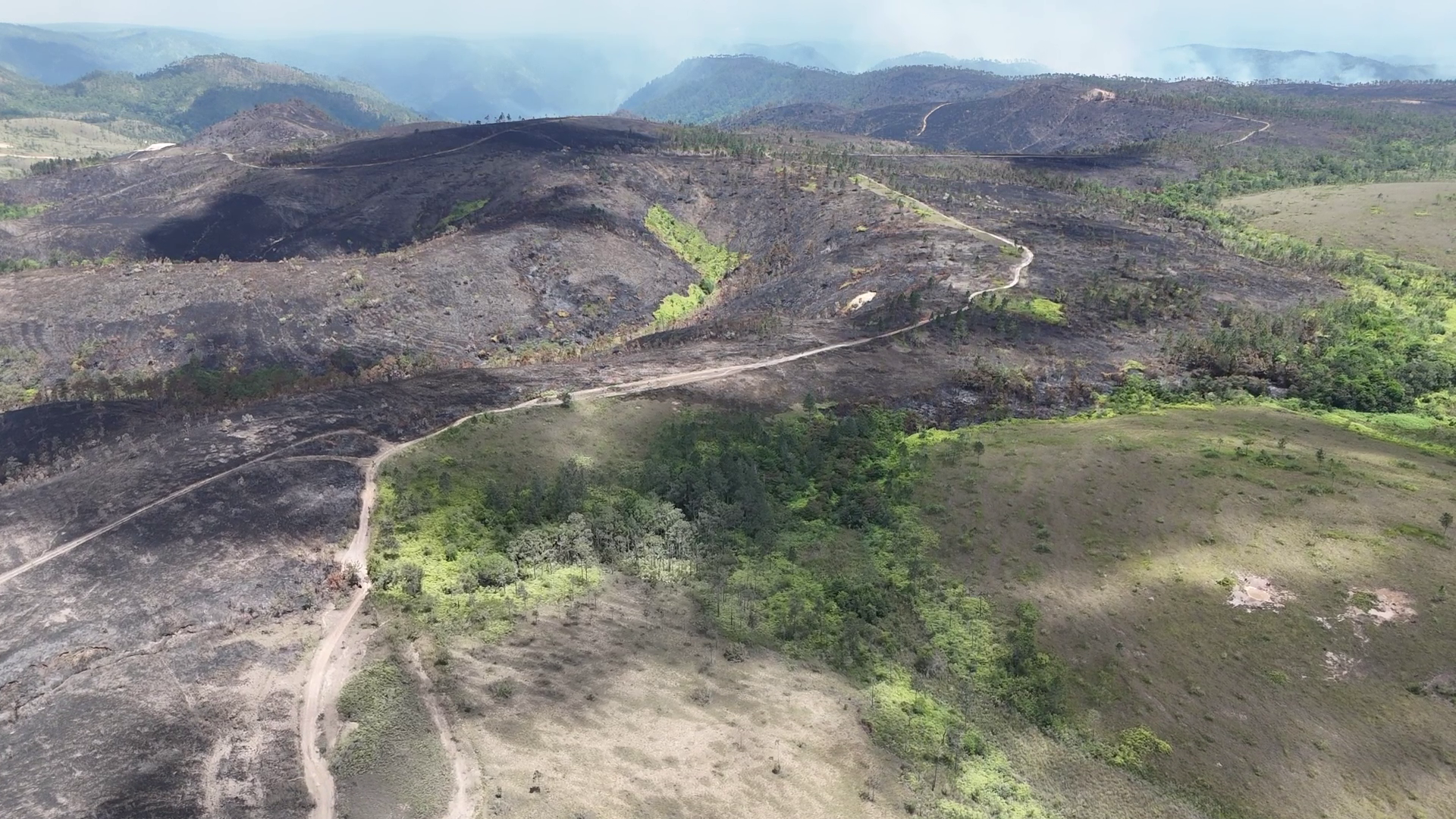
Nearly a week after an out-of-control wildfire ignited in one of Belize’s most treasured protected ecosystems, public outrage is growing over lapses in security protocols and the rapidly expanding damage to ecologically critical land. As of May 22, 2026, the blaze, which has already scorched hundreds of acres of forest at Baldy Beacon in the Mountain Pine Ridge Reserve, remains active, though officials report it has not yet crossed Roaring Creek, with cooler overnight temperatures expected to help contain the flames this evening.
The fire, which has already left irreversible scars on the iconic Bald Hills landscape, was started accidentally by military training exercises involving explosives, a fact Belize’s Ministry of Defense has now officially acknowledged – a shift from its previous refusal to accept blame for similar blazes in the region. The conflict over responsibility has pitted former government minister and local landowner Elvin Penner against defense officials, after Penner stepped forward to sound the alarm over what he calls reckless mismanagement that allowed the fire to spread unchecked.
Penner, a controversial figure who has returned to the public spotlight to push for accountability, told reporters that the Ministry of Defense failed to implement basic safety measures ahead of the explosive training that sparked the fire. Ministry CEO Francis Usher defended the department’s actions, stating that the training area is a designated military zone with strict security protocols to restrict civilian access and prevent unnecessary risk. Usher added that the military has deployed substantial resources to contain the blaze and avoid further destruction of private and public property, noting that while the department accepts accountability, some factors surrounding the fire’s spread were outside of its control.
But a firsthand on-site inspection by News Five reporter Shane Williams directly contradicted the Ministry’s claims of proper safety barriers. Williams was able to drive within a few hundred yards of the detonation site without encountering any secured blockades; the only obstruction to entry was a fallen tree trunk along the road, and the only warning marker was a small, unnoticeable red rag tied to a tree. The only public notice posted at the entrance to the access road restricts entry solely to logging operations and unauthorized military vehicles, with no mention of active training or fire risk.
Penner, who owns 10 acres of scorched land in the affected area, said that he has spent a decade cultivating pine trees on his property and intends to file a damage claim against the government. He added that during past joint military training exercises with British forces, the area was always properly barricaded, marked with clear warning signs, and patrolled by personnel to keep civilians out. When the military withdrew from the area years ago, much of the land was transferred to private owners, but the Ministry of Defense returned to resume training without updating its safety protocols to account for the new private land holdings.
Conservation groups, including Friends for Development, which maintains a former British military base in the area for conservation work, are now leading efforts to protect the remaining intact forest. Ecologists and local residents warn that the fire carries far-reaching risks beyond the immediate reserve damage: Baldy Beacon Valley feeds directly into the Macal River, which connects to the Belize River – the main source of drinking and irrigation water for more than half of Belize’s population. Ash, sediment, and toxins from the burned vegetation could contaminate the watershed for months to come if the fire is not fully contained quickly.
As cooler weather is forecast to aid containment efforts, the core debate over accountability for the damage and future regulation of military training in protected ecological zones remains unresolved.