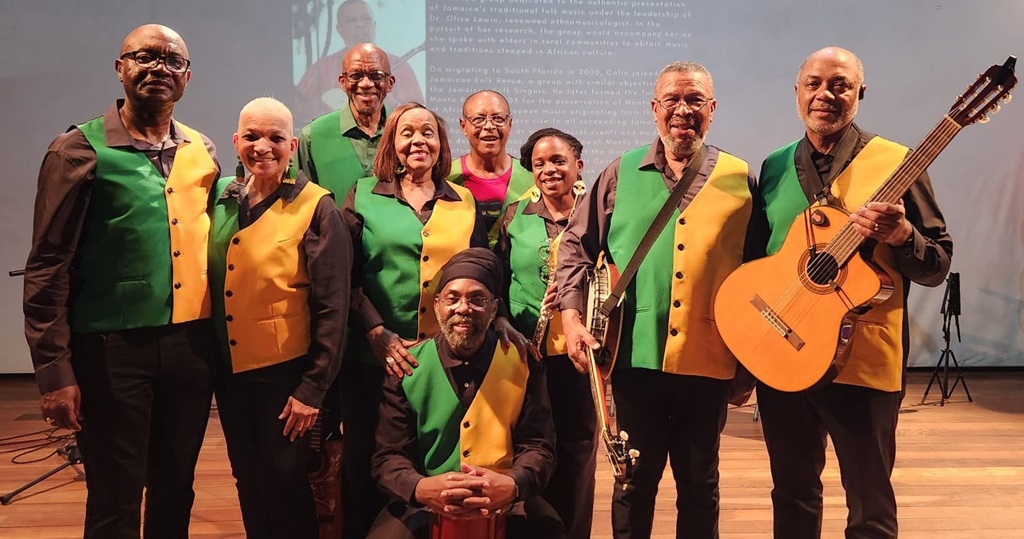
Against the backdrop of Limon, Costa Rica’s annual Marcus Garvey Symposium, one cultural presentation resonated more deeply than most: a dynamic exploration of the hidden coded messaging woven into traditional Jamaican folk and mento music by the Tallawah Mento Band, a group rooted in South Florida’s vibrant Jamaican diaspora. For 30 engaging minutes, founding band member Colin Smith blended interactive discussion with live performance to pull back the curtain on a little-known layer of Caribbean musical history, revealing how the genres’ upbeat, infectious rhythms long served as a clever shield for sharp critique of the brutal plantation system that shaped Jamaican life.
Smith emphasized that the lyrics of these songs, written in the Jamaican dialect that many cultural stewards and educators now argue deserves classification as a distinct national language rather than “broken English”, carried unapologetic mockery of white planter elites, hidden in plain sight from the ruling class that controlled every aspect of enslaved and post-emancipation Black life. “These musical artforms simultaneously lightened the unbearable challenges of slavery and harnessed collective resilience,” Smith explained to the audience. “They served as a living storybook of our survival, spreading news of plantation activities and developments that doubled as an entertainment and information network, all while evading detection and comprehension by the planter class.”
The performance was elevated by a guest appearance from acclaimed dub poet Malachi Smith, who joined the band to guide the transfixed audience through a journey tracing the music’s origins all the way back to the transatlantic slave trade. Choral refrains echoed the wails of endurance and collective resistance that marked the middle passage, before evolving to reflect the dehumanizing reality of forced labor on Caribbean sugarcane plantations and the gradual formation of modern Jamaican cultural identity. The band’s repertoire spanned more than a century of Jamaican musical evolution, moving from traditional folk and mento to early ska and sacred Nyabinghi drumming. Standout pieces included the traditional standards Ribba to De Bank, Dis Long Time Gal, and Rum and Coconut Water, the band’s original composition Sweet Jamaica, and two of Marcus Garvey’s own poems set to music for the first time at the symposium: Keep Cool and Africa for the Africans.
Beyond their role as vehicles of resistance, the presentation also highlighted the practical cultural functions of folk and mento as call-and-response field worksongs. Many of these tracks were structured to force brief moments of rest during grueling, 12+ hour work days, while others were adapted for communal labor projects — such as the traditional practice of pulling entire wooden houses from one settlement to another, a custom once common in Jamaica’s Westmoreland parish.
Following the symposium, the band traveled to Wallaba in Puerto Viejo, a coastal community known locally as Old Harbour for its large population of Jamaican diaspora members, for a public concert that proved far more emotionally resonant than anyone expected. “It was incredibly festive,” Smith recalled. “The entire audience got up to dance, and there was this immediate, unbreakable connection across generations. One of our band members even discovered long-lost family members living in the community. It felt exactly like being in Jamaica in the 1920s and 30s — the local cuisine was just what your grandmother would cook, a full traditional spread. It was a classic old-school Jamaican gathering, and you could feel the same longing for connection to ancestral roots that many of us feel when we talk about returning to Africa.”
Smith also noted that the event held particular weight in Costa Rica, where national hero Marcus Garvey holds a revered place in local labor history. Garvey was a central organizing figure in the movement to unionize Costa Rica’s plantation workers, and was ultimately expelled from the country amid elite pushback against growing labor unrest. The expulsion sparked mass public outcry and a general strike that forced the government to reverse its decision, and a public holiday was declared in Wallaba to mark Garvey’s return. For the band, the entire symposium and tour boiled down to one simple, unifying truth: “The tour, the symposium was simply about us all being home,” Smith said.