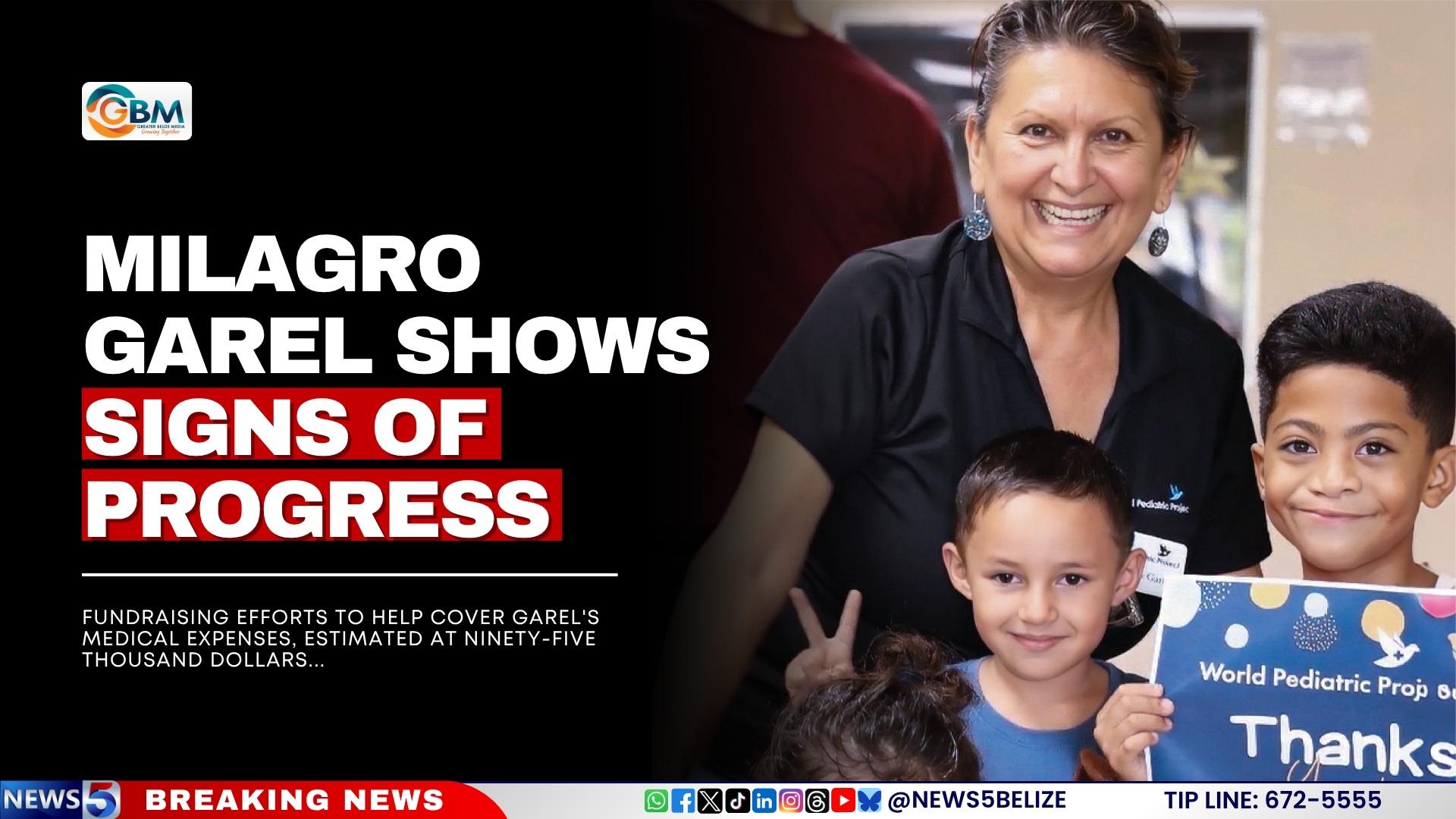
More than two weeks after experiencing a life-threatening ruptured cerebral aneurysm, Milagro Garel, the long-serving Country Director of the World Pediatric Project in Belize, has recorded small but promising steps forward in her recovery, according to regular updates shared by her husband Joe Garel with the network of family, friends, and supporters following her journey.
Garel, who has spent two decades working to expand access to pediatric healthcare across Belize, suffered the aneurysm two weeks before the latest update. After being initially stabilized at a local medical facility, she was airlifted to a specialized hospital in Guatemala to undergo high-risk emergency surgery in early August. Since the procedure, Joe has shared nightly public updates tracking her gradual emergence from unconsciousness, giving the community that Garel has spent years serving a transparent look into her recovery.
In an August 9 update, Joe shared that the day had brought limited visible improvement, despite the family’s best efforts to stimulate Garel within the ICU’s strict visiting guidelines. The facility allows 15 minutes of visitation per hour during two daily windows, and the family attended all seven permitted visits that day, speaking to Garel, playing her favorite music, sharing pre-recorded voice notes from loved ones, and holding and massaging her hands and feet. Though all of her vital signs remained stable and she continued breathing on her own independently, there was no observable movement — a outcome Joe described as disappointing, but added that the family would return the next day to keep trying.
The very next day brought a long-awaited turning point in her recovery. In his August 10 update, Joe noted small but meaningful new responses: subtle movements, yawns, squinting, shoulder shrugs, and small head movements. The most significant milestone came that afternoon, when Garel partially opened her right eye and managed a very weak blink in response to a request from her family.
Clinicians decided to keep Garel connected to a ventilator for additional time even though she could breathe on her own, choosing to wait until she had built enough strength to sustain unassisted breathing long-term. A recent CT scan revealed 80 percent of the blood from the aneurysm rupture had already cleared from her brain, and the family awaited results from an EEG and Doppler scan to screen for dangerous vasospasms.
By August 12, another major medical milestone was reached. Doctors observed that Garel’s daily output of cerebrospinal fluid had decreased significantly, allowing them to seal her external drainage tube and monitor for intracranial pressure buildup. If this step is successful, it could eliminate the need for a permanent VP shunt procedure entirely, a major positive development. That same evening, Joe shared that Garel showed noticeably increased alertness: she partially opened her right eye, moved her gaze side to side as if surveying her surroundings, and turned her head slightly toward the sound of her family’s voices. This marked the longest stretch of consistent alertness Garel had achieved since the surgery began.
A treating neurologist explained that EEG results showed slow but stable brain activity with no signs of seizures. The doctor attributed Garel’s gradual awakening to temporary lesions visible on her CT scan, which are expected to heal completely over the next 10 to 15 days. The medical team has also already begun gentle preventive physiotherapy to reduce the risk of common ICU complications including bedsores and deep vein thrombosis, which includes the use of a specialized pressure relief mattress, compression socks, and inflatable compression boots.
The most recent public update, dated August 13, brought even more encouraging news. Joe shared that Garel appeared to track her family members with her gaze and respond to their voices for an extended period, the longest stretch of consistent interaction recorded to date. “As we walked into the ICU for the first visit this morning I noticed her eye was open. We went in and spoke to her and you could tell she was trying to track us. Whenever we were out of her line of sight she would slowly move her head toward the direction of our voice, moving her mouth a bit, and more shoulder shrugging. This continued for the entire duration of the visit and has been the most time she’s been alert so we are grateful to have gotten that interaction to start the day,” he wrote.
Clinicians also conducted a 30-minute trial of unassisted breathing by removing the ventilator to test Garel’s readiness for full extubation. She successfully sustained independent breathing throughout the trial, and doctors scheduled a second trial for the following day to confirm she is strong enough for full removal of the breathing tube. If successful, this will allow her to avoid a tracheotomy, an invasive procedure that carries additional recovery risks. Medical teams also plan to insert a gastrostomy tube to ensure Garel receives adequate nutrition as she continues to heal. A CT scan conducted the morning of August 13 showed no signs of dangerous brain swelling, a key positive sign that clinicians will confirm with a follow-up scan. If results remain stable, Garel could have her remaining drainage tube removed entirely as early as next week.
“All in all she is on the right path, getting stronger and getting all these tubes and such removed. Slowly but surely we are seeing progress. Thanks for being here with us as we inch forward toward recovery,” Joe wrote in his closing update.
As Garel’s recovery continues, community fundraising efforts are underway to cover her mounting medical expenses, which are estimated to total $140,000 U.S. dollars. Supporters can contribute through a public GoFundMe campaign, send direct donations to the Garel family, or attend an upcoming community fundraiser called “Movements for Milagro,” a dance event scheduled for August 16 at the Bliss Centre.