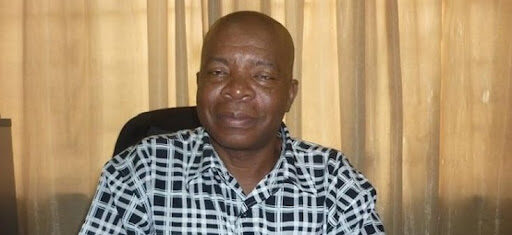
In a stirring address to union delegates gathered at the Dominica Public Service Union (DPSU) headquarters in Roseau this week, General Secretary Thomas Letang has issued a urgent call to rank-and-file members: shift from passive reaction to proactive participation to protect hard-won worker protections. His remarks headlined the 13th iteration of the union’s biennial delegates convention, a landmark gathering that brings together grassroots members, union leadership, and cross-sector representatives to map the organization’s strategic course for the next two years. This year’s convening, which drew nearly 100 delegates, centered its discussions around the unifying theme: “Investing In Ourselves, Organising For Workers’ Rights And Benefits.”
Beyond setting strategic priorities, the convention serves multiple critical purposes for the DPSU: it allows delegates to review past progress, hash out new initiatives focused on advancing worker rights and benefits, explore paths for organizational growth and member self-development, and strengthen the union’s collective voice in advocating for public service employees across Dominica.
In his keynote address, Letang pushed back against a culture of dependency that he says has weakened the union’s impact. He argued that the idea that successful advocacy relies solely on the work of the union’s executive committee is a dangerous misconception that must be rooted out entirely. “It is only after ridding oneself of mental slavery that a worker will be able to yield to the call to be organized so that collectively we can strive to preserve hard, thoughtful workers’ rights and benefits,” Letang told delegates.
The DPSU leader emphasized that broad, collective participation is non-negotiable for the union to deliver meaningful gains for its members. He called out what he described as a growing culture of passivity among many current members, and criticized non-members who benefit from the union’s work without contributing to its efforts, labeling these free-riders “parasites.”
“There are just too many passive, inactive, and non-members, the latter, which I refer to, or I would prefer to refer to as parasites, who are not contributing as they should in ensuring that there are positive outcomes emanating from the union’s effort,” Letang said. “Let us, for a change, be more active than reactive. Let us face the many challenges confronting us head-on.”