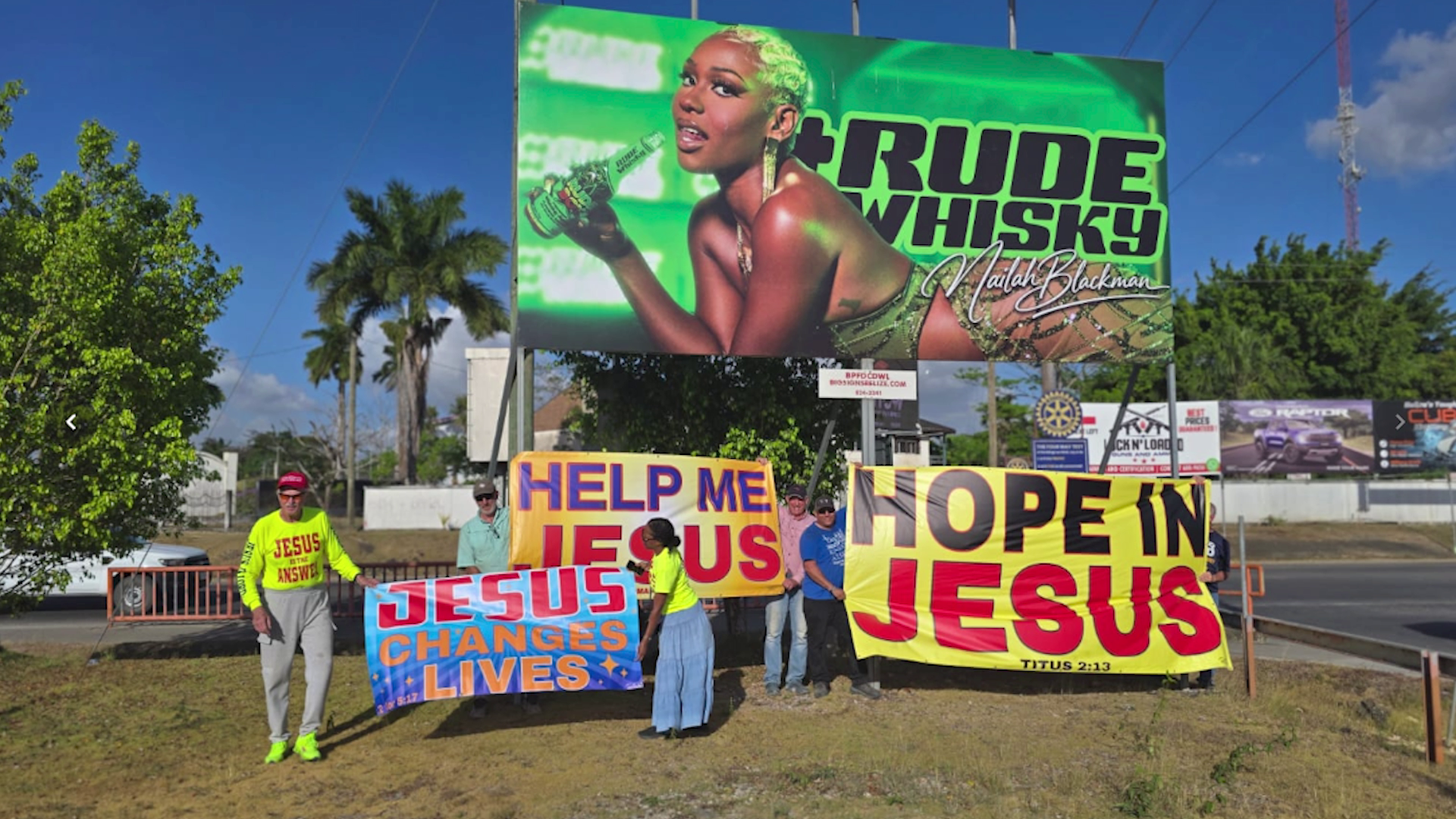
In the Belizean capital of Belmopan, a public controversy that ignited on social media over an alcohol billboard deemed sexually suggestive has escalated into a formal, organized advocacy campaign demanding its immediate removal, pitting community moral standards against commercial expression and putting local city leadership in the political spotlight. As of May 19, 2026, a coalition of 20 religious leaders from Belmopan and its neighboring communities has submitted an official petition to Mayor Pablo Cawich, pressuring the municipal government to take swift action against the advertising display that the clerics argue violates widely accepted public decency norms and has sparked widespread public anger. Campaign organizers have publicly stated they expect the mayor, who is facing growing public and political pressure, will comply with the demand to authorize the billboard’s removal.
Leading the coalition is Church Senator Louis Wade, who laid out the group’s legal and ethical argument for municipal intervention in an on-the-record interview. Wade explained that the formal petition, signed by religious leaders across the capital region, was crafted to remind Mayor Cawich of his core obligations to the city’s residents, including his public duty to uphold community standards in shared public spaces. “At present moment the letter to the Mayor of Belmopan is almost finished formulated. It will be signed by pastors across the city and surrounding communities, reminding the mayor of his responsibility and his fiduciary responsibility to the residents of Belmopan,” Wade said. “It is a public space. There has been a public outcry. It appears that the mayor does not know the law. The criminal code speaks specifically to indecent exposure of photographs, pictures or so on in public space. And so we want to do the right thing first. And so that’s the process we are taking.”
Addressing counterarguments that frame the billboard as a protected exercise of free expression, Wade pushed back on the claim by noting context specific to Belize’s legal framework. While Belize recognizes freedom of expression, Wade argued that the widespread public opposition to the display outweighs the advertiser’s right to place the content in a shared public space. Responding to the framing of the demand as a restriction of free speech, he noted: “We don’t have such [First] amendment in Belize, but we have freedom of expression in Belize. The freedom of expression that trumps the billboard is the freedom of expression of the residents who say they do not want the billboard.”
Wade also emphasized that the scale of public backlash itself serves as proof of the content’s indecency, noting that public anger over the billboard has spread across the entire country, covered by every major media outlet and spawning thousands of social media posts discussing the controversy. “The outcry is so loud that it has gone around the country. Every media house has touched it, thousands of posts on the issue and that alone, the public outcry, demonstrates the fact that it is indecent because if it was decent, there would not be a public outcry,” Wade said. “So there is already enough for the mayor of Belmopan to act. You have people that are writing ‘RIP’ all over the place but don’t connect the deaths to the moral and ethical issues, and it’s the job of the church to bring that out whether people are comfortable with what we have to say or not.”
Interestingly, a nearly identical alcohol billboard has been installed along Central American Boulevard in Belize City, the country’s former capital, but as of the date of this report, no formal public complaints or organized opposition to that display have emerged. This report is adapted from a transcript of an evening television news broadcast, with all original quoted content preserved for accuracy and context.