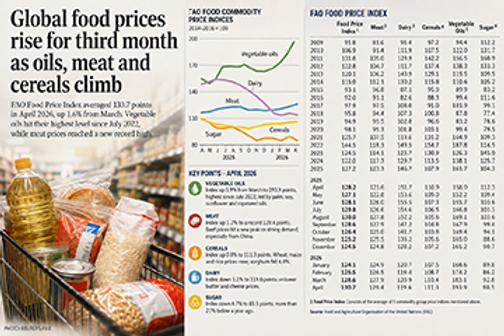
After two straight months of gains, global food prices continued their upward climb in April 2026, according to the closely monitored Food Price Index published by the United Nations Food and Agriculture Organization (FAO). The monthly benchmark, which tracks price shifts for the world’s five major traded food commodity groups, hit an average of 130.7 points last month. That marks a 1.6% increase from March 2026 and a 2% rise compared to the same period one year earlier. While the sustained upward movement has raised concerns about new food inflation pressures, the current index still sits 18.4% below the all-time record set in March 2022, when the Russia-Ukraine war sent global food markets into unprecedented volatility.
The April uptick was led by a sharp surge in vegetable oil prices, which jumped 5.9% month-over-month to hit their highest level since July 2022. Growing demand from the global biofuel sector has been the primary catalyst for the rally: palm oil prices have now risen for five straight months, fueled by both rising biofuel adoption and market jitters over shrinking production outputs across major Southeast Asian producing nations. Prices for soy oil and rapeseed oil also trended upward in April, as biofuel production ramped up in the United States and European Union, boosting competing demand for the agricultural commodities.
Following vegetable oils, the meat category recorded the next largest gain, with the FAO Meat Price Index climbing to a new all-time high in April. Beef prices led the increase, driven by tight cattle supplies in top exporter Brazil and sustained strong international demand, particularly from key importer China. Both poultry and pork prices also moved higher, as ongoing supply chain disruptions and shipping bottlenecks in multiple producing regions kept markets tight.
Cereal prices posted a more modest 0.8% increase in April, with individual sub-sectors facing their own unique supply-side pressures. Wheat prices rose on the back of ongoing drought concerns across major growing regions of the U.S. and forecasts for below-average rainfall in Australia, another top global exporter. Elevated costs for fertilizers and energy have also led market analysts to anticipate that many farmers may scale back wheat planting in upcoming seasons, adding upward support to prices. Maize prices also climbed, as unfavorable weather outlooks have dampened production projections in Brazil and the U.S. Rice prices increased by 1.9% during the month, as higher energy prices pushed up both transportation and production costs for major exporting nations.
In contrast to the upward trend across most commodity groups, two categories moved lower in April. The FAO Sugar Price Index fell 4.7% month-over-month, sitting more than 21% below its level from April 2025. The decline stems from widespread expectations of larger global sugar supplies this season, with increased production projected in top producing nations including Brazil, China, and Thailand. Dairy prices also dipped, dropping 1.1% overall, driven by lower prices for butter and cheese as milk supplies expand across major exporting regions in Europe and Oceania.
For small Central American nation Belize, the latest shifts in global food markets carry mixed economic consequences. As a country that relies heavily on imports for wheat-based products, cooking oils, and many core food commodities, the country is directly exposed to rising international cereal and vegetable oil prices. Higher global costs will likely translate to increased import expenses, upward pressure on domestic food prices, and higher input costs for local livestock producers and food processors.
At the same time, the ongoing slide in global sugar prices creates fresh challenges for Belize’s domestic sugar industry, which has already been struggling with weak international pricing and shrinking profit margins. The 4.7% April drop in global sugar prices adds further downward pressure on the sector’s revenue and profitability.
As a leading benchmark for global food commodity markets, the FAO Food Price Index is tracked closely by policymakers, economic analysts, agribusiness leaders, and food producers around the world. It measures monthly price changes for a weighted basket of the most widely traded food commodities, covering cereals, vegetable oils, meat, dairy, and sugar.