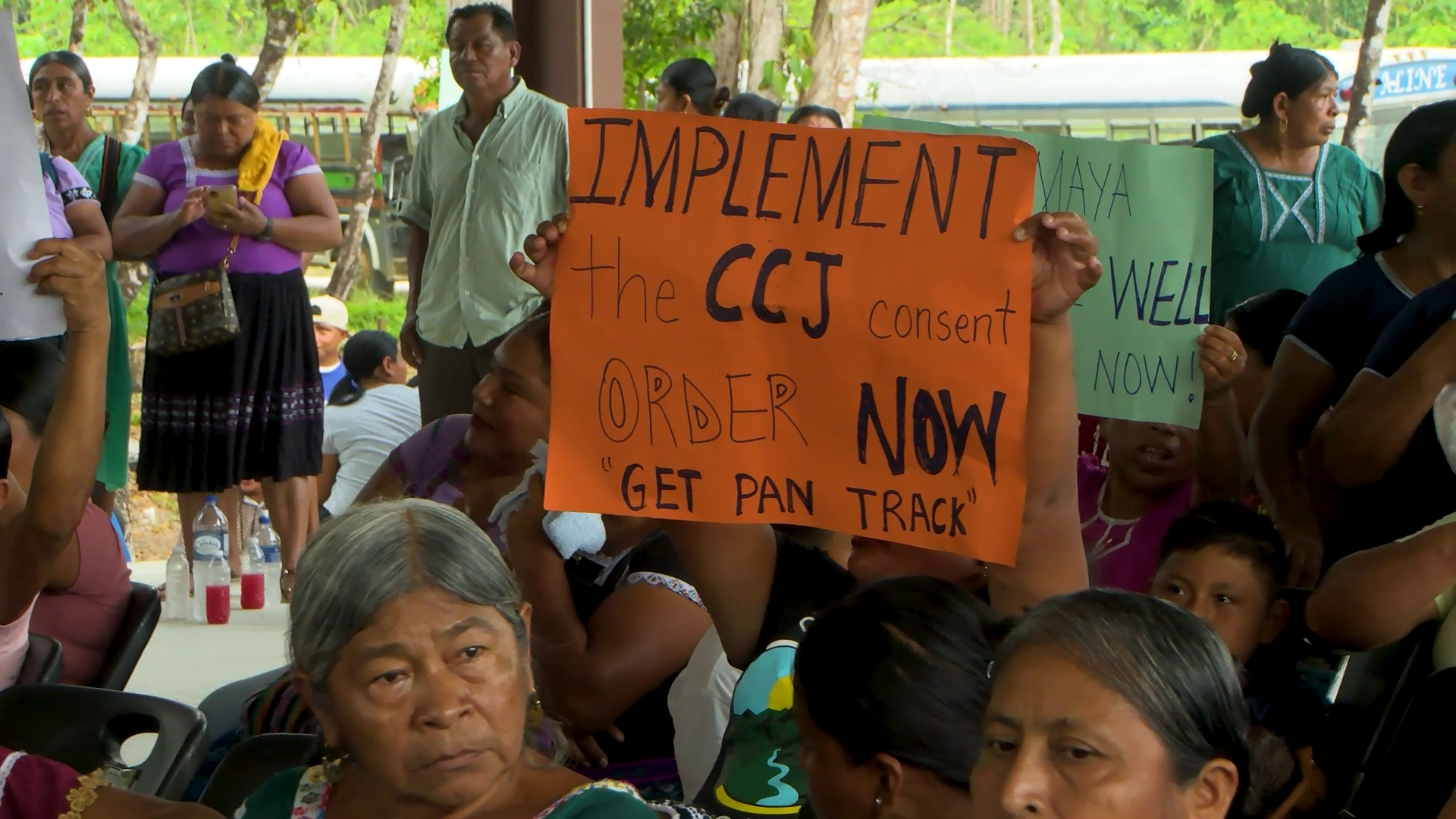
It has now been more than a decade since the Caribbean Court of Justice (CCJ) delivered its landmark 2015 ruling recognizing collective land rights for the Maya people of Belize, yet the bitter, long-running conflict over land ownership, compensation for overlapping land claims and formal title resolution in southern Belize is still far from over.
The latest chapter of the dispute ignited when the Alcalde of the Indian Creek Maya community made national headlines by issuing new informal land certificates to community members. Government officials quickly moved to publicly discredit the documents, dismissing them as legally invalid. In the wake of the controversy, the Alcalde made a serious allegation: he had been kidnapped amid the escalating tensions over the land certificates.
Speaking on the current state of the conflict, Dr. Osmond Martinez, Belize’s Minister of Economic Transformation, has defended the administration of Prime Minister Johnny Briceño, asserting that the government has prioritized collaborative dialogue with Maya community leaders to build mutual trust and de-escalate long-running frictions. Martinez emphasized that trust-building is a non-negotiable foundation for any lasting resolution, noting that no legal or policy agreement can hold without genuine buy-in from all sides of the dispute.
Martinez outlined the two distinct, complex scenarios the government is working to untangle in the wake of the 2015 CCJ ruling. The first involves land titles granted to third-party private owners after 2015, which Martinez says were issued in violation of the court’s ruling. In these cases, Martinez confirms the government accepts its legal responsibility to provide compensation to resolve duplicate title claims. The second, far more complicated scenario involves titles granted to third parties decades before the 2015 ruling, a situation that requires careful negotiation to balance the rights of long-time land holders with the Maya communities’ court-recognized collective rights.
To demonstrate the government’s commitment to avoiding new conflict while a final resolution is negotiated, Martinez revealed that the Briceño administration has paused collection of property taxes from all parcels located within the mapped boundaries of Maya land rights areas, even as the title dispute remains unresolved. “Without that foundation of trust, no legal resolution will hold,” Martinez explained, adding that the current impasse also represents a historic opportunity to finally close a chapter of injustice that has stretched on for generations for Belize’s Maya community.
This report is adapted from a transcribed evening television news broadcast published online.