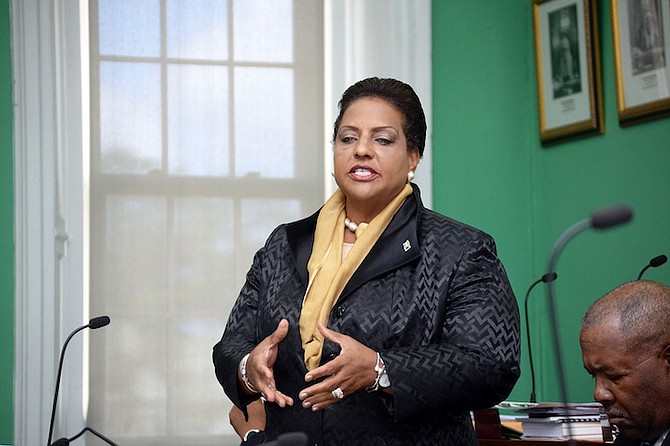
A historic milestone for gender parity in Bahamian politics has emerged after this week’s general election, with nine women securing seats in the 41-member House of Assembly — a result former opposition leader Loretta Butler-Turner calls an unprecedented leap forward for women’s participation in frontline governance.
Butler-Turner, a former Long Island Member of Parliament representing the Free National Movement (FNM), told local media the outcome signals the long-standing political glass ceiling blocking women from national office is far more permeable than it was in previous election cycles. While she emphasized that systemic barriers still place disproportionate pressure on female candidates compared to their male counterparts, she framed the 202? election results as a clear sign of shifting attitudes among Bahamian voters.
“The Bahamian people have spoken, and with more women at the legislative table than ever before, I’m optimistic we’re building a Parliament that better reflects the country it serves,” Butler-Turner said.
Of the nine women elected this cycle, seven represent the Progressive Liberal Party (PLP) and two are members of the FNM. The full list of newly elected female MPs includes Glenys Hanna-Martin for Englerston, Michela Barnett-Ellis for Killarney, Frazette Gibson for Central Grand Bahama, Leslia Miller-Brice for Sea Breeze, Lisa Rahming for Marathon, JoBeth Coleby-Davis for Elizabeth, Ginger Moxey for Pineridge, Patricia Deveaux for Bamboo Town, and Pia Glover-Rolle for Golden Gates. Combined, women will now hold roughly 22 percent of all seats in the House of Assembly, a marked improvement from the 2021 general election, when only seven PLP women won seats and no female FNM candidates claimed victory.
Butler-Turner noted that the progress achieved this election cycle is just the first step toward meaningful gender equity in Bahamian politics. The next critical challenge, she argued, is to retain newly elected women in public service and build on the current momentum to recruit and support more female candidates in future races. She added that while Bahamian voters are increasingly open to electing women, female candidates still face structural disadvantages that their male peers do not encounter.
“There’s more openness now, but women still have to work harder to be seen as viable political candidates,” Butler-Turner said. “That’s changing as more of us run and win.”
She identified three persistent core barriers for women in Bahamian politics: limited access to the substantial campaign funding required to compete competitively, competing personal responsibilities that leave many women with less time to dedicate to full-time campaigning, and the disproportionate public scrutiny female candidates face over their personal and professional lives. Even so, she stressed that growing numbers of women are overcoming these hurdles, and voter attitudes continue to evolve in favor of female leadership.
Butler-Turner also highlighted the strong campaign run by outgoing PLP Senator Robyn Lynes, who ran for the Killarney seat and ultimately lost to Barnett-Ellis. She praised Lynes’ ability to connect quickly with voters and build cross-partisan support for her policy platform, noting her performance demonstrated how strategic messaging and energetic campaigning can shift electoral dynamics even in the final stages of a race.
“She connected with voters quickly, and her message gained traction across the political spectrum,” Butler-Turner said. “It’s a good example of how a clear message and strong delivery can shift momentum, even late in a race. Her high-energy campaign and messaging was commendable.”