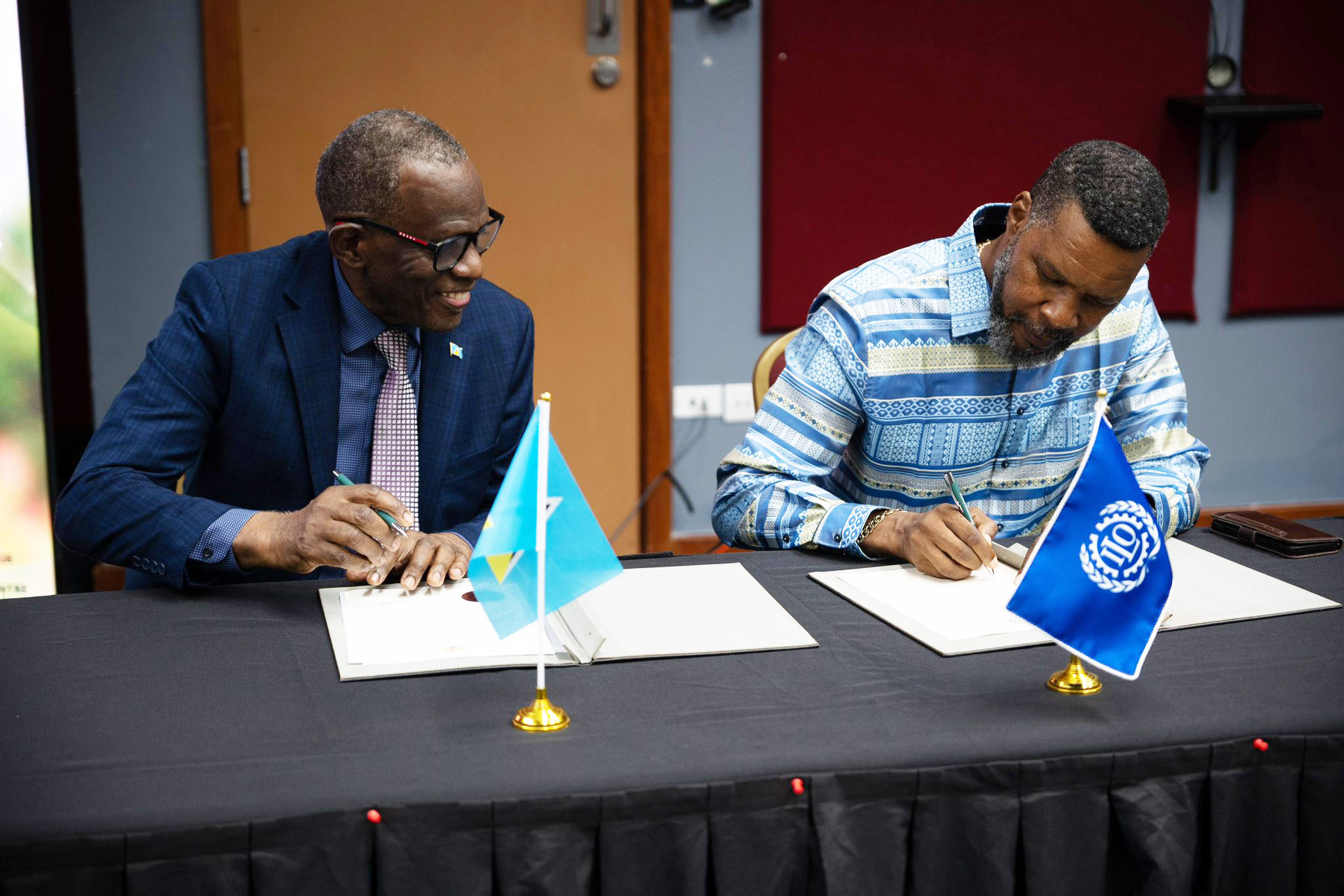
In a landmark move to reshape the island nation’s labour governance framework, the Government of Saint Lucia has formalized its commitment to inclusive industrial relations by ratifying International Labour Organisation (ILO) Convention No. 144. The historic signing, carried out by Prime Minister Philip J. Pierre on behalf of the administration on April 29, clears the path for the creation of a new National Tripartite Advisory Committee designed to strengthen collaborative dialogue between three core labour stakeholders: government bodies, organized workers, and business employers.
The newly established committee will draw representatives from three key groups: Saint Lucia’s Department of Labour, the Saint Lucia Trade Union Federation, and the Saint Lucia Employers Federation. Its core mandate is to create a structured, formal space for collaborative consultation on a full spectrum of labour issues and national workplace policy development. Key topics for discussion will range from wage setting and statutory working conditions to core labour rights, worker protection frameworks, and other pressing workplace-related matters that impact all segments of the national labour force.
For working people across Saint Lucia, the committee is projected to deliver a far more substantial, formal voice in national-level labour policy debates, ensuring that grassroots worker concerns are centered in decision-making. For employer groups, the new body provides an official platform to articulate industry challenges, share on-the-ground insights, and contribute directly to policies that support sustainable business expansion, enhanced national productivity, and expanded job creation across all sectors of the economy.
From the government’s perspective, the reform is expected to improve the quality of national labour policymaking by embedding regular, direct input from stakeholders who are most immediately affected by labour regulations and decisions.
ILO Convention No. 144 stands as a foundational international labour standard, with a core mission of advancing tripartite social dialogue between the three key stakeholder groups. The agreement calls on ratifying nations to maintain consistent, effective consultation processes on matters tied to international labour standards, broader social justice goals, and inclusive workplace development.
Senior government officials note that the signing of the convention underscores the Pierre administration’s long-stated priority of centered consultation and inclusive governance. Per an official government statement, the creation of the National Tripartite Advisory Committee marks a meaningful step forward in building a more collaborative national labour ecosystem, one that delivers balanced progress across worker protections, employer competitiveness, and national economic development objectives.