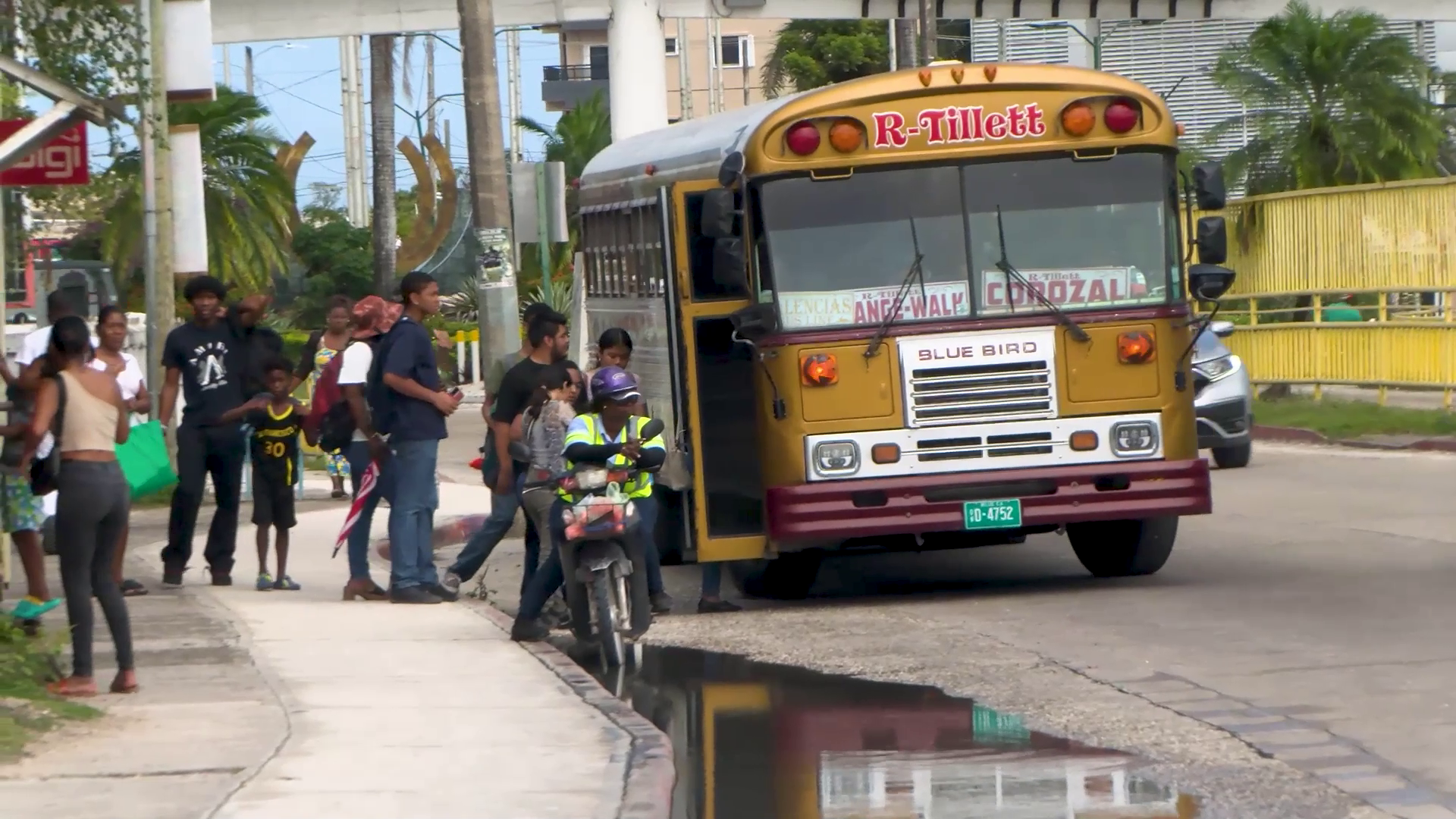
Weeks of tense negotiations that brought the threat of a full shutdown of public bus service across Belize have ended in a landmark agreement between national government officials and bus operators that will keep services running while adjusting fare structures to offset spiking fuel costs.
The breakthrough came out of a high-stakes meeting convened on the orders of Belize’s Cabinet, which was called to formally address the mounting concerns raised by the Belize Bus Association (BBA) and independent private bus operators, who had warned that ongoing volatility in global fuel prices threatened to push many operations into insolvency without fare adjustments.
Phillip Jones, president of the BBA, announced that the deal will create a standardized, aligned fare structure that replaces the uneven pricing that left some commuters overpaying for certain routes while other routes were priced unsustainably low for operators. Under the new framework, many routes will see reduced fares: some routes that previously cost between $5 and $6 will drop to $3 or $4, while longer routes that were priced at $7 will also see modest reductions. For other routes that were underpriced relative to operational costs, small fare increases will take effect, ranging from 25 cents to a maximum of $1.50. A standardized price for short trips within a 10-mile radius will also be implemented, adjusting the short-drop fare from the previous $2.50 to $3.
Jones emphasized that both negotiating sides prioritized minimizing the financial burden on regular daily commuters, taking into account ongoing global economic pressures tied to international geopolitical conflict that have driven up cost of living across the country. “It was a tedious process, with back and forth, but we kept the public’s need for affordable transportation at the center of every conversation,” Jones noted in remarks following the agreement.
Before the new fares can go into effect, the adjusted pricing structure must be formally gazetted and finalized by Belize’s Department of Transport, with final approval required from the Transport Minister. Currently, existing fares remain in place, and implementation will not begin until at least next week once the regulatory process is completed and an official start date is announced.
The deal eliminates the immediate threat of service disruptions that had left thousands of daily commuters uncertain about how they would travel to work, school, and essential appointments in the coming weeks.