Just days after the United States government made a historic shift in federal cannabis policy by reclassifying the substance from a heavily restricted Schedule I to a more lenient Schedule III controlled substance, Barbados’ top medicinal cannabis regulator is leveraging this global policy change to pressure local commercial banks to finally provide financial services to the island nation’s licensed legal cannabis operators. This long-running banking impasse has left the fledgling regulated industry locked out of basic financial services, even after the island legalized medicinal cannabis years ago.
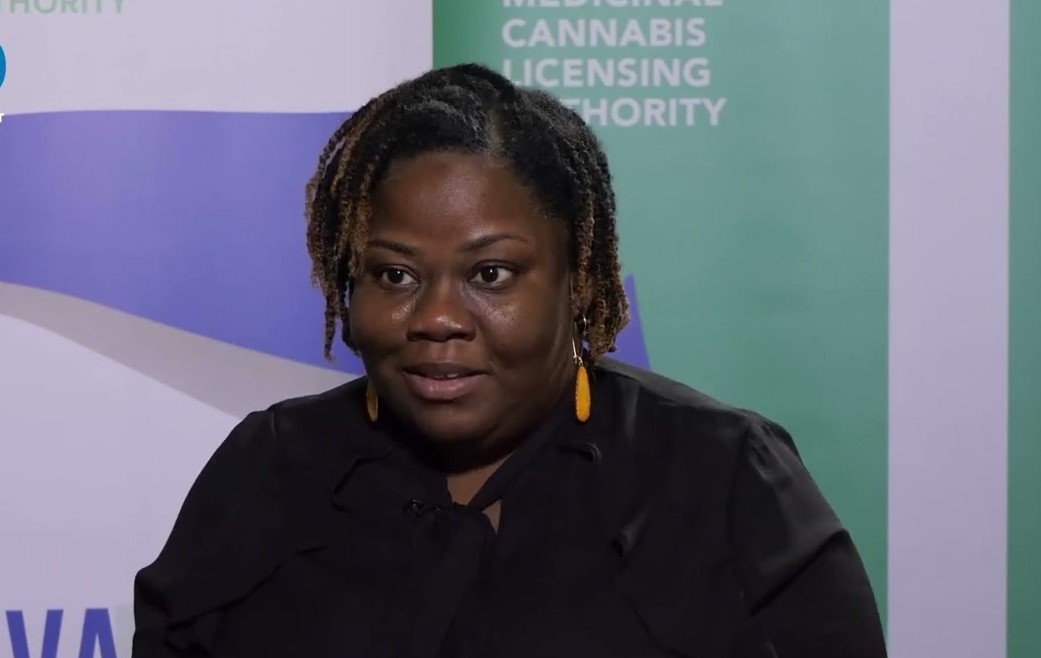
In an official statement released hours after the U.S. Department of Justice announced its rescheduling decision Thursday, Shanika Roberts-Odle, acting chief executive of the Barbados Medicinal Cannabis Licensing Authority (BMCLA), framed the U.S. move as a long-overdue validation of what Barbados’ Rastafarian community has argued for generations.
“This development represents a meaningful acknowledgment of what our Rastafarian brethren and many others have articulated for generations — that cannabis is a natural plant with significant medical and wellness potential,” Roberts-Odle said.
She noted that the U.S. policy shift is expected to resolve many of the persistent banking barriers that have hampered the legal cannabis industry across the United States, and she called on local Barbadian banks to use this global momentum to revisit their own blanket refusal to serve licensed local operators. Despite the policy shift abroad, Roberts-Odle acknowledged that the decision has not yet changed the official position of the Barbados Bankers’ Association, which has continued to bar accounts for cannabis companies.
“We implore the banking sector to take yet another look at this matter and to communicate with their correspondent banking partners toward the potential of allowing the banking of medicinal cannabis funds in Barbados,” she added.
The BMCLA chief said the regulator remains “cautiously optimistic” about the future growth of the local medicinal cannabis industry, as it continues to build out the sector aligned with evolving international standards, evidence-based regulation, and ongoing national stakeholder dialogue focused on advancing the public good. Currently, the BMCLA regulates just two fully licensed commercial medicinal cannabis facilities operating in Barbados: Island Therapeutics and Island Naturals. Roberts-Odle stressed that both operators operate in full compliance with the authority’s strict regulatory requirements.
She also issued a public reminder to Barbadians that while medicinal cannabis is legally available to patients with a valid doctor’s prescription dispensed through a licensed pharmacist per national law, recreational cannabis use and distribution remains fully illegal across the island.
Local financial institutions, however, maintain that their hands remain tied by the policies of their international correspondent banking partners, which handle cross-border transactions and have refused to create pathways for cannabis-related funds. While the BBA president Shimon McIntosh could not be reached for direct comment on the regulator’s new appeal, Steve Belle, chief executive of the City of Bridgetown Cooperative Credit Union (COB) — the island’s second largest credit union — explained why the local financial sector still cannot open accounts for licensed operators.
“We can’t; because, as it stands now, the situation is that our correspondent banks typically don’t have those systems in place to actually accept funds from medical marijuana. Until that is done, we can’t go and expose ourselves because we depend on correspondent banking relations,” Belle told local outlet Barbados TODAY.
The U.S. rescheduling has been broadly welcomed by Rastafarian leaders in Barbados, who have long campaigned for full recognition of cannabis’ cultural and medicinal role in their community. Ras Paul Simba Rock, a senior Rastafarian leader, president and founder of the African Heritage Foundation, and a key member of the National Rastafarian Registry and Trust, applauded the U.S. for acknowledging cannabis’ inherent medicinal properties, but argued that the classification distinction between recreational and medical cannabis is an artificial separation.
“I, personally, and I know the rest of the Rastafari community welcome the acknowledgment of the US, that we love to follow and look up to, to say that, within its raw state, it’s medicinal. There is no difference between medical cannabis and regular cannabis. All cannabis is medicinal. That is the trick that has been played on Barbados. The only difference is the regulation,” he said.
Rock added that the most valuable therapeutic properties of cannabis come from the whole plant, not processed cannabinoid extracts or modified forms of the substance created through scientific manipulation. He also noted that the general public of Barbados has long accepted and used cannabis for its natural medicinal benefits, long before formal legalization of the medicinal form.
To clarify the context of the U.S. policy change, Schedule III substances are defined as drugs with a lower potential for abuse than the more tightly restricted Schedule I and II categories, with officially accepted medical uses in the U.S. Abuse of Schedule III substances can lead to moderate low physical dependence or high psychological dependence. By contrast, Schedule I substances are categorized as having a high abuse potential, no accepted medical use in the U.S., and lack accepted safety for use under medical supervision. Under U.S. federal law, Schedule I substances cannot be legally prescribed or dispensed for medical use, and are restricted almost exclusively to approved research settings.