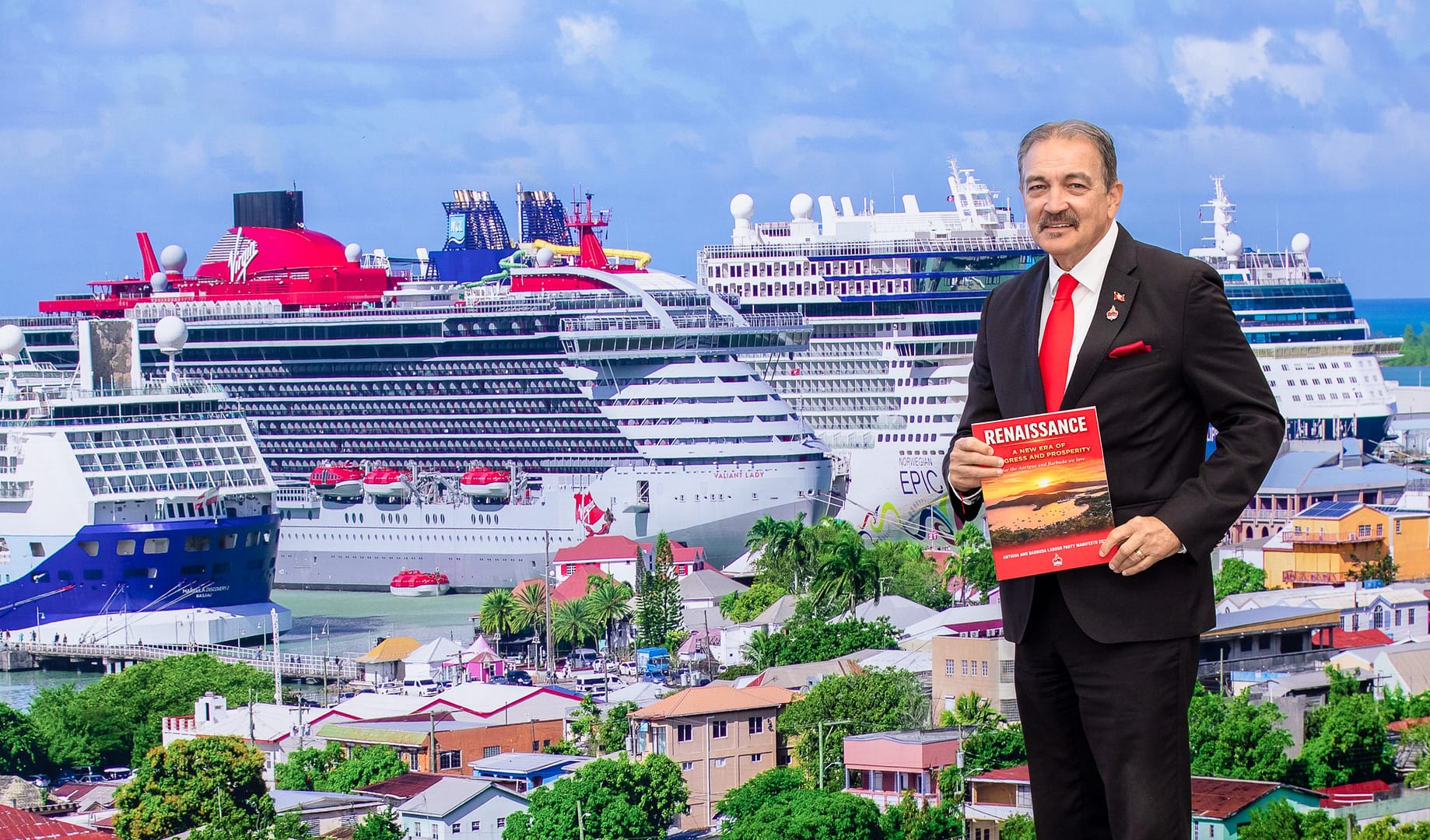
As the Caribbean nation of Antigua and Barbuda prepares for its upcoming general election on April 30, the country’s Tourism Minister Charles Fernandez has laid out an ambitious plan to reshape the nation’s core economic sector: tourism. In a public “Know Your Candidate” interview, Fernandez detailed a strategy that moves beyond the nation’s long-standing reliance on traditional source markets, with new outreach focused on high-growth regions across Africa, the Middle East and Latin America.
For decades, Antigua and Barbuda’s tourism industry has drawn the vast majority of its visitors from established markets including the United States, the United Kingdom and Canada. While these core markets will remain important, Fernandez says expanding into new regions is no longer optional in an increasingly competitive global travel landscape. “I think what we need to do now, and we have started it, is to look at other source markets apart from the US, UK, Canada,” he noted, pointing to advanced ongoing negotiations with one of the world’s leading air carriers.
The centerpiece of the new airlift strategy is a pending deal with Emirates Airline that would bring three weekly direct flights from Dubai to Antigua and Barbuda starting in 2027. Fernandez explained that this air link would unlock access to a large base of high-net-worth travelers across the Middle East, while also creating easier connections for visitors from African and South Asian markets. “There are a lot of very, very wealthy people in Africa, the Middle East, and so on, and Antigua has now positioned itself as a high-end destination,” he said.
The diversification push extends beyond tourism alone, with parallel plans to boost bilateral trade and economic ties with the new target regions. To support this dual goal of growing travel and commerce, the government has outlined major infrastructure upgrades for the nation’s main airport, including expanded cargo storage space and new temperature-controlled refrigeration facilities. These upgrades are designed to complement ongoing expansion work at the country’s commercial seaport, with the end goal of transforming Antigua and Barbuda into a comprehensive logistics and transportation hub for the entire Caribbean region.
“We’re now looking to build out a larger cargo area… all in making the airport, just as the port is being done, a hub for the Caribbean,” Fernandez explained. He emphasized that the broader diversification strategy is a critical step to insulate the national economy from sudden disruptions, noting that over-reliance on a small number of source markets leaves the tourism sector vulnerable to shocks such as economic downturns or public health emergencies in any single region.
Even with the push for new markets, Fernandez reaffirmed that the existing tourism ecosystem remains the primary engine of Antigua and Barbuda’s national economy. Today, the sector supports widespread employment across the country, with growth coming not just from large international hotel brands but also a fast-expanding network of locally owned short-term vacation rentals that keep more tourism revenue in local communities. By expanding into new high-yield markets while strengthening core infrastructure, the government aims to deliver long-term, stable growth that benefits all segments of the national economy.