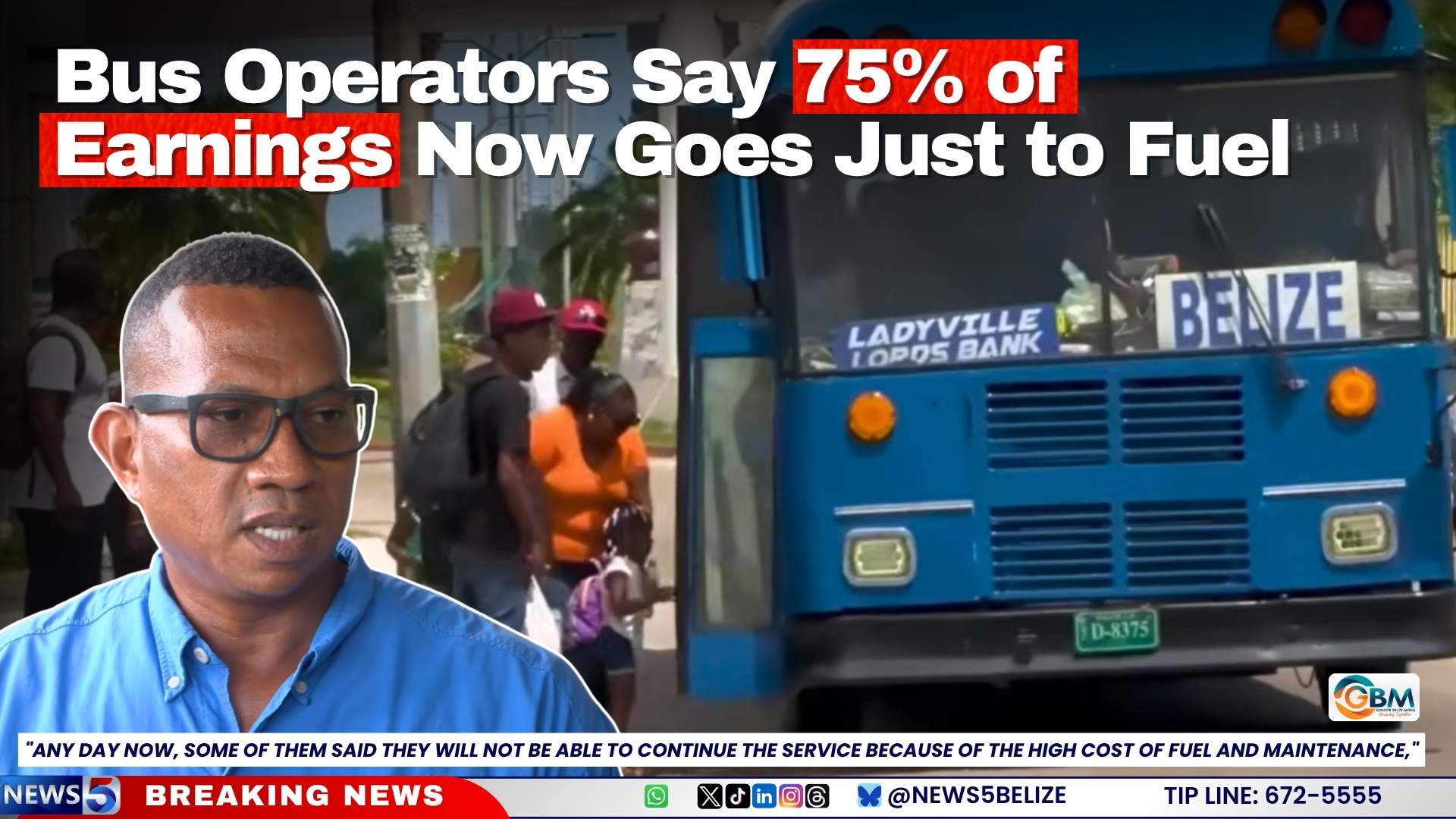
A looming public transportation crisis is set to upend daily travel for thousands of Belizeans, with independent bus operators announcing they could suspend all services within days if the national government fails to deliver urgent financial support. The warning, delivered by Philip Jones – president of the Belize Bus Association and a veteran city bus operator – paints a dire picture of an industry pushed to the breaking point by spiraling operational costs and institutional gridlock.
The crisis traces back to a decision from Belize’s Cabinet last Friday, when policymakers delayed acting on two critical demands from the association: a long-requested fare adjustment and a targeted fuel subsidy to offset global price spikes. Jones describes the financial pressure facing association members as “colossal”, a burden that has already made daily route operations unsustainable for dozens of small operators.
Global market volatility driven by ongoing Middle East conflict has sent fuel prices surging across Belize, eating into operator revenues at an unprecedented rate. Jones confirmed that 75% of the average operator’s daily earnings now go exclusively to covering fuel costs – leaving almost no disposable income for mandatory vehicle maintenance, employee wages, or even earnings for the business owners themselves. “Many days we don’t get a salary as owners,” Jones explained, highlighting the cascading impact of rising energy costs across small transportation businesses.
Tensions have also spilled over into long-simmering friction between independent operators and the state-linked National Bus Company (NBC). Jones reports that association members have lost faith in the Minister of Transport to advance their interests, accusing the minister of withholding support to pressure independent operators into aligning with the state-run NBC. The operators have already raised allegations of anti-competitive practices by NBC, including so-called “sniper runs” where state-owned buses cut off independently scheduled routes to pick up passengers first, further eroding already thin profit margins for small businesses.
In a push to break the current deadlock, Jones has begun drafting a formal letter requesting a direct meeting with Prime Minister John Briceño to address the crisis. The association is also renewing a long-standing demand for a representative seat on the national transport board – a position the group has been denied since Jones first formally requested the representation in writing back in September 2025. Without immediate intervention from the prime minister, Jones warns, commuters across the country who rely on independent bus service for work, school, and essential travel could be left stranded without notice.