标签: Trinidad and Tobago

特立尼达和多巴哥

  • St James Children’s Carnival committee appeals for funds

    St James Children’s Carnival committee appeals for funds

    The highly anticipated 36th edition of the St James Children’s Carnival, scheduled for February 8, faces significant financial challenges that threaten its continuation. This beloved junior masquerade parade, which draws hundreds of young participants and thousands of spectators along Western Main Road, St James, requires urgent sponsorship to proceed.

    Organized jointly by the St James Community Improvement Committee and the St James Children’s Carnival Committee, the event has historically relied on funding from the National Carnival Commission’s Regional Carnival Committee with additional support from local businesses. Despite persistent financial obstacles, organizers are working diligently to preserve this cultural tradition.

    This year’s celebration, themed ‘Colour Wee Carnival,’ features multiple competitive categories including King & Queen of the Bands, Band of the Year in various size divisions, Male & Female Individual of the Year, Best Use of Local Materials, Best Traditional Mas, and the special Yvonne Mungal Challenge Trophy open category.

    Registration opened on January 12 at 16 Ranjit Kumar Street, St James, with additional forms available at TTCBA’s secretariat in Queen’s Park Savannah and Crosby’s on Western Main Road. The registration deadline is February 2, with no late entries permitted.

    The event’s historical significance was highlighted by former NCC chairman Winston Peters, who in 2020 emphasized that the carnival provides children with “an extra day to jump, exhibit, palance and ramajay.” Former NCC CEO Colin Lucas further noted that children’s carnival ensures the cultural tradition continues “from one generation to another.”

    The St James Children’s Carnival has grown to become an integral component of Trinidad and Tobago’s Carnival celebrations, now rivaling adult events in both costume artistry and attendance. With over 50 registered bands and 200+ individual participants, the event serves as both cultural preservation and community building opportunity, bringing together families, friends, and visitors for a day of creative expression and celebration.

  • Trinidad and Tobago Newsday – Sunday January 11th 2026

    Trinidad and Tobago Newsday – Sunday January 11th 2026

    The global dietary supplement industry, valued at over $150 billion, is facing renewed scrutiny over regulatory oversight and consumer safety. Unlike pharmaceutical drugs, which undergo rigorous FDA testing for efficacy and safety before market release, supplements operate under the 1994 Dietary Supplement Health and Education Act (DSHEA). This legislation places the burden of proof on the FDA to demonstrate a product is unsafe after it has already reached consumers, fundamentally reversing the traditional drug approval process.

    This regulatory framework has created a market where new ingredients can be introduced without mandatory pre-market safety evaluations. While manufacturers are prohibited from making specific disease treatment claims, they frequently utilize structure/function claims that describe how a product may affect the body’s structure or functioning. The absence of stringent manufacturing standards has also led to issues with product purity, ingredient accuracy, and potential contamination.

    Healthcare professionals increasingly warn consumers to exercise critical judgment when selecting supplements. They recommend verifying products through third-party testing organizations like USP (United States Pharmacopeia) or NSF International, which provide independent quality verification. Consumers are advised to consult healthcare providers before beginning any new supplement regimen, particularly those with pre-existing conditions or taking prescription medications, due to potentially dangerous interactions.

  • Towards national conversation on pollution

    Towards national conversation on pollution

    Trinidad and Tobago’s recently enacted 2025 Summary Offences Amendment Act, designed to regulate fireworks usage through permit requirements, faces substantial criticism for its inherent contradictions and inadequate enforcement mechanisms. While the legislation aims to protect vulnerable populations and animals, experts identify significant flaws that may undermine its intended purpose.

    The amendment mandates that fireworks users obtain permits from the police commissioner, yet creates explicit exemptions during national holidays at 8-9 PM and on Old Year’s Eve from 11:30 PM to 12:30 AM. These waivers directly conflict with the legislation’s protective goals, as they authorize heightened fireworks activity precisely when traditional celebrations like Divali, Christmas, and Old Year’s observances occur—periods when pyrotechnic usage traditionally peaks.

    Environmental and health concerns present additional challenges. The law permits fireworks usage within 0.5 kilometers of sensitive areas including hospitals, farms, forests, parks, and zoos, potentially exposing humans and animals to dangerous pollutants. Scientific evidence indicates that fireworks emit strontium, barium, and aluminum particles that can trigger respiratory issues such as coughing and breathing difficulties. A 2020 Environmental Management Authority survey confirmed that fireworks exposure causes sleep deprivation, irritability, and anxiety in humans, while animals experience panic, trauma, and habitat displacement.

    The amendment’s enforcement mechanisms appear particularly insufficient. Violators face mere $450 fines—a sum unlikely to deter dedicated fireworks enthusiasts—while permits cost only $100, making legal compliance relatively inexpensive. This contrasts sharply with the United Kingdom’s model, which imposes fines equivalent to thousands of dollars for illegal fireworks usage.

    Legal experts question whether the amendment will achieve meaningful change, noting that Trinidad and Tobago already had fireworks regulations under the Explosives Act. The Supreme Court of India’s recent recognition that fireworks bans often create unpoliceable informal economies raises relevant concerns about enforcement practicality in the Trinidad and Tobago context.

    Commentators suggest that rather than implementing potentially redundant legislation, the government should convene a parliamentary joint committee to comprehensively examine human-induced noise and air pollution impacts on all living creatures. Such dialogue should include environmental NGOs, religious groups, and industry stakeholders to develop more effective solutions grounded in intelligent discourse rather than political expediency.

  • Psychologist: Society can benefit from sustained, equitable law enforcement

    Psychologist: Society can benefit from sustained, equitable law enforcement

    Recent substantial increases in traffic penalties and government service fees have sparked widespread public discontent across Trinidad and Tobago. While authorities justify these measures as necessary to address pervasive road lawlessness, citizens counter that the hikes impose additional burdens on a population already struggling with unemployment, soaring living costs, and economic despair.

    A behavioral psychologist, speaking anonymously, criticized the government’s historical laissez-faire approach to regulation enforcement. “We must recognize that law is law and rules are rules,” the expert stated. “Enforcement doesn’t require harshness but rather firm, consistent application. Our pattern has been enthusiastic crackdowns that gradually fade into neglect—recall the initial enthusiasm with speed guns that ultimately vanished from roads.”

    The psychologist noted that societal behavior often involves risk-taking tendencies, citing last-minute Christmas shopping and event ticket purchases as examples of cultural patterns that influence policy decisions. The specialist predicted citizens would scrutinize whether enforcement would be applied equitably across geographic regions, particularly between areas with different political affiliations.

    University of the West Indies sociologist Dr. Shelene Gomes emphasized that effective societal functioning requires consensus-based rules serving majority interests. “The core issue emerges when legislation and institutions fail most citizens,” Gomes explained. “Simultaneously reducing social protections while increasing fines creates a combustible situation. The working class faces extreme difficulty, and even the middle class has diminished financial cushioning.”

    Dr. Gomes referenced historical parallels from decades past when oil revenue declines and structural adjustments similarly strained citizens, urging authorities to learn from previous experiences.

    Public testimony reveals deep frustration. Tobago taxi driver Sean Guerra acknowledged the need for penalties but condemned the 100% increases: “This will cause societal chaos. People can barely afford groceries—the majority are suffering.” Guerra reported cases where minor vehicle imperfections, including torn seats, were being penalized, questioning their relevance to road safety.

    An anonymous school teacher and single mother of three described the fines as “ridiculous,” noting that even gainfully employed individuals would struggle to pay penalties for minor infractions like windshield chips. She anticipated having to reduce grocery and bill payments if fined.

    The government has proposed amendments allowing motorists 3-7 days to rectify vehicle defects before facing penalties, with legislation expected for parliamentary debate late January. However, the fundamental tension remains between public safety objectives and their economic impact on an already strained population.

  • Media bodies warn of democratic and industry fallout as Newsday winds up operations

    Media bodies warn of democratic and industry fallout as Newsday winds up operations

    The Caribbean media landscape faces a severe crisis as Newsday, Trinidad and Tobago’s prominent daily newspaper, initiates winding-up procedures after 32 years of operation. This development has triggered widespread alarm among media organizations and professionals who warn of significant implications for democratic discourse and media pluralism throughout the region.

    The Trinidad and Tobago Publishers and Broadcasters Association (TTPBA) expressed profound concern over the closure, attributing it to a convergence of economic challenges, technological disruption, and structural pressures reshaping the media industry. The association highlighted how evolving consumption patterns and rapid digital transformation have fundamentally impacted print media worldwide, creating increasingly difficult operating environments for traditional news organizations.

    Regional media watchdog Media Institute of the Caribbean (MIC) characterized the closure as symptomatic of a deeper structural crisis affecting traditional media across the Caribbean. MIC president Kiran Maharaj emphasized that Newsday’s shutdown represents more than an isolated corporate decision—it reflects a regional pattern marked by declining advertising revenue, escalating production costs, and shifting audience behaviors.

    The institute’s research applying UNESCO’s Media Viability Indicators has repeatedly demonstrated the fragility of media ecosystems in small island developing states. Studies conducted across the region reveal that dependence on limited advertising bases, underdeveloped digital revenue strategies, and insufficient policy support have created intense pressure on traditional news organizations.

    MIC vice president Wesley Gibbings described Newsday as “a bastion of quality journalism” established by working journalists over three decades ago. He called for enhanced regional collaboration among media stakeholders to address shared challenges and develop sustainable solutions.

    Former Media Association of Trinidad and Tobago president Ira Mathur characterized the situation as a “perfect storm” threatening journalism’s survival, citing shrinking advertising revenue, overreliance on government spending, social media competition, and chronic underpayment of journalists. Mathur warned these conditions are fostering self-censorship and undermining journalism’s crucial role as the fourth estate in democratic societies.

    Media leaders agree that Newsday’s potential closure represents not merely the end of a newspaper but a critical test for journalism’s resilience throughout the Caribbean region, with profound implications for democratic governance and citizen access to verified information.

  • Ministry: Launch of Carnival village a success

    Ministry: Launch of Carnival village a success

    Trinidad and Tobago’s Carnival 2026 celebrations commenced officially with the inauguration of two dedicated village spaces at Queen’s Park Savannah in Port of Spain, though the launch was met with contrasting public reactions to organizational changes.

    The Ministry of Culture and Community Development, in partnership with the National Carnival Commission (NCC), formally opened the John Cupid Carnival Village on January 9, following the successful debut of the culinary-focused Flava Village the previous day. The dual launch marks the official beginning of the nation’s premier cultural festival.

    High-ranking officials including Minister of Culture and Community Development Michelle Benjamin, Parliamentary Secretary Dr. Narindra Roopnarine, and NCC chairman Peter Kanhai presided over the ceremonies alongside several government ministers and stakeholders. Notably, Minister Benjamin did not deliver a public address during the events.

    The unveiling of the John Cupid Carnival Village proved contentious as NCC chairman Kanhai faced audible public disapproval when explaining the venue’s relocation from the east to the west side of the grandstand. Despite Kanhai’s assurances that the new layout offered improved convenience, accessibility, and spaciousness, attendees responded with loud boos and shouts of disagreement.

    “You will notice right off the bat that we are doing things differently this year,” Kanhai stated during his address, which was immediately met with crowd disapproval. He maintained that both new and returning visitors would recognize the dramatically enhanced quality of the village experience despite the vocal opposition.

    In contrast to the mixed reception of the Carnival Village, the Flava Village culinary component reported exceptional success. The ministry revealed that numerous food vendors completely sold out their inventory before closing time on the inaugural night, with one entrepreneur reporting by 8 PM and subsequently doubling his stock for the second night to meet unprecedented demand.

    Minister Benjamin extended gratitude to the NCC Board of Commissioners and all involved parties for their dedication toward ensuring Carnival 2026’s success. The ministry confirmed that festival events are now fully underway, including the heating Panorama 2026 competitions, the launched Chutney Soca Monarch 2026, and final costume preparations ahead of the main celebrations.

  • Liam Bryden, Victoria Seenath hold on to Brechin Castle Open leads

    Liam Bryden, Victoria Seenath hold on to Brechin Castle Open leads

    Liam Bryden has established a formidable three-stroke advantage following the second round of the Brechin Castle Open Golf Championship at Sevilla Golf Course. The 2022 titleholder, who held a marginal one-shot lead after day one, dramatically expanded his margin as defending champion Ryan Gomez encountered significant difficulties on Couva’s front nine, conceding three critical shots.

    Despite Gomez reclaiming one shot during the back nine, Bryden’s consistent performance secured him a comfortable cushion heading into the championship’s decisive final round. Meanwhile, Marcus Ling delivered an impressive 70-shot round to catapult into third position, trailing the leader by four strokes, while Alex Kangoo matched Ling’s score to claim fourth place.

    In the women’s division, defending champion Victoria Seenath strengthened her position with an 80-stroke round, establishing a five-shot dominance over her closest competitor. Isabella Ramdeen advanced to second place with an 83, as Elise LaBorde slipped to third after carding an 85.

    The First Flight category witnessed a compelling familial rivalry unfold, with Asa Roopchand maintaining a two-shot lead over his teenage son Aba Bally Roopchand. Despite the younger Roopchand firing a superior 77, Asa’s steady 78 preserved his advantage. Amir Ali remains in contention just two strokes back after an 82-round performance.

    Notably, overnight leaders Dr. Solaiman Juman and Shazad Ali experienced dramatic declines, plummeting to 16th and 11th positions respectively. Defending champion Hollis George revitalized his campaign with a flight-best 77, positioning himself for a potential title defense from sixth place.

    The tournament concludes on January 11 with the third and final round determining all championship winners.

  • WI pace duo in line for T20 World Cup

    WI pace duo in line for T20 World Cup

    In a significant development for West Indies cricket, the Caribbean team’s T20 World Cup prospects have received a substantial uplift with confirmation that pace spearheads Shamar Joseph and Alzarri Joseph are progressing optimally toward full fitness for the upcoming global tournament.

    Dr. Donovan Bennett, Head of Cricket West Indies’ Medical Panel, delivered an encouraging assessment on January 6th, particularly highlighting Shamar Joseph’s remarkable recovery from a shoulder injury that had sidelined him since September. “The latest that I saw on Shamar is that he is fit and ready to go,” Dr. Bennett affirmed. “He was bowling pretty fast, in the 140s (kph) without any discomfort.”

    This medical update concludes an anxious period for West Indies supporters, as Shamar missed both the Test tour of India and the ongoing ODI series against Bangladesh. His rehabilitation journey included specialized consultation in England, which has yielded successful outcomes.

    Meanwhile, Alzarri Joseph, who missed the India Tests with a lower-back concern, is following a slightly delayed but positive recovery trajectory. Dr. Bennett confirmed: “Alzarri has resumed return-to-play protocols and is currently hitting his required fitness targets. Based on what I am seeing, both of them should be ready for the World Cup.”

    The return of both pacemen, who last competed in September 2025, substantially bolsters the West Indies’ bowling arsenal ahead of the prestigious event. CWI President Dr. Kishore Shallow disclosed that a provisional squad has already been selected, with the final 15-player roster to be formally ratified following the West Indies’ T20I series against Afghanistan in India from January 18-22.

    Subsequent preparations will include a three-match T20I tour of South Africa in late January. The two-time champions will commence their World Cup campaign in Kolkata on February 7 against Bangladesh, competing in Group C alongside England, Nepal, and Italy.

  • Penny: Tell government you have had enough

    Penny: Tell government you have had enough

    In a vehement public address delivered at a PNM rally in Sangre Grande on January 7, Opposition Leader Pennelope Beckles launched a comprehensive critique against the current UNC administration’s performance since assuming office in April. The political gathering, attended by prominent PNM figures including Diego Martin North East MP Colm Imbert and Lopinot/Bon Air MP Marvin Gonzales, served as a platform for Beckles to articulate growing discontent with public service delivery.

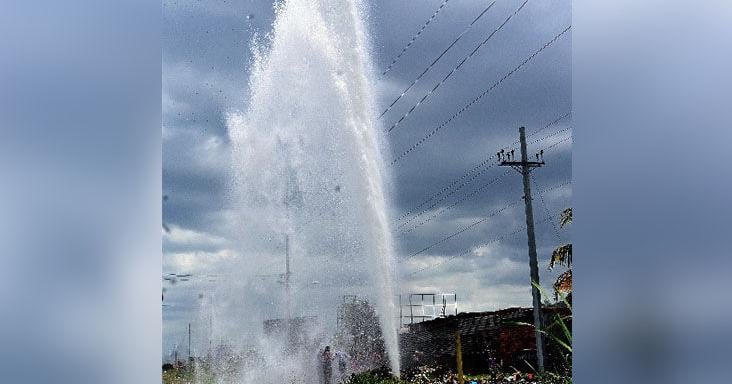
    Beckles highlighted severe water supply disruptions affecting multiple constituencies including Arima, Malabar, D’Abadie/O’Meara, and St Ann’s East, particularly during the Christmas period. She emphasized the irony of these shortages occurring despite previous substantial investments in water infrastructure, characterizing the situation as “wicked and oppressive” governance.

    The Opposition Leader detailed widespread job losses resulting from the government’s termination of several youth employment and training initiatives. Beckles specifically referenced the closure of the Civilian Conservation Corps (CCC), Youth Agricultural Homestead Programme (YAHP), Military-led Academic Training Programme (MILAT), and the Military-led Youth Programme of Apprenticeship and Reorientation Training (MYPART). She further noted significant employment reductions in the Cepep, URP, and Reforestation Programme, particularly impacting the agriculturally significant Sangre Grande region.

    Beckles accused the UNC of making extravagant campaign promises including distribution of “ham, lamb and jam” that remained unfulfilled, while simultaneously distancing themselves from constituents who had supported their election. She encouraged citizens to directly contact government officials regarding service deficiencies rather than relying on opposition figures.

    The address concluded with Beckles urging supporters to maintain political awareness despite potential offers of material incentives from the governing party, emphasizing the need for the PNM to reclaim control of the Sangre Grande Regional Corporation. She framed the current administration’s policies as detrimental to both cultural preservation and small business sustainability across communities.

  • Paris Coutain shows off his versatility in new releases

    Paris Coutain shows off his versatility in new releases

    At just 22 years old, Trinidadian artist Paris Coutain is demonstrating extraordinary artistic range through his latest musical releases and compelling stage presence. His newest soca single “Brush” represents a deeply personal project, produced by Richard Gosine with mixing and mastering handled by Nikholai Greene. Coutain co-wrote the track alongside Emmanuel Rudder and Yohann Niles, describing it as “a smooth, sweet melodic vibe that invites someone to hold and dance with.”

    Simultaneously, Coutain showcases his versatility with the chutney soca track “Magic in the Air” on the Soca Love Story Riddim, which he composed with production by Motto. This dual-genre approach reflects his fundamental artistic philosophy: “I could never envision myself confined to a single genre. My passion spans across multiple genres, so versatility is my goal as an artist.”

    Hailing from Arouca, Coutain credits his mother’s protective upbringing and musical influence as foundational to his development. “My mother is a huge Michael Jackson fan,” he shared, “so from the moment I learned about him at the age of five, I decided that I wanted to be an artiste and performer.”

    This early inspiration was formally cultivated through his education, culminating in a bachelor’s degree in performing arts from the University of Trinidad and Tobago in 2024. His academic training taught him “to fully commit to my performances and to be adequately prepared for shows.”

    Coutain’s competitive achievements include winning both Mr NGC Sanfest in 2019 and the Junior Chutney Soca Monarch in 2020, followed by placements in the Intellectual Chutney Monarch (5th in 2024) and Ultimate Soca Champion (4th in 2025). He views these competitions as strategic platforms for exposure and growth rather than mere contests.

    Beyond music, Coutain has built a substantial digital presence with over 164,000 TikTok followers through comedy skits and musical content. “It all began when I was quite young; I aspired to be an artiste, so I started creating skits and building a fanbase,” he explained, noting that making others laugh brings him “immense joy.”

    Looking toward Carnival 2026, Coutain plans to audition for the Chutney Soca Monarch while preparing additional releases, including a collaborative track with another artist. His long-term vision extends beyond Trinidad’s shores: “Becoming an international artist is my aspiration,” he stated, aiming to break into global markets with pop, R&B, and hip-hop while remaining true to his Caribbean roots.