
标签: Trinidad and Tobago

特立尼达和多巴哥

  • Costa, Heatwave appeal High Court decision to clear Pan Am trials

    Costa, Heatwave appeal High Court decision to clear Pan Am trials

    In a dramatic escalation of an ongoing sporting dispute, national cyclist Alexi Costa-Ramirez and her Heatwave Cycling Club have formally appealed a High Court decision that permitted the Trinidad and Tobago Cycling Federation (TTCF) to proceed with selection trials for the Pan American Track Cycling Championships. The appeal, filed on January 14, seeks to overturn Justice Westmin James’s January 13 ruling that denied an interim injunction against endurance trials scheduled for January 17.

    The legal confrontation stems from broader proceedings involving multiple athletes—including Njisane Phillip and Makaira Wallace of JLD Cycling Academy—who are contesting the fairness of the federation’s selection methodology for February’s continental championships. The appellants assert the trial judge committed significant judicial errors by refusing to halt the selection process.

    Central to their appeal is the challenge against the judge’s finding that certain claimants had submitted performance data without attending trials, and the determination that canceling trials would disproportionately harm the federation. Heatwave and Costa-Ramirez contend the TTCF bears an implied contractual duty to ensure equitable treatment of all athletes during selection.

    They further argue that financial compensation cannot remedy the potential loss of competing at a prestigious event like the Pan American Championships—a critical qualifying pathway to the Olympic Games. The appeal emphasizes that proceeding with the trials could inflict irreversible damage on athletes’ careers during a pivotal moment in the Olympic cycle, while pausing them would not significantly disadvantage the federation.

    As part of their requested relief, the appellants seek an order from the Court of Appeal to restrain the TTCF from conducting the January 17 endurance trials. They also request coverage of legal costs from both the appeal and prior proceedings. Given the time-sensitive nature of the selection process, the appellants plan to request an expedited hearing under Part 64.10 of the Civil Proceedings Rules.

  • Woman, 61, dies in Besson Street house fire

    Woman, 61, dies in Besson Street house fire

    A devastating fire erupted in Port of Spain on January 14th, resulting in the tragic death of 61-year-old Vernie Rigault and the complete destruction of two adjacent residential properties. The incident occurred at approximately 11:30 AM on Besson Street, where rapidly spreading flames engulfed two single-story concrete-and-metal structures before emergency services could contain the blaze.

    According to official police reports, officers on routine patrol responded to emergency calls around 12:15 PM, arriving to find both properties already suffering extensive fire damage. Firefighting teams from both Wrightson Road and Belmont Fire Stations were promptly deployed to the scene, though the intensity of the inferno presented significant challenges during suppression efforts.

    During subsequent recovery operations, firefighters discovered Rigault’s charred remains in the bathroom area of her home. Her husband, 75-year-old McDonald Cabrera, who was not present during the incident, later formally identified the body. The adjacent property suffered severe structural damage, though fortunately no additional casualties were reported as the residence was unoccupied at the time of the fire.

    While authorities have confirmed the absence of suspicious circumstances, the exact cause of the fire remains undetermined. Investigators from Homicide Region One have initiated a comprehensive investigation to establish the origin and circumstances surrounding the tragic incident.

    In response to the emergency, Housing Minister David Lee extended official condolences to the affected families, having been notified of the incident through Laventille West MP Kareem Marcelle. The Housing Development Corporation (HDC) immediately activated emergency protocols, providing temporary accommodation solutions for displaced residents.

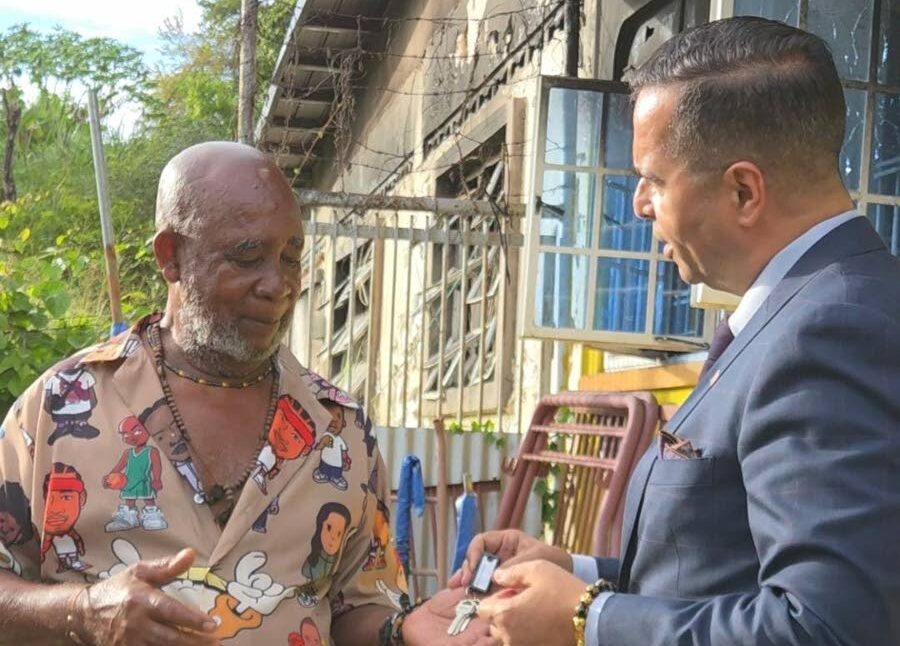
    Minister of State in the Ministry of Housing Phillip Alexander personally visited the disaster site on January 14th to assess damage and coordinate relief efforts. During his visit, Alexander formally presented temporary housing keys to affected families, including McDonald Cabrera, ensuring immediate shelter arrangements. The Ministry has committed to ongoing monitoring of the situation with additional support measures to be implemented as necessary.

  • 14 Trinidad and Tobago officials appointed to 2026 Fifa referees panel

    14 Trinidad and Tobago officials appointed to 2026 Fifa referees panel

    In a significant recognition of officiating excellence, Trinidad and Tobago has secured an unprecedented 14 appointments to the FIFA referees panel for 2026. The appointments, announced by FIFA on January 6, include assistant referee Caleb Wales, who previously demonstrated his expertise at the 2022 FIFA World Cup in Qatar.

    The distinguished roster features referees Timothy Derry, Cecile Hinds, Nikolai Nyron, Andrew Samuel, Crystal Sobers, Kwinsi Williams, and Nathalya Williams. They are joined by assistant referees Kirt Charles, Evelyn Carissa Douglas, Keron Myers, Melissa Nicholas, Shash Ramsaroop, and Ainsley Rochard. The Trinidad and Tobago Football Association (TTFA) formally congratulated the officials through a media release on January 12.

    TTFA President Kieron Edwards characterized this development as a pivotal moment for the nation’s football community. He emphasized that these appointments result from years of dedicated sacrifice, continuous development, and unwavering commitment to excellence rather than mere chance. Edwards noted that the officials have earned regional and international respect through their disciplined approach and thorough preparation.

    The TTFA stated that these appointments not only reflect the consistency and professionalism of Trinidad and Tobago’s refereeing program but also reinforce the country’s reputation for producing officials capable of performing at the highest levels of international football. This achievement underscores the football body’s conviction that Trinidad and Tobago can produce world-class quality both on and off the field, with referees being considered essential components in the growth and development of the sport within the nation.

  • Costa, Heatwave appeal High Court decision to clear Pan Am trials

    Costa, Heatwave appeal High Court decision to clear Pan Am trials

    National cyclist Alexi Costa-Ramirez and Heatwave Cycling Club have initiated legal proceedings against the Trinidad and Tobago Cycling Federation (TTCF) by filing an appeal challenging a recent High Court ruling. The appeal, submitted on January 14, seeks to overturn Justice Westmin James’ January 13 decision that denied their request for an interim injunction to prevent endurance trials scheduled for January 17.

    The legal confrontation stems from ongoing disputes regarding the TTCF’s selection methodology for the upcoming Pan American Track Cycling Championships in February. The controversy involves multiple athletes including Costa-Ramirez, Njisane Phillip, and Makaira Wallace from JLD Cycling Academy, all contesting the fairness of the federation’s qualification process.

    In their appellate arguments, Heatwave and Costa-Ramirez contend that the trial judge committed legal errors by dismissing their claims. They specifically challenge the court’s determination that some athletes had already submitted performance data without attending trials, and the conclusion that halting the trials would disproportionately harm the federation.

    The appellants assert the existence of an implied contractual obligation mandating equitable treatment of all athletes during selection procedures. They further argue that financial compensation cannot adequately remedy the potential loss of opportunity to compete at prestigious international events, particularly with Olympic qualification implications at stake.

    The appeal emphasizes that suspending the trials would not adversely affect the federation’s operations, while proceeding could cause irreparable damage to athletes’ careers during this critical Olympic qualification period. The appellants have requested expedited consideration of their appeal under Civil Proceedings Rules Part 64.10, citing the urgent nature of selection deadlines preceding the continental championships.

  • US becoming a lawless dump under Trump

    US becoming a lawless dump under Trump

    A former Trump supporter has voiced grave concerns about the current administration’s trajectory, warning that the United States appears to be descending into a “might makes right” approach to governance. The letter to the editor expresses particular alarm over recent incidents involving federal agents and the subsequent official responses.

    The shooting death of Renee Good, a mother who reportedly posed no apparent threat during an Immigration and Customs Enforcement (ICE) operation, has raised serious questions about the use of lethal force. Despite the gravity of the incident, no credible evidence has emerged to justify the fatal shooting, according to the author.

    More disturbing than the incident itself, the writer argues, has been the response from senior administration officials. Homeland Security Secretary Kristi Noem’s attempts to rationalize the killing have sparked concerns about a pattern of excusing rather than investigating violence by state actors.

    This pattern appears to be escalating, with recent reports of U.S. Border Patrol officers shooting and wounding two individuals in Portland. These incidents, the author contends, are not isolated events but rather indicative of a dangerous normalization of aggressive enforcement tactics and a disregard for accountability.

    The underlying concern extends beyond specific locations to a national pattern characterized by the deployment of military-style force in American cities, the intimidation of immigrant communities, and what appears to be a casual justification of deaths at the hands of federal agents. This trend suggests a government increasingly comfortable exercising raw power rather than adhering to established rule of law principles.

    The author concludes with a sobering warning: when authority operates without restraint, every citizen’s rights become conditional. The erosion of democratic norms in the United States carries global implications, potentially influencing how power is exercised throughout the hemisphere and beyond.

  • Your business, our data using TTEITI insights for decision-making

    Your business, our data using TTEITI insights for decision-making

    In an era of economic volatility, foreign exchange challenges, and escalating ESG demands, access to reliable data has transitioned from optional to strategically essential. This is especially critical for economies like Trinidad and Tobago, where extractive industries fundamentally influence fiscal stability, currency flows, and investor sentiment.

    Vashti Guyadeen, CEO of the TT Chamber of Industry and Commerce, emphasizes that transparency transcends abstract idealism—it represents practical business necessity. Drawing from her leadership in Trinidad and Tobago’s inaugural Open Government Partnership Action Plan (2012-2015), Guyadeen affirms that open, dependable data fortifies governance, fosters trust, and enhances decision-making across public and private sectors.

    The Trinidad and Tobago Extractive Industries Transparency Initiative (TTEITI) exemplifies this principle by implementing global transparency standards within the nation’s oil, gas, and mining sectors. Through independently verified reporting, TTEITI discloses vital information regarding revenues, contracts, environmental factors, beneficial ownership, and state enterprise governance.

    With over 15 years of operation, TTEITI has reconciled approximately $200 billion in extractive sector payments, maintaining a remarkable discrepancy margin of just $4,500. This rigorous verification provides businesses, investors, and policymakers confidence in the energy sector’s data integrity.

    Beyond disclosure, TTEITI’s analyses have strengthened revenue collection systems, improved data management practices, and evaluated whether production-sharing contracts deliver optimal national value. Between 2015-2022 alone, major energy companies contributed an estimated US$7.4 billion to government revenues—critical inflows sustaining imports, debt servicing, and macroeconomic stability.

    For business leaders, TTEITI’s open data serves as strategic input rather than mere compliance obligation. It enables companies to anticipate fiscal trends, assess policy risks, strengthen ESG strategies, and base investment decisions on evidence rather than speculation. The Chamber’s partnership with TTEITI reflects member priorities including tax transparency, state enterprise governance, environmental disclosures, and improved ESG readiness.

    Guyadeen concludes that transparency generates tangible value, providing competitive advantage when leveraged effectively. The Chamber remains committed to institutional foundations supporting a resilient private sector, demonstrating that transparency ultimately enables sustainable growth in evolving economic landscapes.

  • Twin power: Tenique, Tyrique Vincent shine at NAAA meet

    Twin power: Tenique, Tyrique Vincent shine at NAAA meet

    Track and field’s rising stars Tenique and Tyrique Vincent delivered spectacular performances at the National Association of Athletics Administration’s Season Opener meet on January 10, each securing dual victories at Hasely Crawford Stadium in Mucurapo. The exceptional siblings, fresh from receiving Multi-events Athlete of the Year honors just one week prior, demonstrated why they’re considered among Trinidad and Tobago’s most promising athletic talents.

    Tyrique Vincent edged out fierce competition in the boys’ Under-20 100-meter hurdles, clocking 14.07 seconds to narrowly defeat Omari Brown (14.09s) in a thrilling photo finish. The Concorde Athletic Club phenom continued his dominance in the long jump pit, achieving a winning leap of 7.18 meters to outdistance Kristiano Perez’s 7.13-meter effort.

    Tenique Vincent mirrored her brother’s success with commanding performances in the girls’ Under-20 division. She captured the long jump title with a 5.55-meter effort, nearly sixty centimeters clear of silver medalist Hailey Lynch (4.96m). The talented hurdler then blazed through the 100-meter hurdles in 15.57 seconds, finishing ahead of Neon Wolves’ McKaikah Warde (15.68s).

    The development meet showcased several other standout performances across various age categories. Peyton Winter emerged as a throwing sensation with victories in both discus (37.05m) and shot put (12.80m) in the girls’ Under-20 division. Ethan Myers demonstrated similar prowess in the boys’ Under-17 category, winning discus (37.33m) and shot put (13.91m) events.

    Sprint prodigy Eden Chee-Wah, a 2025 Carifta Games bronze medalist, displayed her versatility with wins in both the girls’ Under-17 100m (12.03s) and 400m (56.25s) events. The meet concluded with relay excitement as Burnley and Stallions Athletics claimed victories in the women’s and men’s 4x200m relays respectively.

  • Farley-Kamla alliance

    Farley-Kamla alliance

    The recent electoral triumph of Farley Augustine and his Tobago People’s Party (TPP) has delivered a profound political realignment on the island territory. This decisive victory represents both a strong endorsement of Augustine’s leadership and a striking repudiation of the ruling People’s National Movement (PNM), which suffered substantial losses in the polls.

    Political analysts note the outcome carries significant implications beyond Tobago’s shores. The results suggest a strategic alliance between Augustine and United National Congress leader Kamla Persad-Bissessar, evidenced by recent budgetary increases for Tobago and discussions around greater autonomy for the island. Notably, criticisms leveled against Persad-Bissessar—particularly regarding her alignment with United States interests and domestic policy measures—appeared to have minimal impact on voter behavior in Tobago.

    The election results reveal a notable divergence between Tobago voters and their Trinidad counterparts. While Persad-Bissessar’s initiatives have faced considerable scrutiny nationally, Tobago’s electorate demonstrated either indifference to these concerns or prioritized local issues above national political controversies. The overwhelming support for Augustine’s platform indicates a growing appetite for political change and alternative governance approaches.

    This electoral outcome signals a potential paradigm shift in Tobago’s political consciousness. Beyond the immediate victory, the results suggest emerging support for progressive policies and non-traditional political thinking, challenging established party loyalties and signaling possible broader changes in the nation’s political landscape in future elections.

  • Economist warns businesses of ‘black swan events’

    Economist warns businesses of ‘black swan events’

    Economist and Independent Senator Marlene Attzs has issued a stark warning to Trinidad and Tobago’s business community about the looming threat of catastrophic “black swan” events that could devastate even well-established enterprises. Speaking at a conference hosted by the TT Extractive Industries Transparency Initiative and the TT Chamber of Industry and Commerce on January 13, Attzs described these events as a dangerous convergence of unpredictable shocks that could derail the most carefully laid business plans.

    The urgency of this warning is underscored by recent developments in the local business landscape, including Newsday’s announcement of its winding-up process after more than three decades of operation. Managing director Grant Taylor attributed this decision to a “perfect storm” of challenges, mirroring similar struggles across multiple industries from energy to retail and entertainment.

    Attzs emphasized that these black swan events may already be unfolding, citing recent airspace compromises that forced flight cancellations as a potential precursor to more significant disruptions. She pointed to escalating geopolitical tensions, including the US-China rivalry and renewed Russian activity, as factors that could create concentric circles of impact affecting even peripheral economies like Trinidad and Tobago.

    The conference panel, which included TTEITI co-ordinator Sherwin Long, senior fellow Preeya Mohan, and chairman Gregory McGuire, identified multiple systemic risks to the national economy. Chief among these is the country’s persistent dependence on the volatile oil and gas sector, which continues to drive GDP fluctuations and government revenue instability.

    Long revealed that between 2011 and 2024, the upstream energy sector contributed US$17.3 billion in foreign exchange, with companies like bpTT and NGC providing over US$7 billion. However, he noted that this volatility is largely driven by external factors beyond local control, including global energy prices, demand-supply imbalances, and geopolitical tensions.

    Attzs highlighted additional concerns regarding the nation’s economic dependence on government support and rising debt challenges. Latest data indicates Trinidad and Tobago’s debt-to-GDP ratio has reached 85 percent and continues to climb, creating fiscal constraints that could limit the government’s ability to respond to economic crises.

    Mohan addressed emerging trade-related risks, particularly the Carbon Border Adjustment Mechanism (CBAM) and adjustments to tariff regimes. She warned that 90 percent of TT’s exports to the EU—accounting for 14 percent of total exports—could be affected by CBAM, while half of exports to the US (30 percent of total) face similar exposure. These mechanisms could increase taxes on the ammonia sector by 22 percent, though implementation of emission reduction technologies like carbon capture could mitigate these impacts.

    The consensus among experts is that data-driven preparedness represents the most effective defense against these converging challenges. Attzs urged businesses to professionalize, modernize, and leverage available data to build resilience, conduct thorough risk analyses, and develop strategic plans for survival in an increasingly uncertain global economic landscape.

  • Societal elder abuse

    Societal elder abuse

    A poignant revelation from an 87-year-old Trinidadian writer has unveiled systemic age discrimination permeating financial institutions and social structures. HD Greaves, a published author of twelve books, finds himself denied basic financial services including credit cards and purchase financing solely based on his age, despite maintaining robust health and mental acuity. This case exemplifies a broader pattern of institutional ageism that treats senior citizens as liabilities rather than valuable contributors.

    The situation extends beyond financial exclusion into systemic administrative failures. Thousands of elderly citizens face prolonged pension processing delays—some waiting over two years for entitlements—creating unnecessary economic hardship during their most vulnerable years. These bureaucratic inefficiencies represent what experts describe as ‘economic violence’ against the aging population.

    More disturbingly, many seniors experience various forms of domestic mistreatment including financial exploitation, emotional neglect, and physical abuse within their own families. These violations often remain hidden behind closed doors, leaving victims without recourse or protection.

    Psychology expert Dr. Margaret Nakhid-Chatoor analyzes this crisis as reflecting deeper societal values that prioritize youth and productivity over wisdom and experience. The banking industry’s risk-aversion toward older clients, combined with inadequate social support systems, creates an environment where aging becomes synonymous with irrelevance rather than respected maturity.

    The solution requires multidimensional reform: financial institutions must adopt capacity-based assessments rather than age-based discrimination, government agencies need to streamline pension processing systems, and families must recognize elder care as privilege rather than burden. Culturally, societies must reimagine aging as a continuation of contribution through intergenerational knowledge-sharing programs that begin as early as preschool education.

    This collective awakening demands policy revisions, corporate responsibility, and cultural transformation to ensure senior citizens receive the dignity and respect their lifetime of contribution deserves.