标签: Trinidad and Tobago

特立尼达和多巴哥

  • Is AI taking our jobs or not?

    Is AI taking our jobs or not?

    The rise of artificial intelligence (AI) is fundamentally transforming the global workforce, challenging traditional job structures and reshaping industries. While the phrase ‘AI won’t take your job – but someone using AI will’ offers a sense of optimism, the reality is far more complex. Companies worldwide are increasingly citing AI as a reason for cutting thousands of white-collar roles. Amazon’s CEO, Andy Jassy, recently highlighted that AI enables teams to achieve more with fewer people, signaling a shift in workforce dynamics.

    Jobs are not monolithic but rather collections of tasks. Research from McKinsey & Company reveals that AI can perform 30 to 70 percent of these tasks, altering the economic viability of many roles. When AI handles half of a job’s workload more efficiently, companies face three choices: eliminate the role, merge it with another function, or redesign it into an AI-assisted position. This gradual erosion of tasks is particularly evident in routine cognitive work, such as data entry, report writing, and document review, which AI now manages with near-professional precision.

    Gartner predicts that by 2026, 20 percent of organizations will use AI to flatten their hierarchies, eliminating half of their middle-management layers. AI systems are now capable of handling coordination, analytics, and communication—functions traditionally overseen by managers. This shift is creating what McKinsey terms the ‘agentic organization,’ where small human teams supervise networks of AI agents, resulting in leaner companies and faster decision-making.

    While AI is automating many tasks, it is also driving job transformation. In medicine, surgeons use AI to enhance decision-making during operations. In law, AI tools save lawyers an estimated 240 hours annually by handling contract analysis and legal research. In marketing, generative AI has reduced content creation costs by 30 to 50 percent. AI acts as a copilot, handling repetitive work so humans can focus on creativity and judgment. However, companies often fail to replace eliminated tasks with new creative roles, leading to workforce reductions.

    AI is also reshaping income distribution. According to PwC’s Global AI Jobs Barometer (2025), industries like finance, IT, and professional services are experiencing productivity growth five times faster than sectors like manufacturing or transport. Workers with advanced AI skills command a 56 percent wage premium, while routine professional roles face decline. This dynamic is compressing the middle class and rewarding those who can direct, train, or govern AI systems.

    One of the most pressing concerns is the hollowing-out of the career ladder. AI is automating entry-level tasks that once provided young professionals with learning opportunities. Simultaneously, firms are adopting ‘AI-first’ hiring policies, deploying automation before opening new roles. This trend raises questions about how the next generation of managers and specialists will be trained.

    Governments are responding differently to these challenges. The European Union’s AI Act classifies workplace AI as ‘high-risk,’ demanding transparency and safety protocols, which slows innovation but protects workers. In contrast, Singapore is rapidly building an AI-fluent workforce through national upskilling initiatives and a government-backed ethics framework called AI Verify.

    In conclusion, AI is not eliminating all jobs but is dismantling the structure of work as we know it. Tasks are being automated, hierarchies flattened, and entry points erased. The future will favor individuals and nations that master AI literacy, creative judgment, and the ability to design systems rather than merely operate within them. As companies in the Caribbean and beyond adopt digital tools more aggressively, the question is no longer if AI affects our jobs, but how quickly we adapt. When half of your tasks vanish, what remains is a test of the true value of the human element in your work.


  • 7 new members appointed to NIF board as 4 resign

    7 new members appointed to NIF board as 4 resign

    The National Investment Fund Holding Company Ltd (NIF) is undergoing significant changes as four board members have resigned, and seven new members have been appointed. The resignations, effective from October 28, include Chairperson Jennifer Lutchman, along with board members Nadira Lyder, Dexter Jaggernauth, and Cindy Pierre. The vacancies have been filled with the appointment of Dr. Sandra Sookram as the new chairperson, Patrice Jameela Ayoung-Chee as deputy chairman, and Aiden Boodoo, Shivanand Maharaj, Vandanna Singh-Maharaj, and Dexter V. Ragoonath as board members. The new board will serve a two-year term starting October 28. Established in 2018, the NIF was created to manage assets received by the government from Clico’s shareholdings, following a $4 billion government bailout in 2009. The fund has since repaid the bailout and made significant interest distributions, totaling $2.4 billion since its inception. Notable assets under the NIF include Republic Financial Holdings Ltd, One Caribbean Media Ltd, West Indian Tobacco Company Ltd, Angostura Holdings Ltd, and TT Generation Unlimited. The NIF has also made multiple coupon payments to bondholders, including a recent $9 million payment under the NIF 2 bond offer launched in 2022.

  • TTDRM 2026: Climate risk to regional readiness

    TTDRM 2026: Climate risk to regional readiness

    As climate risks escalate globally, Trinidad and Tobago (TT) is spearheading a regional initiative to combat these challenges. The TT Disaster Risk Management Conference and Expo (TTDRM), themed ‘Resilience 360: Bridging Knowledge and Action,’ is set to take place from June 1-3, 2026. Organized by PODS Emergency Management Consultancy & Solutions, this event aims to transform climate warnings into actionable resilience strategies, fostering multi-stakeholder collaboration to bolster national preparedness. The conference builds on the success of TTDRM 2024, which emphasized a ‘whole-of-society’ approach, uniting government agencies, NGOs, private sector leaders, academics, and community stakeholders. TTDRM 2026 will focus on systemic risk, advocating for a shift from isolated hazard management to understanding interconnected risks. Drawing lessons from past disasters like Hurricane Flora in 1963, the event will address gaps in disaster risk reduction, particularly for SMEs and vulnerable populations. The conference will feature international and regional experts, including renowned meteorologist Brian Shields, and showcase innovative emergency management products. PODS Managing Director Stacey-Ann Pi Osoria has called for government representation at TTDRM 2026, stressing the need for political will to drive effective disaster risk management policies. TTDRM stands as a platform where local innovation meets regional readiness, ensuring communities are active participants in building resilience.

  • Cyclist Wallace motivated after World Track Champs debut

    Cyclist Wallace motivated after World Track Champs debut

    Trinidad and Tobago’s emerging track cycling sensation, Makaira Wallace, has described her inaugural appearance at the UCI Track Cycling World Championships in Santiago, Chile, as a profoundly inspiring and motivating experience. Competing for the first time as a senior rider, Wallace marked a significant milestone in her burgeoning career.

  • Positioning Trinidad and Tobago for the AI economy

    Positioning Trinidad and Tobago for the AI economy

    As the global economy increasingly relies on cutting-edge technologies like artificial intelligence (AI) and robotics, Trinidad and Tobago (TT) faces a critical question: Is the nation prepared to seize the opportunities these innovations present? The answer, unfortunately, is far from reassuring. Recent data paints a troubling picture of TT’s declining performance in global innovation benchmarks. On the 2024 Global Innovation Index, TT ranked 108th, a significant drop from its peak at 68th in 2008. Similarly, the UNCTAD Frontier Technology Readiness Index shows TT slipping to 86th in 2025, down from 75th in 2021. These rankings highlight systemic weaknesses in industrial capacity and research and development (R&D), with TT scoring 122nd and 130th globally in these areas, respectively. The nation’s R&D expenditure remains below 0.5% of GDP, and patent filings are alarmingly low, averaging just one per year. Despite these challenges, there are glimmers of hope. Ramps Logistics’ AI-driven solution, MAWI, is revolutionizing customs brokerage and generating foreign exchange, while Carib Brewery’s $200 million smart manufacturing initiative marks a bold step toward industrial modernization. These successes underscore the potential for TT to tap into the $2.5 trillion global frontier technology market, projected to grow to $16.4 trillion by 2033. To bridge the innovation gap, TT must prioritize R&D and industrial capacity, strengthen governance frameworks, and support SMEs in adopting advanced technologies. The urgency of these reforms cannot be overstated, as failure to act risks leaving TT behind in the rapidly evolving global economy.

  • St Paul’s Anglican crowned Victoria District U11 champs

    St Paul’s Anglican crowned Victoria District U11 champs

    St Paul’s Anglican Primary School emerged victorious in the Victoria District Under-11 final, securing a decisive 3-0 win against San Fernando Boys’ RC at the Manny Ramjohn Stadium in Marabella on November 4. The match showcased stellar performances from the young athletes, with Malachi Joseph opening the scoring in the 10th minute. Khadeem Flemming extended the lead in the 30th minute, and Wraydenn Charles sealed the triumph with a final goal in the 33rd minute. This victory marks St Paul’s second district championship in three years, following their dominant 3-0 semi-final win against defending champions San Fernando Boys’ Government. Head coach Rondel Renwick attributed the team’s success to rigorous preparation and unwavering commitment from the players, coaching staff, and school administration. Renwick emphasized the importance of discipline, development, and the collective effort in shaping the future of Trinidad and Tobago football. The team now sets its sights on the national tournament, with preparation remaining a cornerstone of their strategy.

  • Shaping a sustainable bioeconomy for Caricom

    Shaping a sustainable bioeconomy for Caricom

    The Caribbean’s economic narrative has long been shaped by its exports—oil, gas, tourism, and rum. However, the region’s future prosperity hinges on empowering its women, innovators, and small enterprises. This was the central message delivered by Vashti Guyadeen, CEO of the TT Chamber of Industry and Commerce and President of Caribbean Women in Trade (CWIT), at the Caribbean Women in Trade conference in Saint Lucia.

  • Olympian Kirt Sinnette chairs new boxing board

    Olympian Kirt Sinnette chairs new boxing board

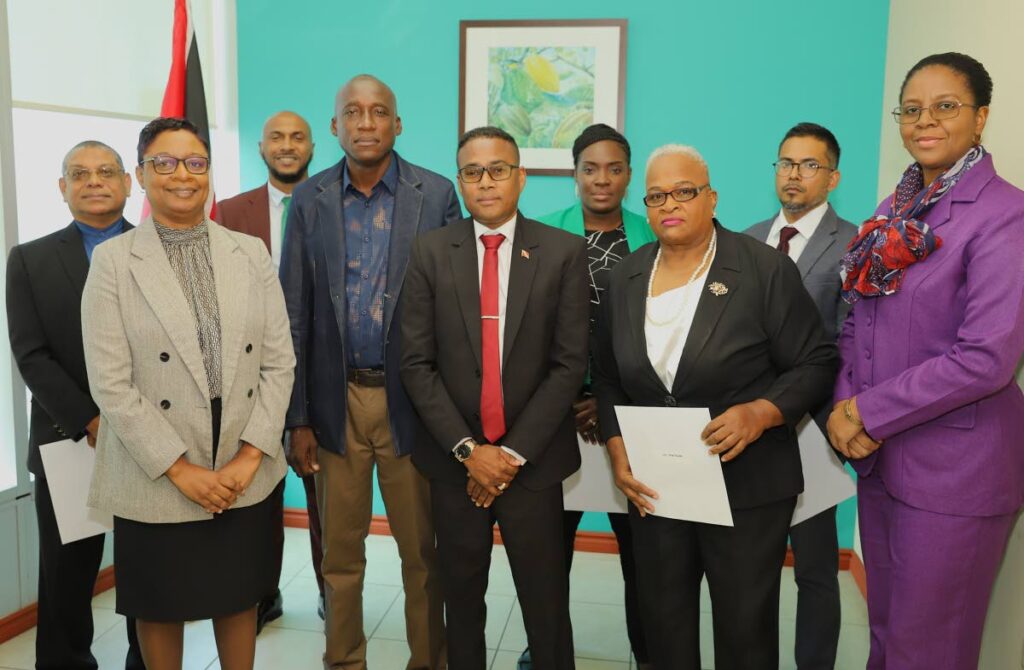
    In a significant move to bolster Trinidad and Tobago’s boxing sector, Minister of Sport and Youth Affairs (MSYA) Phillip Watts officially appointed a five-member Trinidad Boxing Board of Control (TBBC) on November 5. The ceremony, held at Nicholas Tower in Port of Spain, marked the beginning of a two-year term for the newly installed board. The TBBC is tasked with regulating and promoting boxing under the Boxing Control Act, Chapter 21:52, Section 2(1).

    The board is led by Kirt Sinnette, a national boxing champion and former Olympian, who assumes the role of chairman. He is supported by deputy chairman Kim Quashie, a seasoned boxing coordinator. Other members include sport administrator Kwanieze John, business administrator Hemrajh Rampersad, and attorney Bryan Basdeo. The diverse expertise of the board members underscores its mission to uphold the nation’s rich boxing heritage while driving modernization and creating opportunities for emerging athletes and coaches.

    Minister Watts emphasized the board’s critical role in preserving Trinidad and Tobago’s proud boxing history and modernizing the sport to build a legacy of opportunities for future generations. He also reiterated the government’s commitment to fostering discipline, resilience, and national pride through boxing, particularly in grassroots communities.

    The MSYA remains dedicated to uniting stakeholders and advancing sport and youth development as part of its broader vision for the nation’s future. This appointment signals a renewed focus on enhancing the sport’s infrastructure and ensuring its continued growth and relevance in Trinidad and Tobago.

  • The business of dignity

    The business of dignity

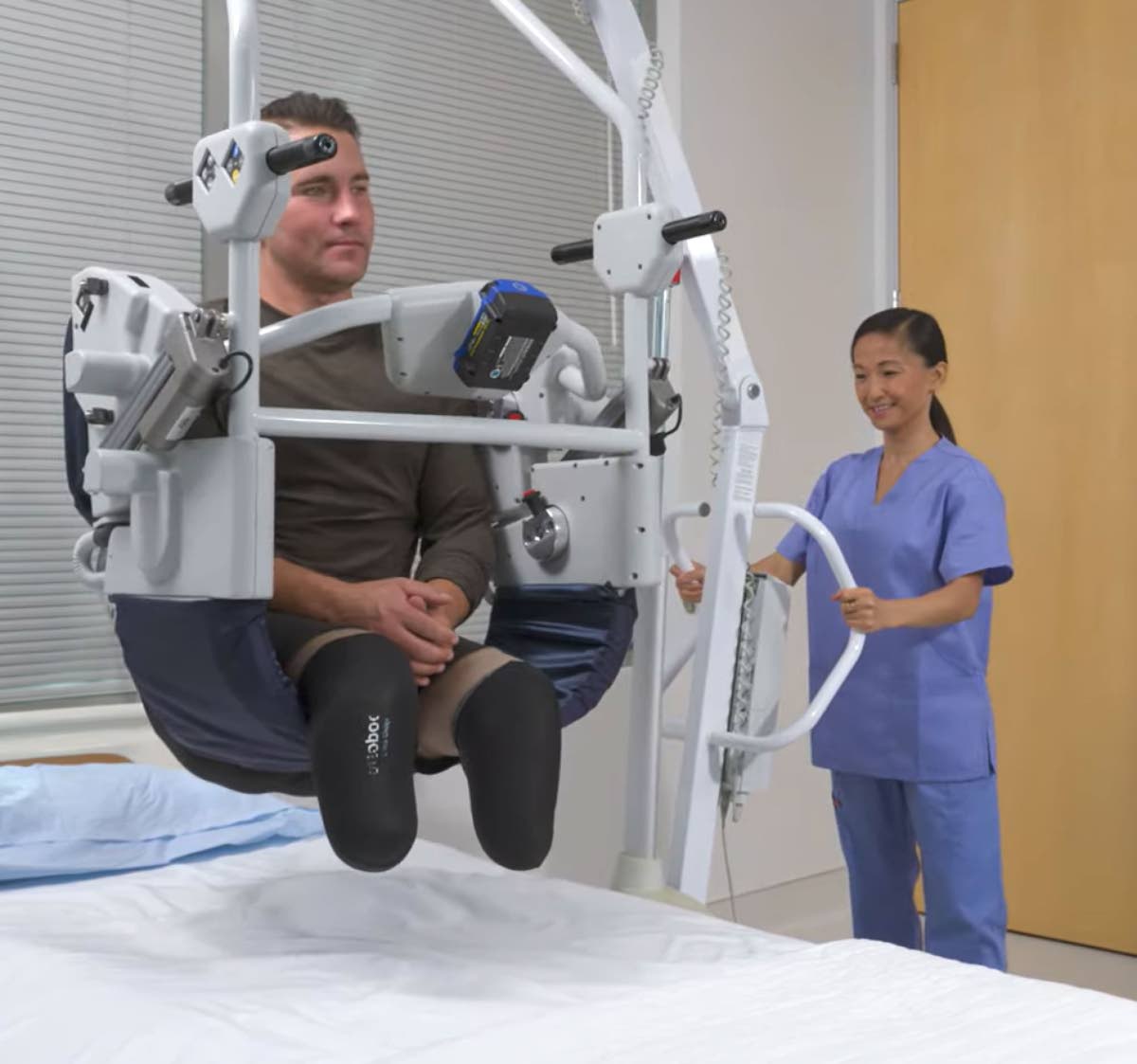
    As individuals age or face mobility challenges due to illness or injury, the ability to perform basic tasks like getting out of bed or moving to a wheelchair becomes increasingly difficult. Recognizing this universal need for dignity and independence, Neala Persad, Director of Sales and Administration at Access Mobility MedCare, has dedicated her career to providing innovative home accessibility solutions. One such groundbreaking product is the UpLyft, a self-transfer system designed to enhance the quality of life for those with limited mobility. Launched in Trinidad and Tobago on October 8 at the Kapok Hotel, the UpLyft represents more than just a business venture—it’s a mission to restore dignity and independence to individuals facing physical challenges. The UpLyft, constructed with high-carbon steel and an electromechanical screw drive system, can safely transfer individuals weighing up to 330 pounds (136 kg) from a supine position to a wheelchair without the need for nursing assistance. Its user-friendly design allows individuals to operate the system independently, further promoting autonomy. While initially designed for medical facilities, the UpLyft is also available for home use, with leasing options starting at $750 per month. Access Mobility MedCare, headquartered in Canada, has expanded its operations to Trinidad and Tobago, driven by Persad’s passion and strong alliances within the medical community. The company’s broader portfolio includes bathroom modifications, ramps, stair lifts, and porch lifts, positioning it as a leader in mobility solutions. Persad emphasizes the importance of planning for ageing and mobility challenges, advocating for mental health support and strong community networks to complement physical accessibility solutions. The UpLyft is not just a product; it’s a testament to the belief that everyone deserves to live with dignity and independence, regardless of their physical limitations.

  • Jevonte David wins Parapan Games shot put F42 gold

    Jevonte David wins Parapan Games shot put F42 gold

    Trinidad and Tobago’s para-athlete Jevonte David soared to victory, securing the gold medal in the men’s F42 shot put event on November 4 during the 2025 Parapan American Youth Games in Santiago, Chile. The event, held at the Mario Recordon Stadium, witnessed David’s exceptional performance as he hurled the shot an impressive 10.27 meters, outpacing a formidable lineup of competitors from the Caribbean, South, and Central America. David’s triumph marks a significant milestone for Trinidad and Tobago in the international para-athletics arena. Beyond the shot put, David is poised to compete for top honors in the men’s discus throw F45 and javelin throw F45 events. He is accompanied by his teammate Odessa Wilkinson, who is set to participate in the women’s shot put F40-41, discus throw F41, and javelin F41 events, further bolstering the nation’s presence at the Games.