
标签: Trinidad and Tobago

特立尼达和多巴哥

  • Minister: Motor Vehicle Accident Fund soon

    Minister: Motor Vehicle Accident Fund soon

    Trinidad and Tobago’s Finance Minister Davendranath Tancoo has announced the imminent operationalization of the long-awaited Motor Vehicle Accident Fund, with full infrastructure expected to be in place by the first quarter of 2026. The announcement comes amid heated political debate regarding recently passed financial legislation.

    During a December 7 interview, Minister Tancoo emphasized that the Financial Bill provisions were designed specifically to protect citizens, countering opposition claims that the measures simply imposed additional taxes. “The People’s National Movement is attempting to create the impression that this is a tax on people,” Tancoo stated, “when in reality it establishes crucial protections for accident victims.”

    The Minister explained that the current system leaves victims without recourse when involved in accidents with uninsured, unlicensed, or improperly documented drivers. The new framework establishes significantly increased penalties for traffic violations while simultaneously creating a safety net for those affected by such violations.

    “We have implemented substantially higher penalties for driving without insurance, operating overloaded vehicles, driving without proper permits, and using fraudulent insurance documentation,” Tancoo detailed. “Concurrently, we’ve established an Accident Victims Fund to provide compensation for those injured by uninsured motorists.”

    The fund’s history dates back to 2008, with significant development occurring during Prime Minister Kamla Persad-Bissessar’s first administration between 2010-2015. Cabinet approval for the fund was granted in 2015 with an initial $20 million allocation. The project faced delays due to legal challenges from the Motor Insurance Bureau Association, and as recently as last year, advocacy group Arrive Alive had questioned the ministry about the fund’s status, which was reported to contain approximately $1 billion.

    Tancoo directly addressed political opposition to the measures, asserting that only lawbreakers had reason to fear the increased penalties. “The PNM voted against these protections and apparently believe there should not be increased penalties for those who break the law,” he stated. “As far as I’m concerned, the PNM is encouraging violation of the law. They have never supported government anti-crime measures.”

    The Minister emphasized that the dual approach of increased penalties and victim compensation was designed to both deter unlawful behavior and provide protection for law-abiding citizens. “We are trying to encourage compliance with traffic laws while ensuring that victims have recourse when others choose to break those laws,” he concluded.

    The Financial Bill containing these provisions passed on December 5, 2024, during the 2025/2026 budget presentation, which also announced increased fines for dangerous driving, driving under influence, and driving while disqualified.

  • Tancoo: Landlord Tax is not property tax

    Tancoo: Landlord Tax is not property tax

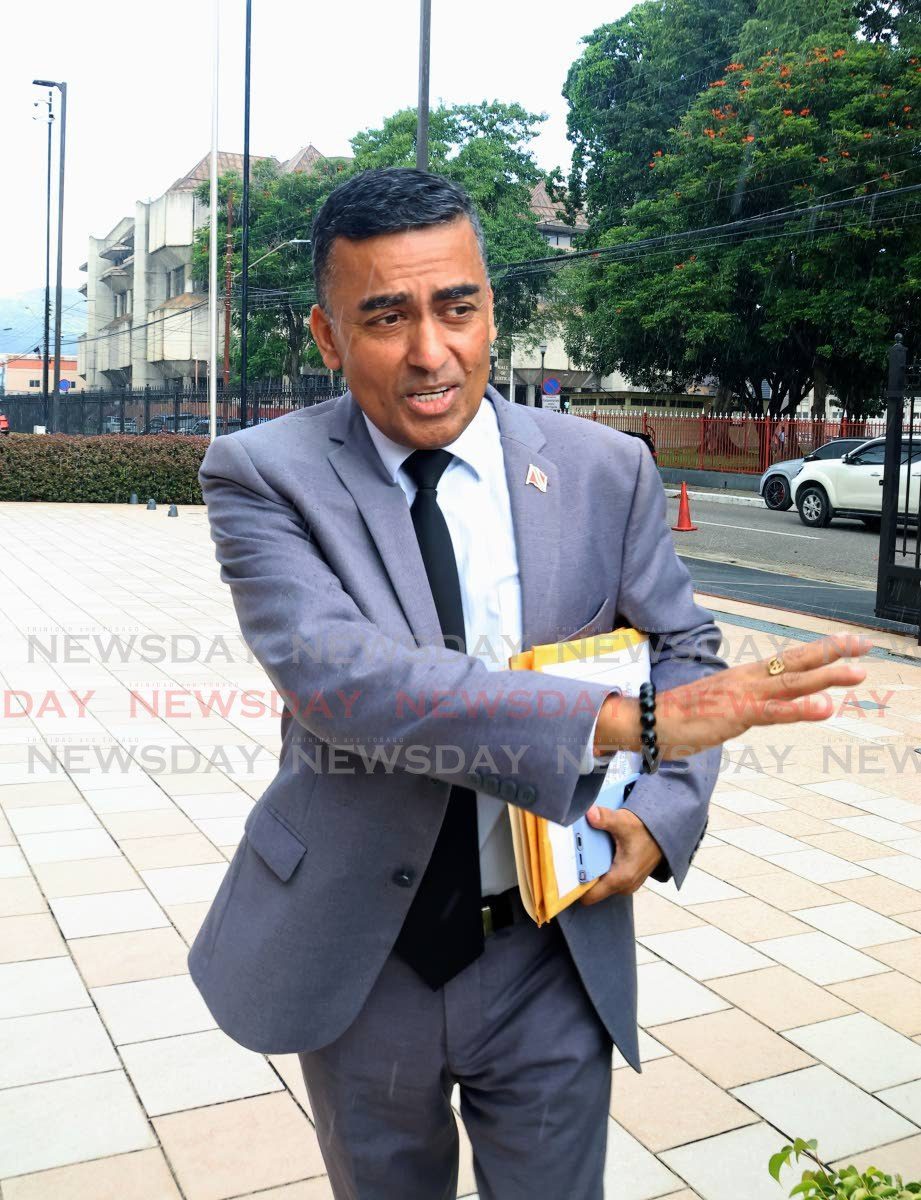
    Finance Minister Davendranath Tancoo has explicitly distinguished the newly implemented Landlord Tax from the previous administration’s controversial property tax, asserting fundamental differences in their underlying principles. In a December 7th interview with Newsday, Minister Tancoo addressed what he characterized as misinformation being propagated about the fiscal measure passed within the Finance Bill, 2025.

    The Minister clarified that while the former People’s National Movement (PNM) government’s property tax targeted private homeowners based on assumed rental income that often didn’t exist, the current Landlord Tax specifically targets actual revenue generation. “The property tax was based on residential income which did not exist,” Tancoo stated. “Home owners were being asked to pay a tax on income that they were not generating. That, in itself, was manifestly unethical and unfair.”

    Tancoo emphasized that the new tax regime focuses exclusively on landlords engaged in commercial activity who have remained unregistered and non-compliant with tax obligations. “We are not taxing fake income, we are taxing real income which should have been taxed in the first place,” he explained, characterizing rental income as a legitimate revenue stream that warrants taxation.

    The Finance Minister revealed that according to former administration estimates, there are approximately 100,000 landlords operating in Trinidad and Tobago who would fall under the purview of this tax. He notably pointed out that some government ministers themselves, described as “substantial landowners” receiving rent from the government, had not been contributing fairly to public coffers.

    Tancoo defended the current policy as “much more equitable, just and legal” than its predecessor, noting that the administration had consistently opposed taxing private residences while in opposition. The Landlord Tax specifically exempts homeowners who do not generate revenue from their properties, distinguishing it fundamentally from the previous approach that assessed taxes based on potential rental value rather than actual income.

  • Vani Maharaj’s world of warmth – where Xmas is a way of life

    Vani Maharaj’s world of warmth – where Xmas is a way of life

    For interior designer Vani Maharaj, Christmas represents far more than seasonal decoration—it embodies profound emotional resonance, childhood nostalgia, and the very essence of her design philosophy. The creative force behind Trinidad-based luxury design firm Divine Living has transformed her lifelong fascination with the holiday into both professional inspiration and a personal mission to spread joy through intentional design.

    Maharaj’s journey into design began unconventionally. With academic credentials including a BBA in finance and a master’s in marketing from the Arthur Lok Jack Global School of Business, she initially approached decorating as a hobby in 2010 before formally establishing Divine Living in 2019. The company now operates from two locations: a showroom on Stone Street, Port of Spain, and a design studio in Lange Park, Chaguanas, serving clients throughout Trinidad and Tobago, the Caribbean, and the United States.

    The designer credits her childhood environment—characterized by what she describes as ‘warmth, discipline, and quiet beauty’—for shaping her aesthetic sensibilities. ‘Our space was always warm, intentional and well cared for,’ Maharaj recalled. ‘It wasn’t about luxury, it was about the feeling a home could evoke.’ This early exposure to thoughtfully curated spaces nurtured an instinctive appreciation for beauty that would later define her career.

    Beyond aesthetic considerations, Maharaj emphasizes the importance of work ethic learned from her parents. ‘Through school, university, and my early career, I learned one consistent truth: the more effort I put in, the more I achieved.’ This philosophy continues to guide her approach to both business and creative endeavors.

    For Maharaj, the most rewarding aspect of her work lies in client reactions. ‘Handing over a completed home and seeing a client’s joy—sometimes tears, excitement and relief—is something indescribable,’ she shared. Particularly meaningful are messages received years later, especially during Christmas, showing homes maintained exactly as designed. ‘Knowing something I created continues to bring peace and happiness long after the project is finished makes every bit of effort worthwhile.’

    Her personal Christmas traditions reflect this same intentionality. Maharaj has developed elaborate family rituals, including theatrical Santa Claus experiences for her teenage son featuring handwritten North Pole scrolls and custom-made Santa sacks. ‘I would tell him Santa saved him for last because he was such a special boy,’ she laughed. These carefully crafted moments extend to an annual Gratitude Letter tradition, where family members document their thankfulness each Christmas season, preserving these letters in a keepsake box that has become ‘a beautiful archive of appreciation, growth and love.’

    Professionally, Maharaj approaches Christmas décor by focusing on mood creation through layered textures, neutral color palettes accented with festive sparkle, and strategic lighting. She incorporates signature elements like pearls and orchids while insisting decorations should be ‘playful, imaginative and full of little surprises.’ Even scent plays a role, with her favorite Fraser Fir candle from the Divine Living collection evoking immediate Christmas associations.

    Looking beyond seasonal design, Maharaj remains committed to mentorship and supporting women entrepreneurs through talks, forums, and informal guidance. She actively participates in charitable initiatives year-round, particularly during Christmas, believing that ‘giving back is one of the most powerful ways to use my skills, time, resources, connections and experiences to uplift others.’

    Future plans include expanding educational offerings through interior design classes and opening additional studio space in Port of Spain with certified in-house designers. For those seeking to build authentic, beautiful lives aligned with their passions, Maharaj advises beginning with self-understanding: ‘Begin with understanding yourself—your passions, values and the things that genuinely bring you joy. Don’t shy away from taking bold steps toward what excites you, even if it feels unfamiliar or unconventional.’

    Ultimately, Maharaj sees Christmas spirit as a year-round approach to living. ‘That feeling people get at Christmas—the warmth, the beauty, the sense of being cared for—that’s something I try to bring into everything I do, every single day. Christmas isn’t limited to one season—it is a way of living and expressing love throughout the year.’

  • Emily sings from the heart

    Emily sings from the heart

    A remarkable musical phenomenon is emerging from Lower Barrackpore, where 10-year-old Emily Roopnarine demonstrates vocal prowess that defies her youthful age. The standard four student at Rochard Douglas Presbyterian School, who maintains exceptional academic performance with Mathematics as her favorite subject, possesses a melodious voice that instantly captivates listeners and leaves audiences spellbound.

    Emily’s musical journey commenced unexpectedly at age four during a Sunday School concert, where she discovered an innate passion for performance. Under the nurturing guidance of her parents, Nancy and Deva Roopnarine, and through dedicated self-study via YouTube tutorials facilitated by her mother, Emily has cultivated her natural talent into refined artistry. Her repertoire now spans multiple genres, showcasing remarkable versatility for someone her age.

    The young vocalist has graced numerous prestigious platforms, including school productions, church programs, and special cultural functions. She has been featured twice on ‘Moments of Inspiration,’ a religious program spotlighting talented performers within Presbyterian communities. Her performance credentials include the National Day of Prayer at the National Council for Indian Culture’s Divali Nagar and the Rhythms ‘n Brews karaoke event.

    Two recent performances particularly stand out in Emily’s budding career. On November 16, she delivered an unforgettable performance at Debe High School during a regional Christmas concert organized by her church, describing the experience as ‘ecstatic.’ Earlier, on November 8, she achieved what she considers her pinnacle performance to date at her school’s cultural show held at Vickar’s Country Club.

    Despite experiencing pre-performance nerves, Emily has developed effective techniques to manage stage anxiety by immersing herself in the music and allowing the melody to guide her delivery. She maintains academic excellence through disciplined time management, balancing school responsibilities with her musical pursuits.

    For Emily, Christmas represents ‘a time of love, happiness and most of all, celebrating the birth of Jesus.’ Her seasonal favorite is ‘Rockin’ Around the Christmas Tree,’ and she cherishes family gatherings and gift exchanges during the holiday period. Inspired by global pop sensation Ariana Grande, Emily aspires to professional performance career.

    Beyond music, Emily enjoys practicing art and karate. She maintains a special connection to her late grandmother, Basdaye (Katie) Dukhoo, who passed away four years ago, and draws strength from her supportive extended family including grandfather Errol Dukhoo, Uncle Andy, Aunt Natalie Rajkumar, and cousin Chad.

    Her mother expresses overwhelming pride in Emily’s accomplishments: ‘We are beaming with pride. Emily has blown us away with her incredible singing talent. We have watched her grow and progress through hard work and dedication for her love for singing. We are very proud parents, and we cannot wait to see where this journey takes her.’

    Emily’s advice to fellow young aspirants embodies her philosophy: ‘Follow your heart, believe in yourself, and dream big’—a mantra that continues to propel her extraordinary journey.

  • Nuanced approach to gaming tax needed

    Nuanced approach to gaming tax needed

    Hospitality associations in Trinidad and Tobago are mounting strong opposition against the government’s planned gaming amusement tax increase, warning of severe consequences for community bars and their employees.

    The Trinidad and Tobago Coalition of Bars and Restaurants (TTCOBAR) alongside the Barkeepers Owners/Operators Association (BOATT) have issued forceful complaints regarding the proposed measure that would raise annual taxes per gambling machine from $6,000 to $25,000—an increase exceeding 400%. Industry representatives argue this dramatic hike would devastate hundreds of neighborhood bars that rely on machine revenues to maintain financial viability.

    This perspective has gained support from the Trinidad and Tobago Coalition of Service Industries, which has called for collaborative dialogue before implementation. Currently, approximately 60% of the nation’s 2,500 bars operate known gambling devices, with many establishments risking substantial fines for undisclosed machines due to the lucrative returns.

    The financial mechanics of these machines reveal why they’re so attractive to bar owners. After covering acquisition costs and annual taxes, the machines generate revenue without additional staffing requirements, sick leave, or drink-mixing services. They efficiently extract cash from patrons while creating no new employment opportunities.

    Unlike social bar games like pool or darts that encourage customer interaction and extended stays, these electronic gambling devices promote solitary, focused use. Despite their colorful interfaces and the softened term “gaming,” they constitute sophisticated gambling technology with lower payout rates than those offered in private members’ clubs.

    Bar owners already anticipate staff reductions to offset the new tax burden. There are also concerns that increased taxation might drive more operators to conceal their machines, potentially undermining tax collection efforts.

    Globally, taxes on gambling devices typically fund specific programs, including rehabilitation services for compulsive gamblers. The current proposal appears to be part of broader government efforts to finance programs through taxes that target harmful behaviors, though stakeholders argue the approach requires more nuanced consideration than a blunt tax increase.

  • Pleasantville power into girls’ national intercol final

    Pleasantville power into girls’ national intercol final

    In a stunning display of offensive prowess and tactical discipline, Pleasantville Secondary School secured their place in the 2025 Secondary Schools Football League (SSFL) girls’ intercol national final with a resounding 5-0 victory over defending champions St Joseph’s Convent Port of Spain (SJCPoS). The highly anticipated semifinal clash at Hasely Crawford Stadium on December 6 transformed into a showcase of Pleasantville’s championship pedigree as they exacted revenge for last year’s penalty shootout defeat in the national finale.

    From the opening whistle, Pleasantville demonstrated their determination to control the narrative. National team standout Nikita Gosine, fresh from representing Trinidad and Tobago in CONCACAF World Cup qualifying action against Barbados just five days prior, immediately imposed her will on the match. The reigning SSFL Girls’ Player of the Year opened the scoring in just the second minute before doubling the advantage in the 13th minute with a clinical finish that left SJCPoS reeling.

    Despite entering halftime with a comfortable 2-0 lead, Pleasantville faced sustained pressure as SJCPoS mounted numerous offensive raids to begin the second half. Goalkeeper Akeila Marryshow emerged as a defensive stalwart, making crucial interventions including two spectacular saves against SJCPoS winger Emma Nieves who found herself in dangerous positions but failed to convert.

    The match’s turning point arrived in the 65th minute when Kaeley Martin capitalized on precise right-wing play to slot home from point-blank range, extending Pleasantville’s lead to 3-0. SJCPoS’s frustration compounded when standout performer Kaitlyn Darwent struck the base of the post after skillfully evading multiple defenders on the edge of the penalty area.

    Pleasantville sealed their emphatic victory with two additional second-half goals. Zara Chase, who previously recorded a hat-trick in the zonal finals, demonstrated composure beyond her years with a clinical 69th-minute finish past goalkeeper Alexia Dolland. Midfielder Natalia Gosine provided the exclamation point in the 77th minute, unleashing a spectacular curling effort from distance that dipped and swerved beyond Dolland’s reach.

    The comprehensive victory sets up a national championship showdown against east zonal champions Five Rivers Secondary on December 10. Five Rivers earned their finals berth with a narrow 1-0 victory over Tobago champions Signal Hill Secondary, courtesy of an eighth-minute goal from national youth team player Hackeemar Goodridge in the simultaneous semifinal at the Hasely Crawford training field.

  • Signal Hill edge ‘Tigers’ to book intercol final spot

    Signal Hill edge ‘Tigers’ to book intercol final spot

    In a tense and dramatic semifinal clash at Hasely Crawford Stadium on December 6, Signal Hill Secondary School secured a hard-fought 1-0 victory over St Anthony’s College to advance to the Secondary Schools Football League (SSFL) Coca-Cola national intercol final. The decisive moment arrived in the 76th minute when substitute Siel Mills, who had just entered the pitch seconds earlier, calmly slotted the ball into an unguarded net. This opportunity emerged after St Anthony’s goalkeeper Necose Moore made a brilliant initial save against another substitute, Jahmiah Gibbes, but left his line exposed.

    The match, while lacking in technical refinement, compensated with intense drama and physical commitment. Signal Hill’s advancement was largely safeguarded by an exceptional performance from goalkeeper Kaleb Romeo, who made two critical saves in the closing stages against St Anthony’s key playmaker, Mordecai Ford. Romeo first denied a powerful left-footed strike from Ford in the 82nd minute and then produced another spectacular stop deep into stoppage time to preserve his team’s narrow lead.

    Signal Hill now prepares for a highly anticipated championship rematch against Naparima College, the 2025 premier division champions who narrowly defeated St Augustine Secondary in their semifinal on December 5. This final confrontation carries added significance for the Tobago-based team, as Naparima College previously denied them the premier division title with a 2-1 victory on November 27, a result that ultimately pushed Signal Hill to third place in the league standings.

    The national intercol final is scheduled for December 10 at the Ato Boldon Stadium in Couva, where Signal Hill will seek redemption and their first national crown against their familiar rivals from Naparima.

  • Stewards Cup headlines racing at Santa Rosa

    Stewards Cup headlines racing at Santa Rosa

    Santa Rosa Park in Arima prepares for an exhilarating climax to the 2025 racing season with the prestigious Grade One Stewards Cup, scheduled for December 6. The featured event, contested over 1,200 meters on the main track, will showcase five exceptional thoroughbreds competing for one of Caribbean racing’s most coveted titles.

    Heading the competitive field is the 2025 Tanglewood Hello World champion, positioned as the pre-race favorite following impressive recent performances. The field features formidable challengers including Triple Crown winner Headliner and American-bred contender The Goddess Nike, trained by renowned conditioner John O’Brien. Completing the elite roster are Sneaky Cheeky, representing trainer Ramesh Ramroop, and locally-bred standout C’est La Vie under the guidance of Jimmy Rampersad.

    The racing program extends beyond the headline event, featuring the penultimate day of the season with six total races. The fourth race presents an intriguing matchup between 2025 Trinidad Derby runner-up Have A Great Day and third-place finisher Valiante, both testing their capabilities against experienced older competitors.

    Adding international flair to the card, two simulcast events from Jamaica’s Caymanas Park will be incorporated: the Bruceontheloose Sprint Trophy (J$15,000,000 purse) and the prestigious Mouttet Mile (J$45,000,000 purse). The Mouttet Mile notably features Rideallday, an American-bred runner co-owned by Olympic sprint champion Shelly-Ann Fraser-Pryce among other female owners, trained by Phillip Feanny.

    Racing commences at 12:45 PM, with the Stewards Cup scheduled for approximately 3:45 PM, offering turf enthusiasts a full afternoon of world-class thoroughbred competition.

  • Ban on private drones for Tobago Day show

    Ban on private drones for Tobago Day show

    The Tobago House of Assembly (THA) has implemented temporary airspace restrictions prohibiting private drone operations near Scarborough Esplanade during the December 6 Tobago Day Cultural Concert and Drone Show. The Office of the Chief Secretary issued an official notice stating the ban will be enforced during the scheduled 6:30 PM drone display performance.

    According to the THA’s released statement, unauthorized drone activity in the vicinity could potentially interfere with the navigation systems and precisely coordinated movements of the official display drones. The coordinated aerial show involves sophisticated technology requiring clear, uncontested airspace to ensure both spectacular visual effects and public safety.

    The assembly emphasized that these measures are necessary to create a secure environment for both attendees and performers while maintaining the technical integrity of the scheduled presentation. Officials expressed gratitude for public cooperation, noting that compliance with the temporary restriction would contribute to an enjoyable experience for all concert attendees while demonstrating community responsibility regarding emerging technology regulations.

  • Our versatile bamboo

    Our versatile bamboo

    Despite its tree-like stature, bamboo is scientifically classified as a type of grass—specifically the largest grass species capable of forming forest-like stands. In Trinidad and Tobago, this versatile plant presents both ecological concerns and cultural significance, creating a complex relationship between native ecosystems and human traditions.

    While Bambusa vulgaris (common bamboo) dominates the landscape, it is surprisingly non-native to the islands, originating from Asia. Trinidad and Tobago hosts several indigenous species including Arthrostylidium pubescens, found at higher elevations, and the potentially endemic Rhipidocladum prestoei, recognized by its distinctive fan-like branching pattern.

    Legally, bamboo receives unique recognition under Trinidad and Tobago’s Forests Act, which categorizes it as a tree when growing on state lands. This classification grants the government regulatory control over harvesting and sales, requiring permits for extraction similar to traditional timber species.

    The cultural applications of bamboo span multiple domains: construction, religious ceremonies, musical traditions, and artistic expression. In Hindu practices, bamboo forms jhandi flags—religious markers planted following puja ceremonies. During Divali celebrations, creatively bent bamboo structures support deyas, symbolizing light’s triumph over darkness. The plant also serves as the foundation for tamboo bamboo ensembles, a percussive musical tradition developed by Afro-Trinidadians in the 1800s that eventually evolved into the steelpan.

    Environmentally, bamboo demonstrates remarkable utility in slope stabilization through its fibrous root systems that effectively combat soil erosion. However, the rapid growth rate of Bambusa vulgaris—reaching up to 30 centimeters daily—poses significant ecological threats. These fast-growing clumps outcompete native vegetation, reduce biodiversity, deplete soil nutrients, and create fire-prone environments through accumulated dry litter.

    Globally, bamboo is gaining recognition as a sustainable resource for construction, textile production, and renewable materials. Trinidad and Tobago appears to be underutilizing this potential resource. Government and research institutions could play pivotal roles in evaluating bamboo’s economic viability through pilot projects that balance ecological conservation with sustainable development.