标签: Trinidad and Tobago

特立尼达和多巴哥

  • Walk for peace…and in peace

    Walk for peace…and in peace

    A remarkable 2,300-mile peace pilgrimage from Texas to Washington DC is underway, led by 24 Buddhist monks accompanied by their rescued canine companion, Aloka. The journey, which commenced on October 26 with an anticipated February arrival, represents a powerful spiritual mission advocating for global compassion and non-violence.

    The monks’ adopted dog, Aloka—a Sanskrit name meaning ‘light’ or ‘radiance’—has become an unexpected symbol of their message. Originally a stray from India, this ordinary-looking dog now embodies the extraordinary capacity for compassion that defines their mission. His presence alongside the orange-robed monks has created touching moments that resonate deeply with those following their journey.

    The pilgrimage took a dramatic turn on November 19 when a pickup truck collided with the monks’ escort vehicle, resulting in life-altering injuries to Venerable Phra Ajarn Maha Dam Phommasan. The accident necessitated the amputation of one of his legs. Remarkably, Phommasan responded with immediate forgiveness and compassion toward the driver, inspiring medical staff and fellow pilgrims alike.

    Paradoxically, this tragedy brought unprecedented attention to their cause. Phommasan noted that before the accident, their peace movement received little recognition. Now,沿途 communities are gathering to offer gifts and emotional support, many moved to tears by the monks’ dedication in a world increasingly characterized by division and conflict.

    The article draws parallels to local infrastructure challenges in Trinidad and Tobago, noting the dangerous conditions for pedestrians on poorly lit roads without adequate sidewalks. The commentary argues that true compassion must extend to urban planning, creating safe spaces for vulnerable road users before organizing symbolic peace walks.

    While celebrating the monks’ inspirational journey, the piece concludes with a pragmatic call to action: communities must first ensure basic safety for pedestrians before embarking on symbolic peace marches, emphasizing that practical compassion begins with protecting citizens from becoming road fatality statistics.

  • Government’s Carnival give and take

    Government’s Carnival give and take

    The Trinidad and Tobago government’s management approach for Carnival 2026 has triggered widespread discontent among cultural stakeholders, creating operational challenges and financial strain across the festival ecosystem. While Cabinet approved $2.3 million in funding for 145 unsponsored steelbands—providing $20,000 to conventional bands and $10,000 to single bands—this minimal support fails to address the systemic issues plaguing the cultural sector.

    The disruption extends to educational institutions, where school steelbands received inadequate notice about the relocation of finals to Skinner Park. This sudden venue change forced many school bands, dependent on community steelband equipment, to withdraw due to insurmountable transportation logistics. In response, Pan Trinbago introduced an under-19 category for Sunday’s Junior Panorama competition, prompting several school bands to rebrand and participate in this alternative event.

    Simultaneously, Culture Minister Michelle Benjamin has initiated an audit into the National Carnival Commission’s (NCC) financial management. Concerns emerged after the state entity expended its $141 million budget allocation plus a $200 million loan against mere $11 million gate receipts. This spending pattern barely covers interest on the NCC’s accumulating $178 million debt, raising questions about the commission’s fiscal responsibility and the nebulous economic benefits traditionally attributed to Carnival.

    Despite these challenges, creative communities demonstrate resilience. The National Dance Association of TT revitalizes traditional arts by reintroducing limbo to the national calendar with “Doh Fraid De Fire,” marking the first national limbo competition in nearly twenty years. Meanwhile, local committees like Couva’s Carnival Committee actively seek corporate sponsorship to supplement inadequate NCC subventions, exemplified by Thursday’s crowning of Nyasa Semper as Miss Central Trinidad.

    The overarching issue remains the absence of coherent strategy and meaningful consultation with vulnerable stakeholders. The government’s current approach resembles attempting to steer a massive vessel with abrupt, uncoordinated movements rather than implementing measured, strategic course corrections supported by verifiable economic data and transparent planning.

  • Talk Tent returns for Carnival at Queen’s Hall

    Talk Tent returns for Carnival at Queen’s Hall

    As Carnival season approaches, Trinidad and Tobago’s longest-running talk show performance, Talk Tent, prepares to captivate audiences with its unique blend of cultural storytelling, comedy, and social commentary. Established in 1983 by visionary producer Paul Keens-Douglas, this iconic event has evolved from its humble beginnings in a canvas tent on Victoria Avenue to becoming an institutionalized post-Carnival tradition at Queen’s Hall Conference Centre.

    The event’s foundation rests on bringing together distinguished ‘men of words’ – including midnight robbers, pierrot grenades, and black Indians – showcasing their verbal artistry during Carnival celebrations. Under the motto ‘Where Talk Is Art,’ the production maintains its commitment to quality family entertainment while emphasizing educational values through diverse oral traditions.

    This year’s lineup features an impressive roster of Caribbean performers: spoken word poet Seth Sylvester, performance poet Miguel Browne, pierrot grenades specialists Felix Edinborough and Keomi Serrette, calypsonian Llewellyn ‘Short Pants’ Mac Intosh, along with Farida Chapman, Avion Crooks, MC David Bereaux, and founder Keens-Douglas himself as master storyteller.

    The 2024 performances are scheduled for February 21-22 at Queen’s Hall Conference Centre in St. Ann’s. Tickets priced at $300 are available at multiple outlets including Crosby’s, RIK locations in Trincity and Gulf City, Domon’s Shoe Store in Long Circular Mall, Metropolitan Book Suppliers on Ariapita Avenue, and directly at Queen’s Hall. Attendees can also purchase exclusive show-priced books, CDs, and DVDs featuring the performing artists.

    Organizers emphasize that Talk Tent’s continued success relies on community support from patrons who recognize its vital role in preserving authentic Caribbean cultural expressions. As the release notably states: ‘There are many talk shows but only one Talk Tent!’ For additional information, interested parties can contact 632-1647, 684-1629, 376-5699, or visit the official Facebook page.

  • Mohit condemns elderly abuse, says all grants paid on time

    Mohit condemns elderly abuse, says all grants paid on time

    In the wake of the tragic discovery of 74-year-old Doodhani ‘Mary’ Sooknanan’s decomposing body at her Edinburgh 500 residence, Chaguanas East MP and Minister of People, Family Development and Social Services Vandana Mohit has issued a forceful condemnation against violence targeting senior citizens. Speaking at a UNC press conference on January 11, Minister Mohit emphasized that while specific details of the ongoing investigation remain undisclosed, her government maintains a zero-tolerance policy toward elder abuse and called for collective action to protect vulnerable elderly populations.

    Simultaneously, Minister Mohit presented a comprehensive overview of her ministry’s substantial social welfare initiatives, vehemently denying allegations of reduced grant funding. She confirmed that all January 2026 social services grants were processed and disbursed by January 1, acknowledging only a minor delay attributable to technical issues at the National Insurance Board.

    The minister revealed that approximately $3 billion in pension payments has been distributed to 100,000 senior citizens through these programs. Between May and December 2025, the government allocated millions in social assistance, including $60 million through the food support program (benefiting 275+ new recipients), over $1 million in home repair grants, and $4 million in disaster relief assistance.

    Notable innovations include the inaugural implementation of temporary food card support, with Members of Parliament across all 41 constituencies receiving 60 food cards valued at $550 each for distribution during the Divali season. This initiative expanded during Christmas with 250 food cards per constituency, representing a $5 million investment.

    Minister Mohit announced forthcoming reforms to the standard means test assessment, promising modernization that would enhance fairness and better reflect contemporary socio-economic conditions. Additional initiatives include examining child poverty studies, developing a $5 million women’s health fund to address period poverty, and creating structural support systems for disabled citizens.

    The ministry is also addressing administrative backlogs through collaboration between NIB and the Immigration Division, with formal mechanisms currently in development. In sports infrastructure, Cabinet has approved designs for an inclusive sporting arena to complement the National Therapeutic and Resource Centre for Persons with Disabilities, which began preliminary operations in December 2025 and is scheduled to open fully after staffing and equipment finalization.

  • Psychologist: Society can benefit from sustained, equitable law enforcement

    Psychologist: Society can benefit from sustained, equitable law enforcement

    Recent substantial increases in traffic penalties and government service fees have sparked widespread public discontent across Trinidad and Tobago. While authorities justify these measures as necessary to address pervasive road lawlessness, citizens counter that the hikes impose additional burdens on a population already struggling with unemployment, soaring living costs, and economic despair.

    A behavioral psychologist, speaking anonymously, criticized the government’s historical laissez-faire approach to regulation enforcement. “We must recognize that law is law and rules are rules,” the expert stated. “Enforcement doesn’t require harshness but rather firm, consistent application. Our pattern has been enthusiastic crackdowns that gradually fade into neglect—recall the initial enthusiasm with speed guns that ultimately vanished from roads.”

    The psychologist noted that societal behavior often involves risk-taking tendencies, citing last-minute Christmas shopping and event ticket purchases as examples of cultural patterns that influence policy decisions. The specialist predicted citizens would scrutinize whether enforcement would be applied equitably across geographic regions, particularly between areas with different political affiliations.

    University of the West Indies sociologist Dr. Shelene Gomes emphasized that effective societal functioning requires consensus-based rules serving majority interests. “The core issue emerges when legislation and institutions fail most citizens,” Gomes explained. “Simultaneously reducing social protections while increasing fines creates a combustible situation. The working class faces extreme difficulty, and even the middle class has diminished financial cushioning.”

    Dr. Gomes referenced historical parallels from decades past when oil revenue declines and structural adjustments similarly strained citizens, urging authorities to learn from previous experiences.

    Public testimony reveals deep frustration. Tobago taxi driver Sean Guerra acknowledged the need for penalties but condemned the 100% increases: “This will cause societal chaos. People can barely afford groceries—the majority are suffering.” Guerra reported cases where minor vehicle imperfections, including torn seats, were being penalized, questioning their relevance to road safety.

    An anonymous school teacher and single mother of three described the fines as “ridiculous,” noting that even gainfully employed individuals would struggle to pay penalties for minor infractions like windshield chips. She anticipated having to reduce grocery and bill payments if fined.

    The government has proposed amendments allowing motorists 3-7 days to rectify vehicle defects before facing penalties, with legislation expected for parliamentary debate late January. However, the fundamental tension remains between public safety objectives and their economic impact on an already strained population.

  • Media bodies warn of democratic and industry fallout as Newsday winds up operations

    Media bodies warn of democratic and industry fallout as Newsday winds up operations

    The Caribbean media landscape faces a severe crisis as Newsday, Trinidad and Tobago’s prominent daily newspaper, initiates winding-up procedures after 32 years of operation. This development has triggered widespread alarm among media organizations and professionals who warn of significant implications for democratic discourse and media pluralism throughout the region.

    The Trinidad and Tobago Publishers and Broadcasters Association (TTPBA) expressed profound concern over the closure, attributing it to a convergence of economic challenges, technological disruption, and structural pressures reshaping the media industry. The association highlighted how evolving consumption patterns and rapid digital transformation have fundamentally impacted print media worldwide, creating increasingly difficult operating environments for traditional news organizations.

    Regional media watchdog Media Institute of the Caribbean (MIC) characterized the closure as symptomatic of a deeper structural crisis affecting traditional media across the Caribbean. MIC president Kiran Maharaj emphasized that Newsday’s shutdown represents more than an isolated corporate decision—it reflects a regional pattern marked by declining advertising revenue, escalating production costs, and shifting audience behaviors.

    The institute’s research applying UNESCO’s Media Viability Indicators has repeatedly demonstrated the fragility of media ecosystems in small island developing states. Studies conducted across the region reveal that dependence on limited advertising bases, underdeveloped digital revenue strategies, and insufficient policy support have created intense pressure on traditional news organizations.

    MIC vice president Wesley Gibbings described Newsday as “a bastion of quality journalism” established by working journalists over three decades ago. He called for enhanced regional collaboration among media stakeholders to address shared challenges and develop sustainable solutions.

    Former Media Association of Trinidad and Tobago president Ira Mathur characterized the situation as a “perfect storm” threatening journalism’s survival, citing shrinking advertising revenue, overreliance on government spending, social media competition, and chronic underpayment of journalists. Mathur warned these conditions are fostering self-censorship and undermining journalism’s crucial role as the fourth estate in democratic societies.

    Media leaders agree that Newsday’s potential closure represents not merely the end of a newspaper but a critical test for journalism’s resilience throughout the Caribbean region, with profound implications for democratic governance and citizen access to verified information.

  • Ministry: Launch of Carnival village a success

    Ministry: Launch of Carnival village a success

    Trinidad and Tobago’s Carnival 2026 celebrations commenced officially with the inauguration of two dedicated village spaces at Queen’s Park Savannah in Port of Spain, though the launch was met with contrasting public reactions to organizational changes.

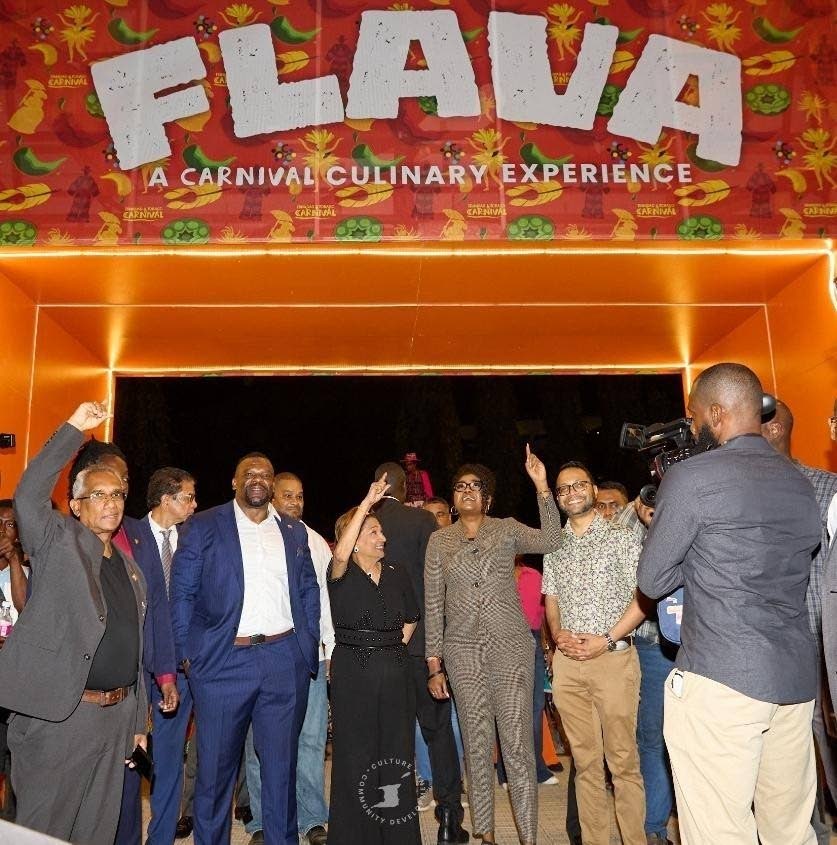
    The Ministry of Culture and Community Development, in partnership with the National Carnival Commission (NCC), formally opened the John Cupid Carnival Village on January 9, following the successful debut of the culinary-focused Flava Village the previous day. The dual launch marks the official beginning of the nation’s premier cultural festival.

    High-ranking officials including Minister of Culture and Community Development Michelle Benjamin, Parliamentary Secretary Dr. Narindra Roopnarine, and NCC chairman Peter Kanhai presided over the ceremonies alongside several government ministers and stakeholders. Notably, Minister Benjamin did not deliver a public address during the events.

    The unveiling of the John Cupid Carnival Village proved contentious as NCC chairman Kanhai faced audible public disapproval when explaining the venue’s relocation from the east to the west side of the grandstand. Despite Kanhai’s assurances that the new layout offered improved convenience, accessibility, and spaciousness, attendees responded with loud boos and shouts of disagreement.

    “You will notice right off the bat that we are doing things differently this year,” Kanhai stated during his address, which was immediately met with crowd disapproval. He maintained that both new and returning visitors would recognize the dramatically enhanced quality of the village experience despite the vocal opposition.

    In contrast to the mixed reception of the Carnival Village, the Flava Village culinary component reported exceptional success. The ministry revealed that numerous food vendors completely sold out their inventory before closing time on the inaugural night, with one entrepreneur reporting by 8 PM and subsequently doubling his stock for the second night to meet unprecedented demand.

    Minister Benjamin extended gratitude to the NCC Board of Commissioners and all involved parties for their dedication toward ensuring Carnival 2026’s success. The ministry confirmed that festival events are now fully underway, including the heating Panorama 2026 competitions, the launched Chutney Soca Monarch 2026, and final costume preparations ahead of the main celebrations.

  • Liam Bryden, Victoria Seenath hold on to Brechin Castle Open leads

    Liam Bryden, Victoria Seenath hold on to Brechin Castle Open leads

    Liam Bryden has established a formidable three-stroke advantage following the second round of the Brechin Castle Open Golf Championship at Sevilla Golf Course. The 2022 titleholder, who held a marginal one-shot lead after day one, dramatically expanded his margin as defending champion Ryan Gomez encountered significant difficulties on Couva’s front nine, conceding three critical shots.

    Despite Gomez reclaiming one shot during the back nine, Bryden’s consistent performance secured him a comfortable cushion heading into the championship’s decisive final round. Meanwhile, Marcus Ling delivered an impressive 70-shot round to catapult into third position, trailing the leader by four strokes, while Alex Kangoo matched Ling’s score to claim fourth place.

    In the women’s division, defending champion Victoria Seenath strengthened her position with an 80-stroke round, establishing a five-shot dominance over her closest competitor. Isabella Ramdeen advanced to second place with an 83, as Elise LaBorde slipped to third after carding an 85.

    The First Flight category witnessed a compelling familial rivalry unfold, with Asa Roopchand maintaining a two-shot lead over his teenage son Aba Bally Roopchand. Despite the younger Roopchand firing a superior 77, Asa’s steady 78 preserved his advantage. Amir Ali remains in contention just two strokes back after an 82-round performance.

    Notably, overnight leaders Dr. Solaiman Juman and Shazad Ali experienced dramatic declines, plummeting to 16th and 11th positions respectively. Defending champion Hollis George revitalized his campaign with a flight-best 77, positioning himself for a potential title defense from sixth place.

    The tournament concludes on January 11 with the third and final round determining all championship winners.

  • Sale of Standards to Term Finance finalised

    Sale of Standards to Term Finance finalised

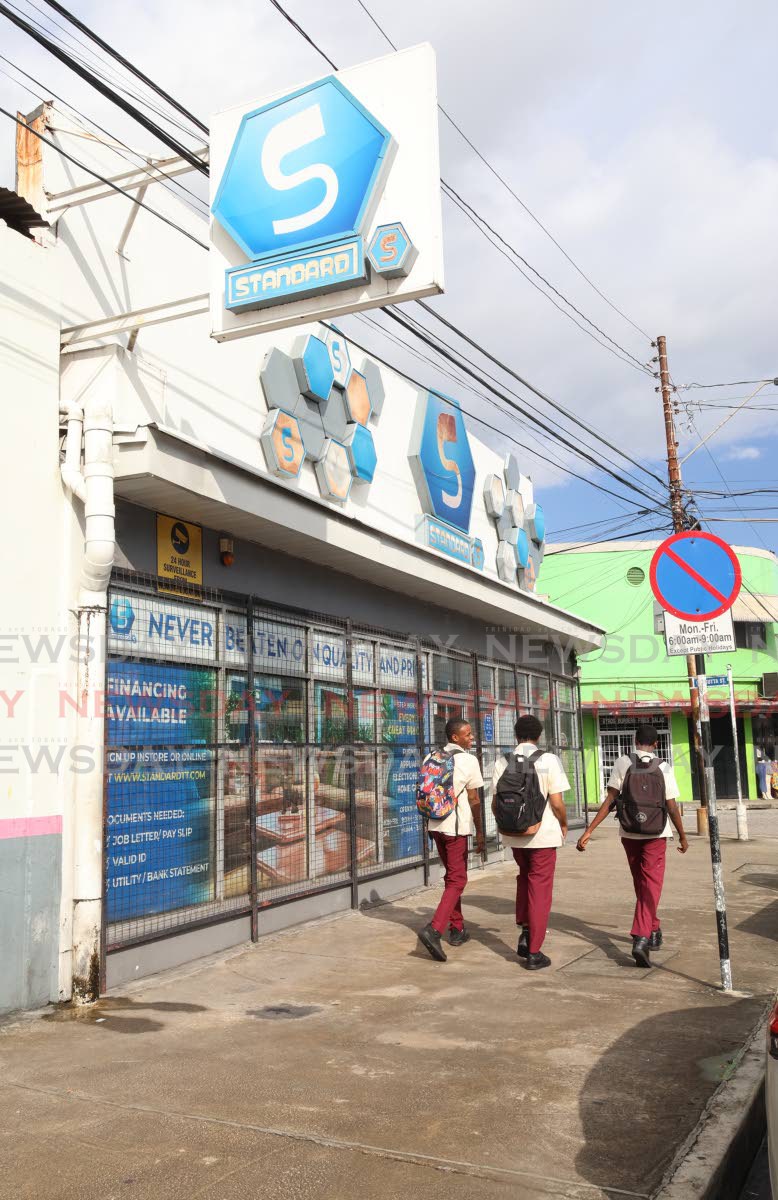
    ANSA McAL has completed the divestiture of its longstanding retail subsidiary Standards Distributors TT to Term Finance, marking a significant strategic realignment for the Caribbean conglomerate. The transaction, which was initially announced in November 2025, also encompasses the Barbados operations under Standard Distribution and Sales Barbados.

    The decision to sell emerged against a backdrop of declining appliance sales and evolving consumer spending patterns. ANSA McAL characterized the move as a deliberate strategic pivot to optimize its corporate portfolio and reallocate resources to core business segments.

    In an official statement released on January 8, the conglomerate revealed that Term Finance will transform the acquired entity into Standard Credit—a consumer credit and e-commerce platform. This transformation will leverage Standards’ historical expertise in hire-purchase financing while introducing expanded digital credit solutions through both physical branches and online channels across Trinidad and Tobago.

    Anthony N Sabga III, Group CEO of ANSA McAL, reflected on the transaction as closing “an extraordinary chapter in the Standard story,” acknowledging the brand’s historic contribution to Caribbean households and recognizing the teams that built the successful retail operation since its acquisition in 1967.

    The transition ensures continuity for existing customers, with all current hire-purchase agreements remaining valid through established payment channels. Product warranties and service commitments will continue unchanged, with ongoing customer support provided through official digital platforms and communication channels.

  • Lessons to be learnt

    Lessons to be learnt

    The recent political maneuvering involving Venezuelan opposition leader María Corina Machado and former US President Donald Trump offers critical insights for smaller nations navigating complex international relations. Machado’s symbolic offer to share her Nobel Peace Prize with Trump—reportedly made after he expressed displeasure at not receiving the award himself—appears more as an act of political desperation than genuine diplomacy. This gesture has failed to yield the anticipated support, with Trump refusing to endorse Machado or any established opposition figures in Venezuela. Instead, he has indicated intentions to directly oversee Venezuela’s political transition through allies including Pete Hegseth and Marco Rubio. This development reveals a concerning pattern where local political actors are utilized as convenient instruments until they no longer serve external strategic interests. Machado, once considered Washington’s preferred candidate for a post-Maduro Venezuela due to her international acceptability and alignment with foreign policy objectives, now appears sidelined despite Maduro’s imprisonment. This scenario exemplifies imperial behavior where allies are elevated when useful and discarded once objectives are achieved. For Trinidad and Tobago and similar small states, this situation underscores the importance of maintaining strategic distance and principled neutrality rather than placing trust in administrations that prioritize transactional dominance over mutual respect. National sovereignty is best preserved through independent foreign policy that avoids entanglement in geopolitical theaters where smaller nations risk becoming supporting actors or collateral damage.