标签: Trinidad and Tobago

特立尼达和多巴哥

  • Trinidad and Tobago Newsday – Thursday January 22nd 2026

    Trinidad and Tobago Newsday – Thursday January 22nd 2026

    A recent surge in public health discussions has brought the global dietary supplement industry under intense scrutiny. Health experts and regulatory bodies are raising urgent concerns about the safety, efficacy, and marketing claims of these widely consumed products, which often occupy a regulatory gray area between food and pharmaceuticals.

    Unlike prescription medications, dietary supplements frequently bypass rigorous pre-market approval processes, relying instead on post-market surveillance to identify adverse effects. This regulatory framework has led to growing apprehensions about potential contaminants, inaccurate ingredient labeling, and exaggerated health benefit claims that may mislead consumers.

    Medical professionals emphasize that while some supplements demonstrate proven benefits for specific health conditions and nutritional deficiencies, many products lack substantial scientific evidence to support their advertised claims. The absence of standardized manufacturing practices across the industry further compounds these concerns, potentially leading to inconsistent product quality and potency.

    Healthcare providers are increasingly advocating for more transparent labeling requirements, third-party quality verification, and improved consumer education initiatives. They recommend that individuals consult healthcare professionals before incorporating new supplements into their regimen, particularly those with pre-existing medical conditions or who are taking other medications.

    The ongoing discourse highlights the critical need for consumers to approach supplement use with informed skepticism and to prioritize evidence-based health interventions over marketing claims.

  • Venezuelan ambassador: Region stands united for peace, sovereignty

    Venezuelan ambassador: Region stands united for peace, sovereignty

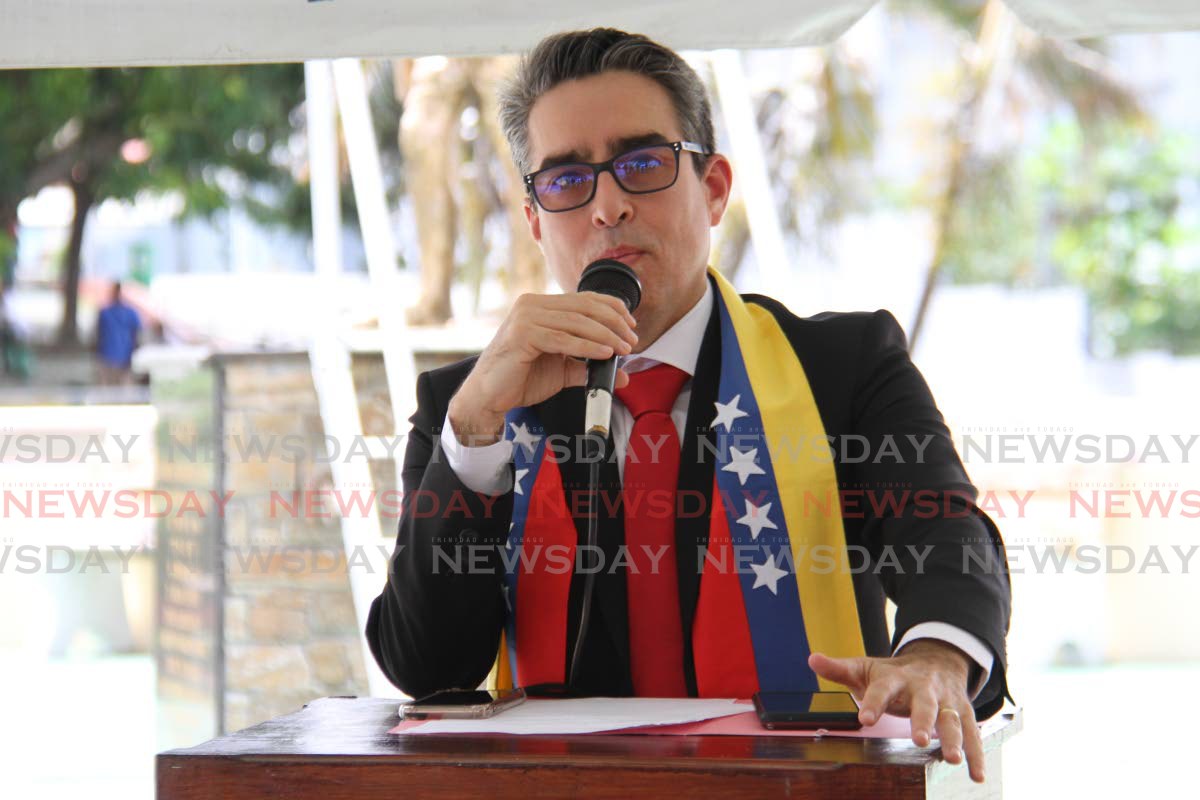
    Caribbean nations have demonstrated remarkable regional solidarity in response to what they characterize as unlawful US military actions against Venezuela. The First Regional Conference: The Voices of the Caribbean in Defense of Venezuela and International Law convened on January 19, bringing together over 180 political and civil representatives from across the hemisphere to address escalating tensions.

    The gathering, which included delegates from Trinidad and Tobago, Antigua and Barbuda, Barbados, Cuba, Jamaica, and numerous other Caribbean states, plus representation from Palestine’s Gaza Strip, focused on coordinating a unified response to the January 3rd military operation that resulted in the capture of Venezuelan President Nicolás Maduro and First Lady Cilia Flores.

    Venezuelan Ambassador to Trinidad and Tobago Álvaro Sánchez Cordero stated that the conference served as a platform to articulate coordinated proposals between social and solidarity movements throughout the Caribbean. Participants unanimously condemned the Trump administration’s military intervention, which reportedly resulted in over 100 casualties and what attendees labeled the ‘unlawful kidnapping’ of Venezuela’s constitutional leaders.

    The primary objectives emerging from the conference included establishing an international solidarity network to defend national sovereignty, developing actionable plans to influence foreign policy reformulation across participant nations, and creating legal instruments to preserve Caribbean unity and territorial integrity.

    Maduro and Flores, who appeared before a New York court on January 5th pleading not guilty to narcoterrorism and drug trafficking charges, are scheduled for their next court appearance on March 17th. Meanwhile, Venezuelan Vice President Delcy Rodríguez has assumed the role of interim president following Maduro’s capture.

    The conference represents the initial phase of coordinated activities that will include expert presentations on international law, analytical sessions, and thoughtful discussions aimed at maintaining regional stability against external threats.

  • Judge rules PM’s ‘administrative silence’ breached permanent secretary’s rights

    Judge rules PM’s ‘administrative silence’ breached permanent secretary’s rights

    In a landmark constitutional judgment, High Court Justice Westmin James has delivered a scathing rebuke of a sitting Prime Minister’s administrative conduct, ruling that prolonged silence on appointment recommendations constituted an unconstitutional violation of a senior public officer’s rights.

    The court upheld the constitutional claim brought by retired public service director John Edwards against the Attorney General, finding that the Prime Minister’s repeated failure to respond to Public Service Commission (PSC) consultations effectively created an illegal “de facto veto” that blocked Edwards’ career advancement unjustly.

    Evidence presented to the court revealed that between 2010 and 2013, Edwards received multiple recommendations from the PSC to act as Deputy Permanent Secretary. However, the Prime Minister failed to respond to three separate consultation requests in 2012 while approving other officers’ appointments within normal timeframes. This selective administrative silence continued until August 2013, when approval finally came—coinciding exactly with Edwards’ commencement of pre-retirement leave, rendering the authorization practically useless.

    Justice James determined that this conduct violated Sections 4(b) and 4(d) of the Constitution, pertaining to protection of the law and equality of treatment by public authorities. The ruling emphasized that while Section 121 grants the Prime Minister appointment veto power, this authority must be exercised rationally, independently, and without unreasonable delay.

    The court awarded Edwards $250,000 in damages—$100,000 as compensatory damages for distress and inconvenience, and $150,000 as vindicatory damages to underscore the seriousness of the constitutional breaches and deter future similar conduct by public authorities.

    Significantly, the judge rejected the State’s arguments regarding delay in filing the claim, accepting Edwards’ explanation that he only discovered the true reason for his non-appointment through Freedom of Information Act disclosures in 2022. The court recognized the case’s broader implications for constitutional governance and accountability, noting that permitting such administrative silence would enable executives to circumvent legal requirements and undermine independent constitutional bodies like the PSC.

    The judgment establishes crucial precedent regarding ministerial accountability and the limits of executive power, asserting that administrative silence cannot serve as an indirect veto mechanism without transparency or justification.

  • West Indies lose T20 series to Afghans

    West Indies lose T20 series to Afghans

    In a stunning display of cricketing prowess, Afghanistan secured a decisive 2-0 series victory against the West Indies with a commanding 39-run triumph in Dubai on January 21. This defeat marks another concerning setback for the Caribbean team, occurring merely weeks before the highly anticipated T20 World Cup.

    Afghanistan’s innings showcased remarkable resilience after an early stumble. Despite losing both openers within the powerplay period—Rahmanullah Gurbaz (1) and Ibrahim Zadran (22)—to the bowling of Shamar Joseph and Matthew Forde respectively, the middle order mounted an extraordinary recovery. The partnership between Darwish Rasooli and Sediqullah Atal proved particularly devastating, amassing 115 runs for the third wicket with aggressive strokeplay that included 13 boundaries between them.

    Atal eventually fell to Forde after scoring 53 from 42 deliveries, while Rasooli’s explosive innings of 68 from just 39 balls was terminated by Ramon Simmonds. A final flourish came from Azmatullah Omarzai, whose unbeaten 26 from 13 balls propelled Afghanistan to a formidable total of 189/4 from their allotted 20 overs.

    The West Indies’ response began disastrously, losing three key wickets—Alick Athanaze (8), Evin Lewis (13), and Johnson Charles (0)—within the first eight overs while managing only 38 runs. Shimron Hetmyer provided temporary hope with a blistering 46 from merely 17 deliveries, including six maximums, but his dismissal in the 14th over effectively ended the contest. Captain Brandon King offered resistance with a patient 50 from 41 balls, but the team ultimately collapsed to 150 all out in 18.5 overs.

    Afghanistan’s bowling attack demonstrated clinical efficiency, with Mujeeb Ur Rahman claiming impressive figures of 4/21 from his four overs. The teams are scheduled to conclude the series with a final match on January 22.

  • National Heritage Trust hosts Legacy Leaders Training Programme

    National Heritage Trust hosts Legacy Leaders Training Programme

    In a landmark initiative recognizing that cultural preservation relies on human dedication rather than mere structures, Trinidad and Tobago’s National Trust launched its inaugural Legacy Leaders Training Programme on January 15-16. The event united heritage site custodians from across the nation in a transformative professional development experience.

    The programme, orchestrated by the Trust’s Education and Outreach Committee, brought together representatives from historically significant sites including Hayes Court, Holy Trinity Cathedral, Asa Wright Nature Centre, Lopinot Historic Complex, and Nelson Island. These practitioners, who often operate with minimal resources while juggling multiple roles from maintenance to fundraising, found common ground in their shared challenges and commitments.

    National Trust CEO Graeme Suite inaugurated the event by acknowledging the quiet determination required to sustain heritage spaces in contemporary society. He emphasized that beyond passion, successful preservation demands resilience, long-term vision, and the ability to navigate economic realities while honoring cultural responsibilities.

    The training curriculum addressed critical operational needs through expert-led sessions covering site interpretation, youth engagement strategies, visitor experience enhancement, and marketing communications. Facilitator Joseph Bertrand introduced innovative approaches to visitor management, advocating for guidance rather than enforcement to foster respectful behavior and cultivate lasting connections between communities and heritage sites.

    A particularly impactful session featured the Heritage Tax Allowance Programme (HTAP), a government-backed fiscal incentive offering companies 150% tax deductions (up to $1 million annually) for investments in heritage preservation. Senior Heritage Preservation Officer Ashleigh Morris explained how this initiative creates vital private-sector partnerships for restoration projects that might otherwise remain financially unfeasible.

    The programme intentionally fostered peer-to-peer exchange, creating a supportive environment where participants could share challenges and solutions. Central concerns included succession planning and engaging younger generations to ensure stewardship continuity beyond current caretakers.

    Special recognition was accorded to Joseph Bertrand, who conceived and project-managed the Legacy Leaders initiative. The programme represents a strategic pivot toward investing in human infrastructure for heritage preservation, acknowledging that sustainable management depends equally on leadership development, collaborative networks, and community connections as on conservation techniques.

    The National Trust continues to advocate for public participation in heritage preservation through membership and active engagement, reinforcing the fundamental principle that investing in people ultimately protects legacy.

  • MV Blue Wave Harmony arrives Jan 22

    MV Blue Wave Harmony arrives Jan 22

    In a significant development for Trinidad and Tobago’s infrastructure and economic landscape, Works and Infrastructure Minister Jearlean John announced the imminent arrival of the MV Blue Wave Harmony. The new passenger and cargo vessel, set to dock at 8 am on January 22, will serve as a replacement for the Cabo Star on the critical seabridge connection.

    The announcement came during the Amcham economic forum at Port of Spain’s Hyatt Regency on January 21, where Minister John revealed extensive redevelopment plans as part of the government’s broader revitalization initiative. The comprehensive strategy encompasses 129 projects targeting key areas nationwide, with particular focus on transformative developments at Invaders Bay and Port of Spain.

    Invaders Bay, comprising 50 acres of prime reclaimed real estate accumulated over two administrations, is poised for dramatic transformation. Minister John outlined ambitious proposals including hotel complexes, marina facilities, and residential housing. The foreshore development alone anticipates 300 premium apartments and 400 marina docks, capitalizing on Trinidad’s advantageous position outside the hurricane belt for dry docking services.

    The Port of Spain revitalization involves repurposing over 400 acres of land, potentially freeing 150 acres of premium real estate for tourism-oriented development including convention centers and entertainment venues. Additionally, Sea Lots is designated for conversion into a specialized “health city” district.

    The scale of construction requirements underscores the project’s magnitude: 3,000 tonnes of structural steel, 23,000 tonnes of cement, 5,000 tonnes of rebar, and substantial additional materials. At peak development, the initiatives are projected to generate over 70,000 jobs, providing significant economic stimulation through construction activity.

    Minister John confirmed the extension of expression of interest submissions for the Invaders Bay project until February 5, responding to numerous requests for additional time. The developments will receive international validation through an upcoming visit by Abu Dhabi’s foreign affairs minister on January 23, who will assess project sites firsthand.

  • Darion Whiteman edges Carifta stars in 400m Golden League showdown

    Darion Whiteman edges Carifta stars in 400m Golden League showdown

    The 2026 Keshorn Walcott Golden League Athletics series witnessed spectacular performances at its second leg in Shaw Park, Tobago, on January 18, with emerging talents showcasing exceptional athletic prowess across multiple disciplines.

    RSS Phoenix’s Darion Whiteman delivered a breathtaking performance in the boys’ under-20 400-meter event, securing victory in a nail-biting finish against formidable competitors. Whiteman demonstrated remarkable resilience in heat three, outpacing 2025 Carifta gold medalists Brion Scott and Christopher Sammy with a winning time of 50.54 seconds—the fastest across all heats. Scott followed closely at 50.56 seconds, while Sammy finished third in the heat at 53.97 seconds. The overall standings saw Khordae Lewis (50.88s) and Keiel Samuel (52.26s) claiming third and fourth positions respectively.

    Whiteman continued his dominance by capturing the boys’ under-20 200-meter title, triumphing in a competitive field of 13 athletes with a time of 22.93 seconds. The rivalry between Whiteman and Scott extended to the 800-meter event, where Scott emerged victorious with a time of 2:00.35 minutes, followed by Whiteman (2:01.60) and Samuel (2:03.15).

    Christopher Sammy redeemed himself in the 1,600-meter race, displaying extraordinary endurance to win by a significant margin. His time of 4:49.54 minutes placed him nearly thirty seconds ahead of runner-up Malique Young (5:16.94) from Zenith.

    Shian Lewis demonstrated remarkable versatility by achieving a double victory in the girls’ under-20 category. She claimed the 200-meter title with 26.47 seconds, ahead of Alisha Sampson (26.90s), and secured the 400-meter win in 1:00.86, outperforming Kaori Robley (1:01.40).

    Several other athletes delivered standout performances: Young Azzirion Williams dominated the boys’ under-13 category with wins in 60m, 200m, and 400m events. Multiple winners included Ace Beckles (boys’ under-9 60m and 150m), Keanna Cummings (girls’ under-15 60m and 200m), J’Quan Douglas (boys’ under-17 60m and 200m), Kelcey Roach (girls’ under-13 60m and 400m), and Cai Williams (boys’ under-15 200m and 400m).

    Field events featured notable achievements, including Lebron James winning the men’s discus and shot put competitions, while Eli’jah Titus secured a double victory in the boys’ under-15 discus and shot put events.

    The athletic series continues with its third meet scheduled for January 31 at Toco Secondary School grounds, promising more exceptional performances from Trinidad and Tobago’s emerging track and field talents.

  • Trinidad and Tobago Under-20 footballers crush SVG in practice match

    Trinidad and Tobago Under-20 footballers crush SVG in practice match

    Trinidad and Tobago’s Under-20 men’s national team delivered a commanding performance on January 19th, securing an impressive 6-0 victory against St Vincent and the Grenadines at Couva’s Ato Boldon Stadium. The comprehensive win served as crucial preparation for upcoming Concacaf qualifiers scheduled to begin next month.

    The match saw exceptional performances from captain Derrel Garcia and Fatima College student Phillip Nelson, each contributing two goals to the scoreline. Garcia, who already boasts experience in senior professional football, initiated the scoring in the 22nd minute. Nelson followed with his first goal in the 32nd minute, establishing a 2-0 lead by halftime.

    The second half began with explosive intensity as Garcia and Nelson each found the net again within a remarkable two-minute span—Garcia scoring in the 51st minute and Nelson completing his brace in the 53rd minute. Despite St Vincent’s efforts to stabilize their defense, Giovanni Hospedales extended TT’s lead in the 77th minute before Caden Trestrail concluded the scoring in the 85th minute.

    Head coach Marvin Gordon provided measured post-match commentary, expressing only partial satisfaction with the performance. ‘I think I am holding this group to a high standard,’ Gordon told TTFA media. ‘I was pleased with the ball movement today at times and then at times I was not pleased.’ The coach specifically noted that passing sequences could have been executed with greater speed and precision.

    In parallel action at the same venue, Defence Force secured a 3-2 comeback victory against Grenada’s U-20 squad. Grenada’s Nathan Mc Intosh scored twice (18th and 60th minutes), but Defence Force responded with goals from Nicholas Bobcombe (37th), Jonathan Mason (74th), and a dramatic 89th-minute winner from Josiah Superville.

    The practice tournament continues with upcoming fixtures at Hasely Crawford Stadium on January 21st featuring Grenada U-20 vs St Vincent U-20 (6 pm) followed by TT U-20 vs AC Port of Spain (8 pm). The tournament concludes on January 23rd at Ato Boldon Stadium with TT U-20 facing Grenada U-20 (6 pm) and St Vincent U-20 meeting AC Port of Spain (8 pm).

  • Bess Motors Ltd invest $175k into U15 Interzone tourney

    Bess Motors Ltd invest $175k into U15 Interzone tourney

    In a significant boost for Caribbean cricket development, Bess Motors Ltd has pledged a substantial $175,000 sponsorship to Trinidad and Tobago Cricket Board’s (TTCB) Under-15 Youth Development Interzone Tournament. The partnership was formally established on January 21 when managing director Krystal Maharaj presented the sponsorship cheque to TTCB president Azim Bassarath at the National Cricket Centre in Couva.

    The upcoming tournament, scheduled to commence on January 28, will showcase emerging talent from eight zonal teams across Trinidad and Tobago: North, North East, Central, South, South West, South East, East, and Tobago. These teams will compete in two groups, with the event serving as a crucial talent identification platform ahead of Cricket West Indies’ Rising Stars Under-15 championship later this year.

    TTCB general secretary Henry Chase emphasized the tournament’s comprehensive reach, noting that it guarantees young athletes from every region of Trinidad and Tobago equal opportunity for recognition and development. “This interzone competition acts as a primary evaluation mechanism for national team selection,” Chase stated, “providing a clear pathway for players to advance to regional representation, including the prestigious West Indies Under-15 tournament.”

    Bassarath hailed the corporate partnership as a transformative moment for youth cricket development, praising Bess Motors for their strategic investment at this critical developmental stage. The TTCB president highlighted the tournament’s historical significance as a launching pad for numerous Trinidadian cricket legends, including former West Indies captain Denesh Ramdin, T20 phenomenon Nicholas Pooran, and current Red Force head coach Rayad Emrit.

    Beyond competitive matches, the 2026 tournament features comprehensive off-field development initiatives including specialized coaching education and umpire training programs. The event is specifically designed to foster character development, instill discipline, enhance communication skills, and promote personal growth among participants from all seven TTCB zonal councils, including Tobago.

    The sponsorship represents a long-term commitment to structured youth development, with Chase describing the initiative as “a deliberate investment in the future of Trinidad and Tobago cricket.” The partnership was facilitated through the efforts of Adrian Ali, captain of Marchin Sports Club and Chaguanas Borough Corporation councillor, who helped bridge the collaboration between TTCB and Bess Motors Ltd.

  • What the Trinidad and Tobago economy looked like in 2025

    What the Trinidad and Tobago economy looked like in 2025

    The year 2025 marked a period of significant economic recalibration for Trinidad and Tobago as the nation confronted multiple structural challenges within an increasingly volatile global landscape. Trade policy fluctuations and geopolitical tensions created headwinds for the Caribbean economy, exposing its continued reliance on the energy sector while highlighting urgent needs for diversification and reform.

    Global economic conditions deteriorated throughout 2025, particularly following April tariff actions by the United States that targeted several trading partners including China and Canada. Although subsequent negotiations resulted in partial rollbacks and delayed implementation timelines, persistent uncertainty undermined international trade stability.

    Domestically, the Trinidad and Tobago economy contracted by 2.1% during the first quarter of 2025, with both energy (-4.8%) and non-energy (-1.0%) sectors contributing to this decline. The economic downturn reflected deeper structural issues, including declining natural gas production and a severely constrained foreign exchange market that affected businesses across virtually all sectors.

    Geopolitical tensions with Venezuela emerged as a critical concern, with Caracas suspending key energy cooperation agreements including the strategically important Dragon gas project. This suspension jeopardized Trinidad’s access to Venezuela’s substantial offshore gas reserves, potentially undermining future gas supply security for the nation’s LNG and energy industries while damaging investor confidence in the sector.

    The foreign exchange shortage persisted throughout 2025, creating operational challenges for businesses through unpredictable currency access, delayed supplier payments, rising input costs, and production disruptions. The administratively managed system continued to reduce competitiveness and discourage new investment, demonstrating that rationed rather than market-responsive forex access inhibits efficient economic growth.

    Business confidence metrics revealed a complex picture. The TT Chamber of Industry and Commerce’s Business Outlook Index for Q4 2025 indicated that 54% of executives reported worsened financial performance over the previous six months. However, a majority anticipated improved organizational financial outlook within twelve months, suggesting business leaders viewed current challenges as cyclical rather than permanent. Notably, the Accommodation and Food Services sector demonstrated particular sensitivity to fiscal policy changes, with hiring intentions dropping sharply following excise duty increases on alcohol and tobacco in the 2026 Budget.

    International ratings agencies expressed growing concern about the nation’s economic trajectory. S&P Global Ratings revised Trinidad and Tobago’s outlook to negative on September 25, 2025, citing gradual erosion of fiscal and external buffers alongside subdued long-term economic growth. Moody’s maintained the government’s Ba2 rating but similarly revised the outlook to negative on December 12, 2025, highlighting near-term risks including declining foreign exchange reserves.

    Operational challenges persisted across the business environment, with issues in trade facilitation, port operations, and administrative processing affecting transaction costs and delivery timelines. Tax administration delays, particularly regarding VAT refunds, created cash flow management difficulties for exporters and VAT-intensive businesses.

    The labor market reflected both resilience and structural problems, with job demand continuing to outpace available opportunities—particularly for youth and first-time labor force entrants. A National Recruitment Drive in October 2025 attracted approximately 11,000 online applications on its first day, demonstrating substantial unmet employment demand. Simultaneously, employers reported persistent skills mismatches and difficulties sourcing appropriately trained labor for specialized roles.

    The potential prolonged shutdown of Nutrien’s nitrogen operations at Point Lisas Industrial Estate exemplified the economic consequences of structural challenges. The fertilizer producer cited port access restrictions and unreliable, uneconomic natural gas supply as primary reasons for the closure, which threatens significant foreign exchange earnings from ammonia and urea exports, risks hundreds of jobs, affects related industries, and could undermine investor confidence in the petrochemical sector.

    These developments throughout 2025 underscored the urgent need for decisive economic reform in Trinidad and Tobago. The convergence of global uncertainty, energy sector vulnerabilities, foreign exchange constraints, and business confidence challenges revealed the limitations of the current economic model and emphasized the risks of continued energy sector reliance. The path forward requires prioritizing private sector-led expansion, productivity enhancement, and long-term competitiveness to achieve inclusive and durable economic progress.