标签: Trinidad and Tobago

特立尼达和多巴哥

  • Gifting shoes this Christmas? Look for quality, comfort

    Gifting shoes this Christmas? Look for quality, comfort

    As the Christmas shopping season reaches its peak, consumers face a critical purchasing decision: authentic branded footwear versus counterfeit alternatives. This choice carries significant implications for both personal wellness and economic integrity.

    Premium footwear manufacturers like Nike, Adidas, and Crocs have built their market dominance through decades of research and development. Their products incorporate engineered materials specifically designed for anatomical support, impact absorption, and long-term durability. The manufacturing processes undergo rigorous quality control measures to ensure consistent performance standards.

    Conversely, counterfeit footwear operations prioritize cost reduction over quality and safety. These unauthorized manufacturers typically utilize substandard materials that compromise structural integrity and comfort. The absence of proper biomechanical engineering in knockoff designs can lead to foot discomfort, improper alignment, and potential injury with extended use.

    From an economic perspective, authentic purchases support legitimate businesses that invest in innovation, employment, and consumer protection. Counterfeit transactions inadvertently fund unregulated operations that often violate intellectual property rights and labor standards.

    Consumer protection experts emphasize that branded footwear represents more than just a logo—it embodies scientific research into foot health, quality materials sourcing, and manufacturing accountability. The higher initial investment typically translates to longer product lifespan and better value per wear.

    This holiday season, consumers should consider that gifting footwear involves not just immediate satisfaction but long-term foot health and ethical consumption practices. While counterfeit options may present tempting short-term savings, they carry hidden costs in comfort, durability, and potential health implications.

    Industry professionals like Delicia Burris, owner of Glorious Touch Health and Wellness Spa, reinforce that footwear choices directly impact musculoskeletal health and overall wellbeing during seasonal activities.

  • Speaker clears PM in ‘cuff down’ remark

    Speaker clears PM in ‘cuff down’ remark

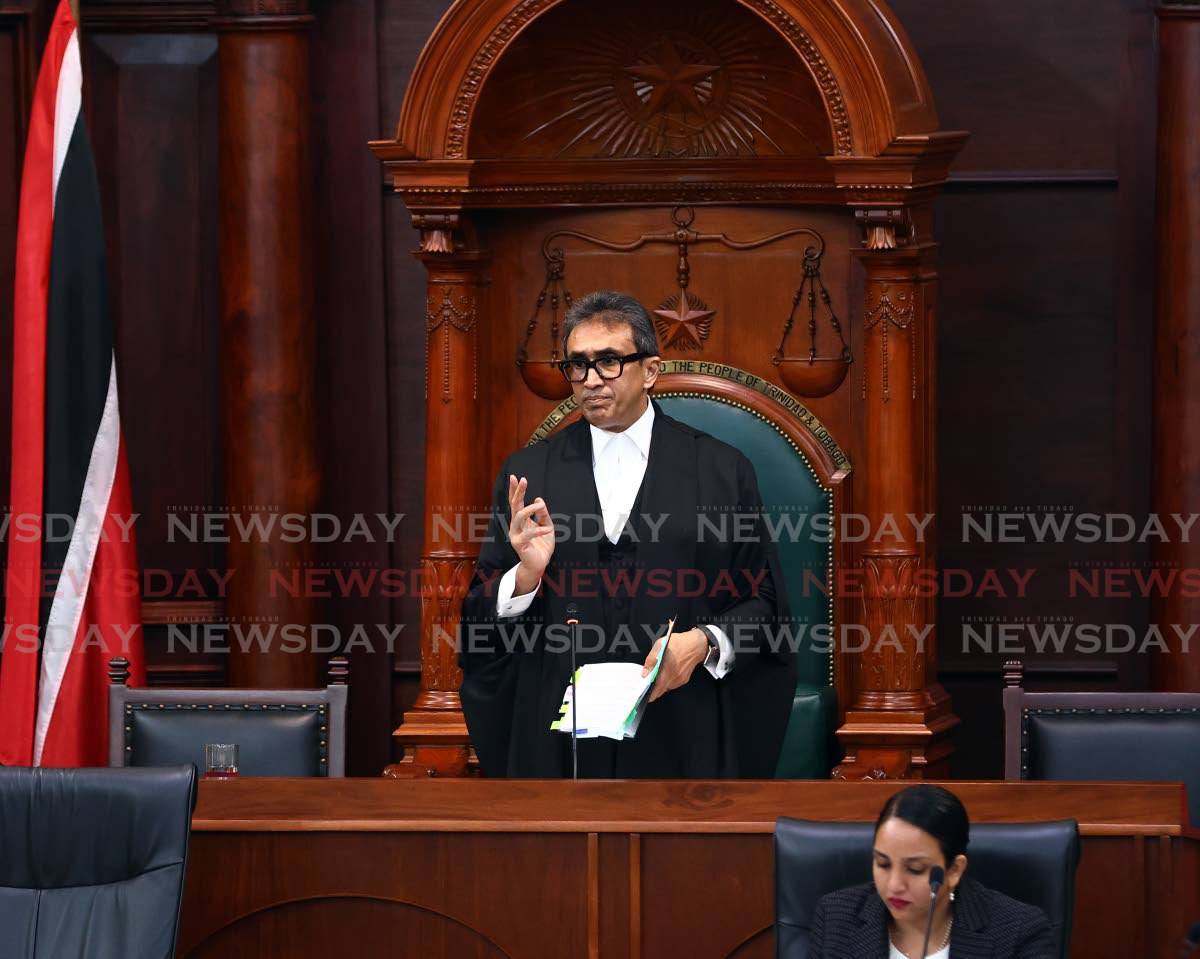
    In a significant parliamentary development, Speaker Jagdeo Singh has formally dismissed a privilege motion initiated by Diego Martin North East MP Colm Imbert against Prime Minister Kamla Persad-Bissessar. The Speaker’s ruling, delivered on December 9 following extensive deliberation, characterized the contentious exchange as “stillborn” due to its inherently lighthearted nature during the November 21 parliamentary session.

    Speaker Singh’s comprehensive judgment emphasized that the verbal exchange between the political leaders was widely perceived as casual banter rather than a serious constitutional breach. The ruling further clarified that no substantive evidence indicated intentional obstruction or impediment of parliamentary duties, thereby negating the grounds for privilege violation proceedings.

    The controversy originated from a heated moment during parliamentary proceedings when Prime Minister Persad-Bissessar cautioned Imbert against gesturing toward her, stating, “Because I will cuff you down” in response to his defiant “Why not?” retort. Government Business Leader Barry Padarath subsequently accused Imbert of deliberately provoking the Prime Minister and instigating the conflict—an allegation Imbert has consistently denied.

    This ruling represents a significant precedent in Trinidad and Tobago’s parliamentary protocol, reinforcing the distinction between informal interpersonal exchanges and substantive breaches of parliamentary privilege. The decision underscores the Speaker’s role in maintaining decorum while recognizing the occasional inevitability of political tensions within legislative debates.

  • Fixing Trinidad and Tobago our duty

    Fixing Trinidad and Tobago our duty

    In a powerful public appeal, citizen Steve Alvarez has issued a compelling call to action for Trinidad and Tobago residents, drawing striking parallels between familial relationships and civic responsibility. Alvarez contends that while many citizens profess deep love for their nation, their actions frequently mirror those of dependent children who continuously extract resources from parents without reciprocating effort or value.

    The timing of this message coincides with the beginning of the Christmas season, presenting what Alvarez describes as an ideal opportunity for transformative community engagement. His practical recommendations include organizing volunteer initiatives to maintain public spaces, eliminating unauthorized garbage dumping, and providing assistance to vulnerable community members including the elderly and impoverished.

    However, Alvarez emphasizes that civic duty extends beyond aesthetic improvements to include active participation in governance processes. He encourages citizens to voice concerns about punitive legislation and contribute constructive suggestions regarding the government’s economic strategies for national survival and growth.

    The proposal outlines specific community-led interventions: residents collaboratively repairing potholes with temporary concrete solutions, promptly addressing water pipe leaks through coordinated reporting and basic repairs, and collectively purchasing sports equipment for youth development programs.

    Transcending political affiliations, Alvarez frames nation-building as a continuous process requiring daily commitment rather than merely electoral participation. He advocates for grassroots problem-solving as ultimately more impactful and rewarding than passive reliance on governmental intervention.

    The message concludes with a unifying vision: incremental national restoration through individual community transformations, positioning collective action as the foundation for Trinidad and Tobago’s revitalization.

  • Justice Seepersad calls for leadership rooted in integrity

    Justice Seepersad calls for leadership rooted in integrity

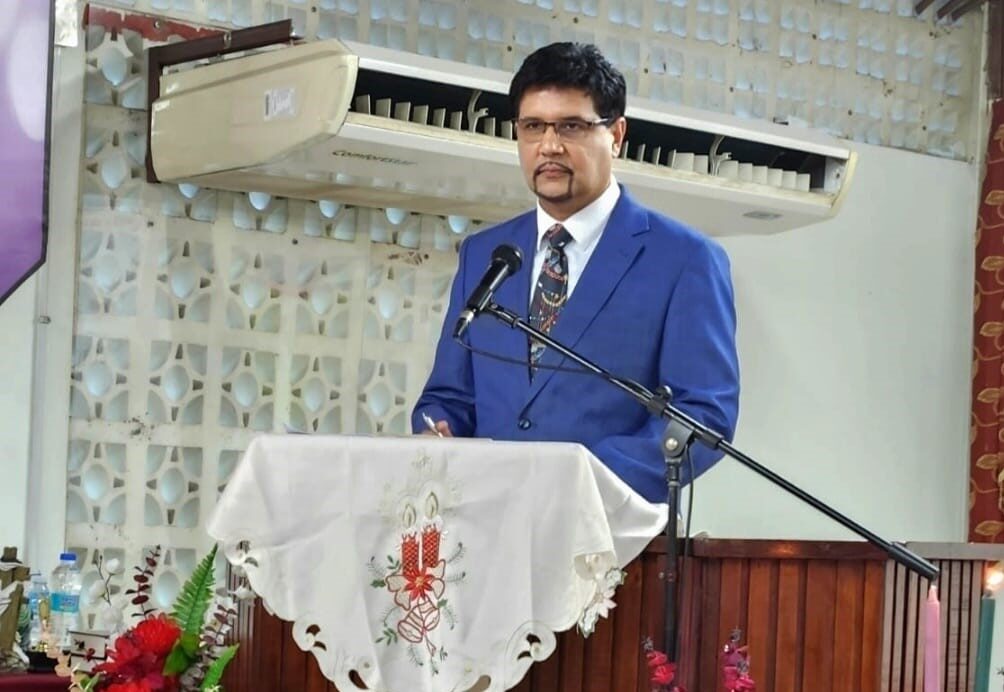
    In a powerful address during the 152nd anniversary service at Mizpah Presbyterian Church in Claxton Bay on December 7, High Court Justice Frank Seepersad delivered a compelling sermon on the critical need for principled leadership in times of global uncertainty. Speaking before congregants, Justice Seepersad articulated a vision of governance rooted in moral fortitude and strategic wisdom.

    The jurist emphasized that while Trinidad and Tobago, as a small island nation, cannot single-handedly influence superpower politics, its leadership must cultivate strategic alliances across political, economic, and military domains while safeguarding national sovereignty. He asserted that truly effective leadership necessitates policies that ensure collective security and prioritize citizen welfare above all else.

    Addressing what he described as a worldwide leadership crisis, Justice Seepersad outlined the qualities of exemplary leaders: those who serve with discipline, place communal needs above personal interests, and maintain unwavering integrity. He particularly stressed that genuine leadership begins with spiritual commitment, stating that ‘leaders who walk with integrity and skill can transform lives, communities, and nations.’

    Justice Seepersad further elaborated on practical leadership requirements, noting that promising leaders must be judged by their track record of delivering results rather than empty rhetoric. He advocated for leaders willing to challenge established norms and make difficult decisions with both empathy and equity, particularly in combating social maladies including drug trafficking, domestic violence, and criminal exploitation.

    The judge also called for national transformation amid concerning levels of divisive discourse and economic challenges. He urged a collective shift in mindset toward godly living, rejection of dependency cultures, and emphasis on service above self-interest. While addressing leadership responsibilities, Justice Seepersad equally emphasized individual accountability, encouraging citizens to take charge of their circumstances through lawful means and due process to catalyze meaningful societal change.

  • Blind Welfare president appeals for protection of children’s sight

    Blind Welfare president appeals for protection of children’s sight

    In a powerful address that blended personal experience with national urgency, Trinidad and Tobago Blind Welfare Association president Deonarine Ragoo issued an impassioned call for immediate action on children’s vision care. Speaking at the Rapidfire Kidz Foundation’s Eyes Right Project ceremony on November 30, the visually impaired leader addressed an auditorium of students, parents, and officials at Naparima College.

    The event marked a significant milestone as 51 students from San Fernando Boys’ and Girls’ Government Primary Schools received prescription glasses through a collaborative initiative between the foundation and Republic Bank Ltd. This partnership represents a concerted effort to ensure that visual impairments don’t hinder educational opportunities or dim future prospects.

    Ragoo, who possesses firsthand understanding of vision loss having been born with only ten percent vision before losing even that fifteen years ago, framed the initiative as more than charity. ‘This function must be looked at in the context of bringing freedom, social justice and empowerment to our nation’s children,’ he declared, elevating the discussion from mere healthcare to fundamental rights.

    The statistics presented were sobering: an estimated 15,000-20,000 people in Trinidad and Tobago live with visual impairment, often due to delayed treatment caused by poverty or neglect. Ragoo emphasized that such delays frequently lead to reduced vision or permanent blindness—outcomes his organization has fought against for over a century.

    Beyond immediate optical care, the president highlighted technological barriers facing visually impaired students, specifically the critical need for Braille displays costing approximately $25,000 each. These devices enable access to digital educational content, representing what Ragoo termed ‘true empowerment’ that leads to ‘true freedom.’

    The foundation demonstrated its expanded commitment to youth development by also supporting athletic pursuits. A $30,000 donation from fundraising proceeds was presented to former West Indies bowler Samuel Badree for constructing cricket nets at the SB Cricket Academy’s facility in Tarouba, scheduled to open in early 2026.

    Republic Bank Ltd reinforced its partnership with a $90,000 pledge for the 2025-2026 period, ensuring the Eyes Right Project’s continued expansion. Since its 2012 launch, the initiative has distributed 1,401 pairs of glasses, addressing vision problems that might otherwise go untreated.

    Practical guidance accompanied the donations, as See View Optical general manager Premnath Sookdeo educated young recipients on proper eyewear maintenance, warning against dry wiping lenses to prevent scratches from accumulated particles.

    Foundation president Kevin Ratiram encouraged balanced lifestyles, advising students to complement their improved visual capabilities with outdoor activities and family time rather than excessive screen use.

    As students departed with clearer vision and broader opportunities, Ragoo’s closing wish encapsulated the event’s spirit: ‘I wish you a Merry Christmas, a prosperous 2026, and many decades of good sight.’

  • Court declares Curepe woman’s ‘will’ invalid

    Court declares Curepe woman’s ‘will’ invalid

    In a significant probate ruling, Trinidad and Tobago’s High Court has declared a disputed will invalid after determining the document contained a forged signature. Justice Robin Mohammed delivered the judgment favoring a Curepe widower over his sister-in-law in a contentious estate battle.

    The case centered on a purported 2012 will that emerged only after the claimant refused to consent to his sister-in-law’s application for letters of administration. The deceased woman’s sister claimed executive rights under the alleged will, but forensic analysis revealed critical discrepancies in the signature.

    A court-appointed handwriting expert conducted detailed comparisons between the will’s signature and multiple authenticated samples from the deceased. The analysis demonstrated fundamental differences in execution style and identified telltale hesitation marks—indicators consistent with signature simulation rather than genuine authorship.

    Justice Mohammed noted the suspicious timing of the will’s emergence after more than a decade, stating that no legitimate executor would wait ten years to seek probate grant. The defendant’s initial attempt to obtain administration letters through consent before producing the will further undermined her credibility.

    The court found the sister-in-law failed to meet her burden of proving the will’s validity and ordered her to pay $1,063,200 in lost rental income from a Bushe Street, Curepe property to the widower. The judgment grants the husband full letters of administration over his late wife’s estate, effectively dismissing all claims made under the invalidated document.

    This ruling highlights the judiciary’s rigorous approach to detecting document fraud and protecting legitimate inheritance rights through expert forensic analysis and careful examination of circumstantial evidence.

  • Digital devices dilemma: Managing screen time during the holiday

    Digital devices dilemma: Managing screen time during the holiday

    As the holiday season approaches, pediatric experts are raising urgent concerns about the developmental risks associated with increased screen time among children. Dr. Melissa Rooplal, a consultant community pediatrician and child development specialist, emphasizes that the fundamental question isn’t about specific time limits but how digital devices displace essential childhood activities.

    Research reveals a troubling trend: children’s daily screen usage skyrocketed by approximately 84 minutes during the pandemic—a 52% increase from pre-pandemic levels—and these elevated patterns have persisted into the post-pandemic era. While traditional television viewing declines, children are consuming more fast-paced, highly stimulating content through platforms like TikTok, YouTube Shorts, and gaming applications.

    The developmental consequences are multifaceted. Early childhood learning, which thrives through hands-on experiences and social interaction, becomes compromised when screens dominate. Rapidly shifting digital content alters attention systems, making ordinary activities like story listening or toy playing seem dull by comparison. This neurological adaptation weakens children’s capacity for sustained attention, impulse control, and frustration management.

    Emotional regulation suffers when devices become primary soothing mechanisms, depriving children of opportunities to develop self-regulation skills. Social development falters as screen time reduces crucial face-to-face interactions necessary for learning empathy, sharing, and reading emotional cues. Physical health deteriorates through reduced active play, potentially contributing to obesity, poor posture, and sleep deficiencies—especially when evening screen use suppresses melatonin production.

    Dr. Rooplal recommends introducing screens only after 18 months, with strict adherence to slow-paced, educational content co-viewed with adults. She advocates for balanced tech gifting—prioritizing age-appropriate devices with parental controls alongside screen-free alternatives like puzzles, art supplies, and outdoor equipment. Critical strategies include device-free meals, screens only after outdoor activities, and mandatory screen blackouts one hour before bedtime.

    The expert concludes that intentional, informed parenting—focusing on consistent habits rather than strict elimination—can help children develop healthier relationships with technology while preserving essential developmental milestones.

  • Riley exits Republic Financial Holdings board ahead of Dec 15 AGM

    Riley exits Republic Financial Holdings board ahead of Dec 15 AGM

    Republic Financial Holdings Ltd (RFHL) is undergoing significant boardroom changes with the confirmed departure of director Robert Riley, effective December 6. This marks the fourth high-level resignation from the financial institution’s leadership in just over two months, creating a substantial shift in corporate governance.

    The resignation was formally disclosed through public channels and the Trinidad and Tobago Stock Exchange on December 9, in compliance with Section 64(1)(B) of the Securities Act 2012. This regulatory framework requires listed entities to promptly announce material alterations to their board composition.

    Robert Riley, an experienced energy-sector executive and corporate veteran, had served on RFHL’s board since October 2016. His departure follows those of Shameer Ronnie Mohammed (October 3), Waltnel X Sosa (October 7), and Jason Mootoo (November 21).

    This wave of resignations coincides with the government’s publicly stated objective to secure majority representation on RFHL’s board. Finance Minister Davendranath Tancoo initially signaled this strategic move during his presentation of the 2025-2026 national budget on October 13.

    According to RFHL’s 2025 annual report, the board comprised twelve directors as of September 30. Further changes are anticipated at the upcoming annual meeting scheduled for December 15 at Port of Spain’s Hyatt Regency. Current chairman Vincent Pereira is expected to step down due to reaching the bank’s mandatory retirement age of 70, while director Kristine Thompson is also anticipated to retire during the AGM proceedings.

  • Tobago Artist exhibition opens at Painters Art Studio

    Tobago Artist exhibition opens at Painters Art Studio

    The Painters Art Studio in Port of Spain will transform into a vibrant hub of Caribbean creativity with the inauguration of Tobago Artist 2025 on December 10. This groundbreaking exhibition showcases five exceptional visual artists who collectively represent the cutting edge of Tobago’s contemporary art movement.

    Curated to highlight diverse artistic approaches, the exhibition features Arletys Arias’ emotionally charged paintings exploring themes of memory and displacement, alongside Dunieski Lora’s vividly colored sculptural works that weave complex narratives through form and hue. Jason Nedd contributes technically refined pieces that capture the dual nature of island existence—both tranquil and multifaceted.

    Helen Evans pushes creative boundaries by merging traditional ceramic techniques with contemporary conceptual frameworks, while Martin Superville demonstrates his acclaimed expertise in portraiture and figurative works that have earned him recognition throughout regional art circles.

    The exhibition serves as a cultural bridge, designed to enhance the visibility of Tobago’s artistic community within Trinidad’s broader art ecosystem. Through a carefully selected array of paintings, sculptures, ceramic works, and mixed-media installations, the show presents both individual artistic journeys and shared Caribbean cultural heritage.

    Tobago Artist 2025 opens with an evening reception on December 10 from 5 PM to 9 PM at 45 Picton Street, Newtown, and will remain accessible to the public through December 14. Admission is free, providing an inclusive opportunity for art enthusiasts, collectors, and community members to engage directly with the artists and their creations.

  • Hosein calls for premarital counselling amid rise in domestic violence

    Hosein calls for premarital counselling amid rise in domestic violence

    In a significant address to newly licensed marriage officers, Trinidad and Tobago’s Minister of Legal Affairs Saddam Hosein has called for mandatory premarital counseling as a crucial measure against domestic violence. The minister delivered this urgent message during a licensing ceremony at Stollmeyer’s Castle in Port of Spain on December 8, where over thirty multi-faith marriage officers received their credentials.

    Minister Hosein emphasized that while love forms the universal foundation of marriage across all religious traditions, couples must be properly prepared for the legal and social responsibilities that accompany matrimony. “Every religion teaches one universal principle: love,” Hosein stated. “But living in love is also a legal process, and that is where my ministry plays a critical role.”

    The minister expressed particular concern about the troubling persistence of domestic violence, urging marriage officers to view premarital counseling as essential preparation rather than optional formality. He reminded attendees of their sacred duty to guide couples responsibly, stating this responsibility “must be exercised with care and integrity.”

    Hosein simultaneously announced sweeping reforms to eliminate bureaucratic delays that have long plagued the marriage licensing system. He revealed discovering countless neglected applications upon taking office in April, blaming inter-agency conflicts and outdated paper-based systems for the inefficiencies. “I am absolutely fed up with the bureaucracy,” Hosein declared. “For far too long, red tape has imposed significant burdens on citizens and religious bodies.”

    Registrar General Karen Bridgewater endorsed the minister’s reforms, praising his “common-sense approach” to consolidating previously scattered responsibilities. She noted that the restructuring has already eliminated longstanding bottlenecks and improved systemic efficiency. Bridgewater further emphasized the officers’ dual role as both solemnizers of marriages and strengtheners of the national social fabric, describing marriage as “the foundation of family life” and families as “the core upon which our nation is built.”

    While acknowledging that numerous applications remain pending, Hosein characterized the December 8 ceremony as symbolic progress toward a more efficient and responsible marriage licensing system. The minister concluded by urging officers to promote a culture that “spreads love rather than hate” throughout Trinidad and Tobago.