标签: Suriname

苏里南

  • Coalitie wil College van Procureurs-Generaal

    Coalitie wil College van Procureurs-Generaal

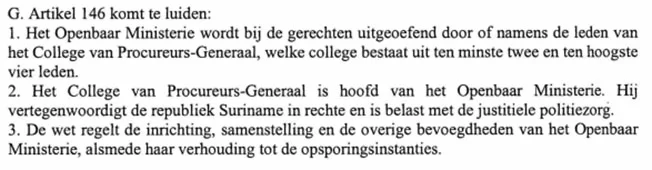
    The Dutch governing coalition has introduced groundbreaking legislation to fundamentally restructure the nation’s prosecutorial system. The proposed initiative law would replace the current single Prosecutor General position with a College of Prosecutors General comprising between two to four members.

    This reform represents a significant institutional strengthening of the prosecutorial function within the Dutch judicial system. Where the Prosecutor General was previously exclusively attached to the Court of Justice, the new framework expands this role to include the Supreme Court (Hoge Raad), which is also being introduced into the judicial structure.

    The College will be formally designated as the head of the Public Prosecution Service, representing the state in legal matters and overseeing judicial police operations. The legislation additionally proposes lowering the mandatory retirement age for prosecutors from 70 to 65 years.

    This reorganization addresses what coalition members describe as decades of organizational fragmentation within the Public Prosecution Service and its previous dependence on ministerial directives. The new framework establishes clear, centralized authority intended to create a more robust institutional foundation.

    The explanatory memorandum accompanying the sweeping proposal indicates that the current structure provides insufficient opportunities for the Public Prosecution Service to develop institutionally. By explicitly linking the Prosecutor General to both the Supreme Court and strengthening the College, the system aims to better prepare for:

    – Increasingly complex criminal cases involving political and economic dimensions
    – Cassation procedures requiring superior legal quality
    – More independent operations, particularly in sensitive cases

    The proposed constitutional amendment would fundamentally alter the Prosecutor General’s position within the judicial organization. The modification of Articles 141 and 142 would replace the phrase ‘the Prosecutor General at the Court of Justice’ with ‘the Prosecutor General at the Supreme Court and at the Court of Justice’ throughout legal texts.

    This dual anchoring positions the Prosecutor General at a crucial junction between the highest factual instance (Court of Justice) and the future highest judicial authority in law (Supreme Court). The reform makes clear that the Public Prosecution Service will no longer merely play a supporting role within the Court but will become an integral component of the new cassation hierarchy, effectively creating the only functionary institutionally connected to both top levels of the judiciary.
  • ICAO biedt steun voor modernisering luchtvaartsector

    ICAO biedt steun voor modernisering luchtvaartsector

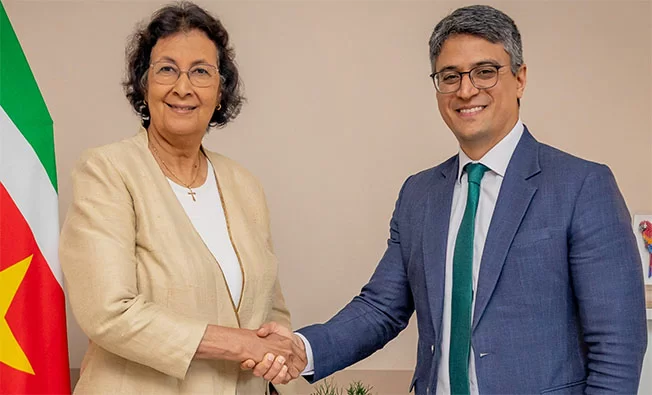
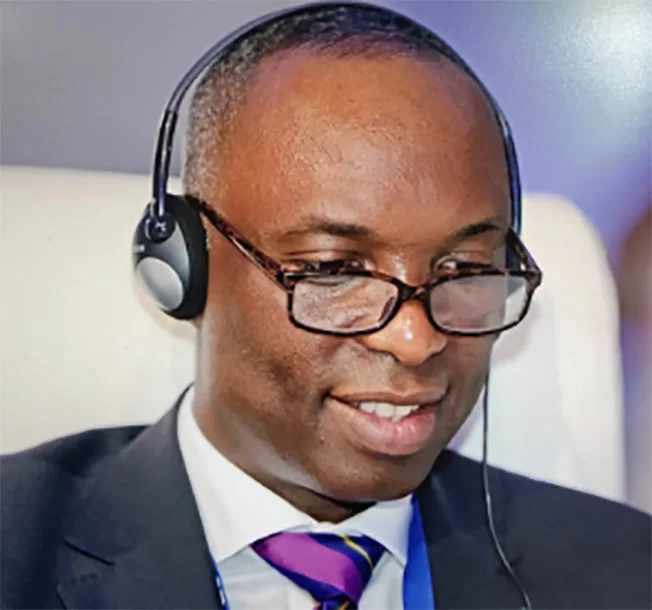
    Suriname’s aviation sector has secured committed international backing for comprehensive regulatory modernization and technical capacity building. Fabio Rabbani, Regional Director of the International Civil Aviation Organization (ICAO), confirmed this strategic support following high-level consultations with President Jennifer Simons on Thursday.

    The pivotal meeting addressed critical challenges facing the nation’s aviation infrastructure and outlined necessary measures to ensure safety standards, sustainable development, and sectoral growth. ICAO has pledged to guide Suriname through enhancing regulatory frameworks, safety protocols, and operational capabilities.

    Rabbani emphasized that his mission specifically aimed to assess governmental commitment at the highest levels. ‘I came to Suriname to hear and understand the leadership’s vision and level of commitment regarding safety and capacity within Surinamese airport management,’ Rabbani stated. He expressed confidence in the sector’s prospects for stable expansion, noting that ICAO’s technical assistance remains ‘structurally available,’ according to Suriname’s Communication Service.

    Central to the agreements reached was Suriname’s commitment to establishing both formal and informal collaborative channels with ICAO. Priority areas include updating the Civil Aviation Safety Act, reinforcing oversight mechanisms, and implementing sustainable aviation solutions.

    The high-profile meeting included Minister Raymond Landveld of Transport, Communication and Tourism, NV Airport Management Director Vijay Chotkan, CASAS Director Brian De Souza, Aviation Department Head Cindy Toemin, and Presidential Advisor Faizel Baarn.

    Baarn highlighted the sector’s strategic significance: ‘Aviation serves as the national gateway. With oil and gas development progressing, increasingly more processes will depend on aviation infrastructure.’

    Despite acknowledging structural challenges including financing constraints, acquisition of modern equipment, and training qualified personnel—processes requiring multi-year development—Baarn expressed optimism due to governmental dedication and President Simons’ persistent advocacy.

    Tangible outcomes are anticipated within six months, including parliamentary consideration of the new aviation legislation in the National Assembly.

  • Zonder Constitutioneel Hof staan mensenrechten op losse schroeven

    Zonder Constitutioneel Hof staan mensenrechten op losse schroeven

    In a stark warning issued on International Human Rights Day, prominent human rights attorney Milton Castelen has declared that Suriname’s fundamental rights protection system faces severe jeopardy due to the continued inactivity of the nation’s Constitutional Court. The court has remained non-operational since May 7, 2025, after both the government and National Assembly failed to appoint new members in a timely manner.

    Castelen emphasized that this year’s UN theme, “Human Rights, Our Every Day Essentials,” precisely highlights what is currently failing in Suriname. While human rights should form the foundation of daily life, they are often treated as abstract legal concepts rather than practical necessities affecting education, healthcare, equal treatment, and legal protection.

    The human rights advocate detailed how Suriname continues to struggle with inclusivity, with persistent exclusion occurring across society based on disability, gender, gender identity, sexual orientation, political affiliation, origin, residence, or ethnicity. These systemic issues regularly result in violations of rights to equal treatment, education, healthcare, and personal freedom through legislation, policy, or daily practice.

    “When these rights are compromised, lives are directly impacted,” Castelen stated. “Human rights are not luxury topics; they determine the quality of our existence.”

    The absence of a functioning Constitutional Court has created a critical gap in Suriname’s legal system, as the institution plays a vital role in reviewing laws and decisions against constitutional provisions and international human rights treaties. Citizens currently have no recourse to challenge legislation or administrative decisions, representing a direct erosion of the rule of law.

    While human rights protection constitutes a shared responsibility among government, parliament, judiciary, civil organizations, media, and citizens, Castelen noted that the court’s prolonged inactivity has shifted this balance. With state institutions failing their fundamental duties, NGOs, human rights organizations, and the press now carry an increasingly heavy burden to raise awareness and pressure the government into action.

    Castelen characterized International Human Rights Day as “a serious wake-up call” for Suriname, urgently calling upon the government and National Assembly to immediately complete the appointment process for the Constitutional Court. “Human rights constitute our daily living conditions,” he concluded. “Every day that the Constitutional Court remains inactive, the foundation of our society is further undermined.”

  • VS escaleert tegen Venezuela: Na inbeslagname tanker, nu ook dreiging  meer dan 30 schepen

    VS escaleert tegen Venezuela: Na inbeslagname tanker, nu ook dreiging meer dan 30 schepen

    The United States has dramatically escalated its pressure campaign against Venezuela’s government through a bold maritime interception operation. On December 10, 2025, US special forces boarded and seized the supertanker Skipper in Caribbean waters near Venezuela’s coast, accusing it of transporting oil in violation of American sanctions. The vessel, carrying approximately 2 million barrels of crude oil, is now being redirected to a US port for formal legal confiscation.

    This military operation represents the most aggressive enforcement action to date in the ongoing sanctions regime against President Nicolás Maduro’s government. The US Treasury Department simultaneously imposed additional sanctions targeting three nephews of Maduro’s wife, along with three individuals and six oil tankers allegedly involved in facilitating Venezuela’s oil exports. These measures, executed through the Office of Foreign Assets Control (OFAC), freeze US-based assets and prohibit American entities from any economic dealings with the designated parties.

    The seizure operation has created immediate ripple effects across global oil markets and maritime security. More than 80 tankers currently operating in or near Venezuelan waters—including over 30 vessels already on US sanctions lists—now face heightened risk of American intervention. These ships form part of a ‘shadow fleet’ known for employing obscure ownership structures, false flags, and manipulated automatic identification systems to avoid detection.

    Washington justifies these actions as necessary measures to combat what it describes as Maduro’s ‘corrupt narco-terrorist regime’ by targeting its primary revenue source and disrupting alleged organized crime and drug trafficking financing channels. The Trump administration has repeatedly accused Maduro of involvement in drug trade operations, charges that Caracas vehemently denies.

    Venezuela has condemned the tanker seizure as ‘international piracy’ and ‘shameless theft’ of national resources, vowing to pursue legal action against the US through international bodies. The government emphasizes the need to defend national sovereignty and control over natural resources amid escalating tensions.

    The economic implications are already visible through increased global oil prices, with Brent crude experiencing immediate gains following the news. For Venezuela, already grappling with prolonged economic crisis, potential disruptions to oil exports threaten to further destabilize the fragile economy and Maduro’s political standing.

    The geopolitical dimensions continue to unfold with Russia and other Venezuelan allies expressing support for Maduro, while opposition figures within and outside Venezuela welcome US actions as necessary steps against corruption and authoritarianism. The coming days will determine whether the US expands this strategy to target additional vessels and individuals within Venezuela’s oil value chain, with current actions having already intensified regional tensions and introduced new uncertainties to global oil markets.

  • Column: De feiten achter de stoelendans

    Column: De feiten achter de stoelendans

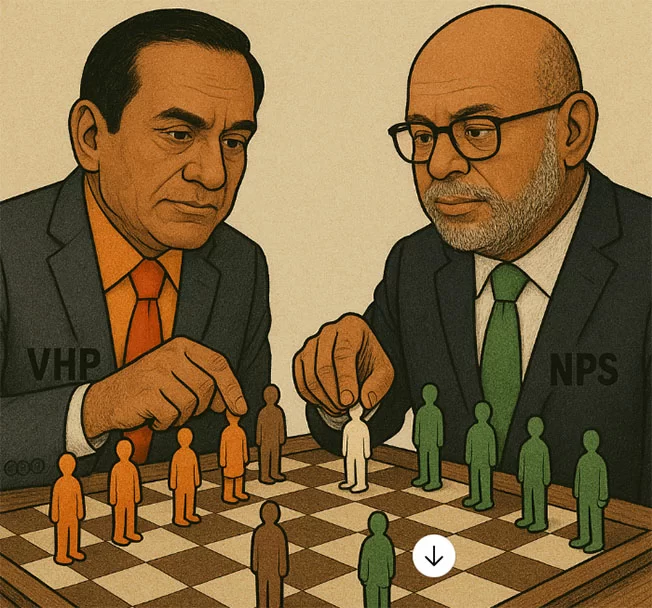
    In Suriname’s Ministry of Education, Science and Culture, recent administrative reshuffling continues to be officially characterized as “policy restructuring” and “professionalization.” However, mounting evidence reveals these personnel changes represent nothing more than deeply entrenched political gamesmanship and ethnic patronage systems that have long plagued the nation’s governance.

    The pattern emerges with striking clarity when examining recent political transitions. During the previous administration—when VHP and NPS parties collaborated—VHP Minister Henry Ori exploited the rupture with NPS to systematically replace predominantly non-Hindustani executives aligned with NPS with officials from his own Hindustani support base. Now, under a new power constellation, the identical maneuver unfolds in reverse: primarily Hindustani officials are being dismissed while some NPS-affiliated personnel previously ousted by Ori are being reinstated.

    This cyclical pattern of removal, replacement, and reinstatement isn’t anomalous—it constitutes the fundamental operating system. Framing these changes as merit-based discussions inadvertently creates dangerous stigmatization by suggesting Hindustani experts are being replaced by non-Hindustani incompetents, or vice versa. The reality remains that expertise bears minimal consideration, overshadowed by partisan shortsightedness with strong ethnic motivations.

    The dangerous fallacy lies in characterizing this musical chairs exercise as a debate about qualifications. Accepting this framing perpetuates the precise ethnic stigma society must avoid. While some suggest discrimination based on race and political affiliation, this not only misrepresents reality but creates an ethnic smokescreen obscuring the core issue.

    For the officials appointed and replaced, the process becomes a mockery—they serve merely as political pawns deployed not based on competency but partisan grudges. What requires acknowledgment is that these have become political positions, and political positions inevitably change hands with administrative transitions. While not inherently unusual globally, Suriname’s process occurs without framework, transparency, and consistently along ethnic lines, rendering it particularly destructive.

    Suriname might benefit from examining established democracies like the United States, which maintains a clear distinction between political appointees (temporary, administration-linked positions) and career officials (diplomats, civil servants, policy analysts who remain regardless of electoral outcomes). This system preserves both stability and neutrality.

    Suriname lacks—or insufficiently defines—this crucial distinction. Consequently, bureaucratic functions and political appointments remain toys of political immaturity, with each new administration resetting progress while citizens bear the consequences. The time has arrived to definitively classify which positions are truly political and which are not, to terminate ethnically-charg appointment traditions, and to construct a professional, stable, and depoliticized apparatus where career civil servants serve based on expertise rather than partisan interests.

    Until these reforms materialize, Suriname remains trapped in the same cycle: petty political games infused with ethnic tensions producing significant consequences. Ultimately, the nation invariably pays the price.

  • Minister Bharrat: Maak local content sterk, maar sluit de deur niet voor investeerders

    Minister Bharrat: Maak local content sterk, maar sluit de deur niet voor investeerders

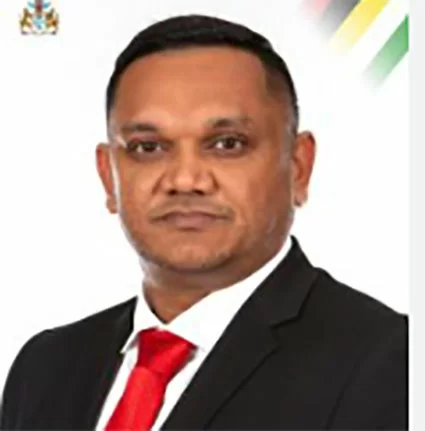
    Guyana’s Minister of Natural Resources Vikram Bharrat has offered strategic counsel to neighboring Suriname regarding local content policy formulation for emerging oil economies. Speaking with Starnieuws during a Production Sharing Agreement signing with Ghana’s Cybele Energy, Minister Bharrat emphasized the critical balance between national development and investor attraction.

    “The best advice I can give Suriname in its pursuit of local content policy is to create well-considered legislation applicable to national development while keeping doors open for investors,” stated Minister Bharrat. Guyana has transitioned from basic local content policies to comprehensive legislation mandating foreign companies to hire Guyanese citizens and contractors while implementing skills transfer programs.

    Senior Petroleum Advisor Bobby Gossai, present at the PSA signing ceremony at Pegasus Hotel, highlighted that attracting foreign investors remains a priority in multinational negotiations. “Corporate capabilities must align with our national conditions,” Gossai explained. “During negotiations, we ensure companies understand our established timelines and investment focus areas for coming years.”

    The negotiation process for agreements like PSA requires companies to recognize the Guyanese government’s dual responsibility to both corporate partners and society. Extensive development has gone into Guyana’s fiscal policy for oil and gas, including 10% royalty fees, 10% taxes, cost recovery mechanisms, and profit sharing arrangements.

    Guyana has secured seven Foreign Direct Investment contracts since beginning its transformation into one of the world’s fastest-growing economies. Following over 30 oil discoveries since 2015, four sites are currently operational with two additional sites expected within two years. The seven FDIs include Liza Phase 1 (2017), Liza Phase 2 (2019), Payara (2020), Yellowtail (2022), Uaru (April 2023), Whiptail (April 2024), and Hammerhead (September 2025).

    Minister Bharrat confirmed the ongoing strategy: “The intention is naturally to attract as many investors as possible” while maintaining responsible resource management and national benefit structures.

  • Consumentenrisico’s steeds vaker zichtbaar tijdens supermarkcontroles

    Consumentenrisico’s steeds vaker zichtbaar tijdens supermarkcontroles

    In a sweeping enforcement operation, Suriname’s Economic Control Service (ECD) has uncovered multiple serious violations across supermarket chains, exposing consumers to significant health and financial risks. The comprehensive inspections revealed a pattern of non-compliance with basic consumer protection standards, prompting immediate regulatory action.

    The investigation was triggered by a complaint from Wim Bos Verschuur School, where teachers discovered students carrying energy drinks both before and during school hours. During subsequent inspections, a supermarket operator on Boulangerstraat admitted selling energy drinks to minors while claiming ignorance of the prohibition. This establishment, previously cited for selling alcohol to underage customers, faced temporary closure as a consequence.

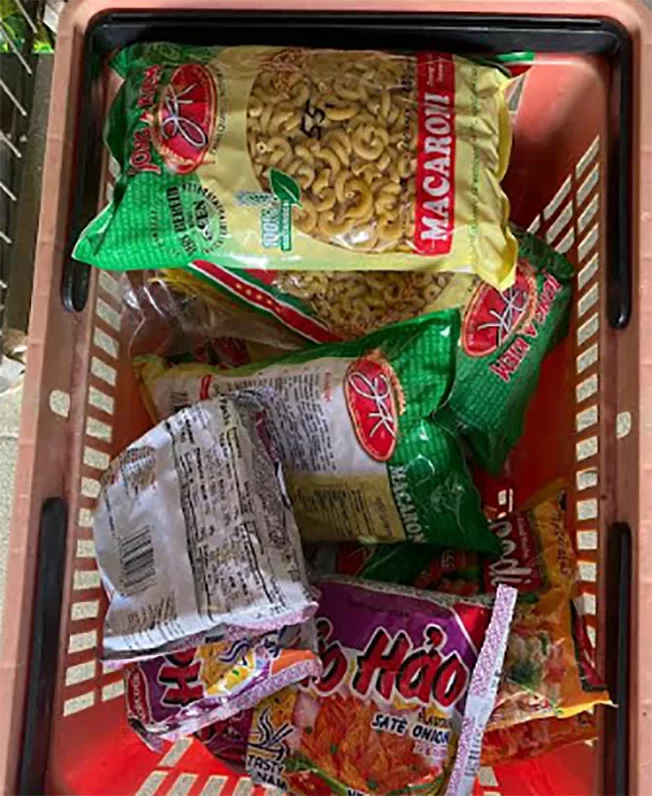
    Among the most concerning findings were expired food products—including cookies, pasta, instant noodles, and spices—discovered on shelves at multiple locations along Pelthoporumlaan, Indira Gandhiweg, Martin Luther Kingweg, and Houttuin Road. While some violations involved isolated items, others revealed entire product categories past their expiration dates, all of which were immediately removed from sale.

    The ECD also identified critical labeling deficiencies, with numerous supermarkets selling frozen chicken, fish, and other products lacking essential information such as production dates, origin, storage instructions, or expiration dates. These omissions violate fundamental food safety protocols. Coffee and various other unlabeled food items were similarly removed from circulation. Notably, one supermarket on Anamoestraat demonstrated full compliance with labeling requirements and was permitted to continue operations.

    Pricing irregularities emerged as another significant concern. Commonly purchased items including onions, eggs, flour, salt, and brown sugar frequently lacked price tags altogether. In one particularly egregious case, brown beans were priced at SRD 75 without supporting purchase documentation—after recalculation, the correct selling price was determined to be SRD 70. Additionally, numerous stores operated with uncalibrated weighing scales, creating potential for inaccurate measurements and incorrect pricing.

    The operation also uncovered unauthorized sales of pharmaceutical products and tobacco. During an inspection along Sir Winston Churchillweg, ECD officials discovered illegal cigarettes and paracetamol being sold without proper licensing. This case has been referred to specialized inspectors for further investigation.

    The ECD has called for increased public vigilance and urged citizens to report similar violations promptly, emphasizing that robust consumer protection requires ongoing collaboration between regulators and the community.

  • Dorpen presenteren visie op ontwikkeling en grondenrechten aan president

    Dorpen presenteren visie op ontwikkeling en grondenrechten aan president

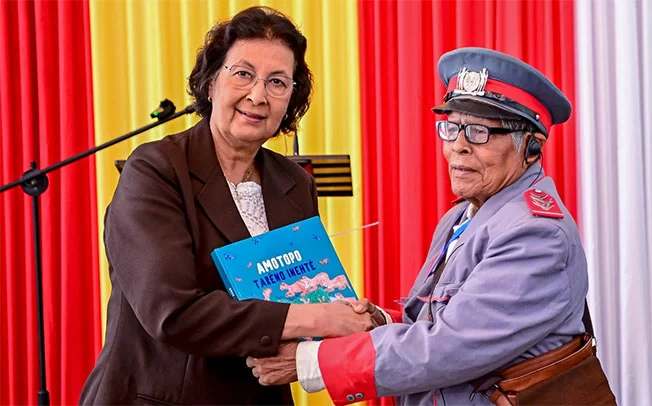
    In a landmark ceremony at the National Assembly building, President Jennifer Simons formally received comprehensive development plans from villages in Suriname’s Coeroenie and Matawai regions. These documents represent a significant step in regional decentralization, outlining community-driven priorities across social, economic, and ecological dimensions.

    The ceremony marked the culmination of an extensive eighteen-month participatory planning process conducted in collaboration with the Amazon Conservation Team (ACT), various government ministries, and non-governmental organizations. ACT Regional Director Minu Parahoe explained that methodologies were adapted from regional models to suit Suriname’s unique context, with villages establishing their development vision through traditional krutu consultations.

    President Simons praised the initiative as demonstrating village communities’ readiness to assume greater responsibility within regional development and decentralization processes. ‘We’re building a model where district residents can determine their own development direction,’ Simons stated. ‘Indigenous and tribal peoples have long practiced local governance, but this must now be structurally integrated into the national governance system.’

    The development plans also provide crucial input for ongoing land rights recognition efforts. Simons emphasized that collaboration with traditional authorities remains essential for achieving sustainable solutions, according to the Communication Service Suriname.

    Current progress indicates completed plans for approximately ten villages in the Upper Saramacca region within the Matawai area, while downstream communities are still determining their participation. In Southern Suriname, eight of nine indigenous villages have expressed interest, with five already possessing finalized documents. ACT anticipates further participation from tribal communities in coastal regions.

    These formally submitted plans now create expectation among communities that their priorities will be incorporated into the government’s national development policies, representing a transformative approach to inclusive governance in Suriname.

  • Van Lelydorp naar Recife

    Van Lelydorp naar Recife

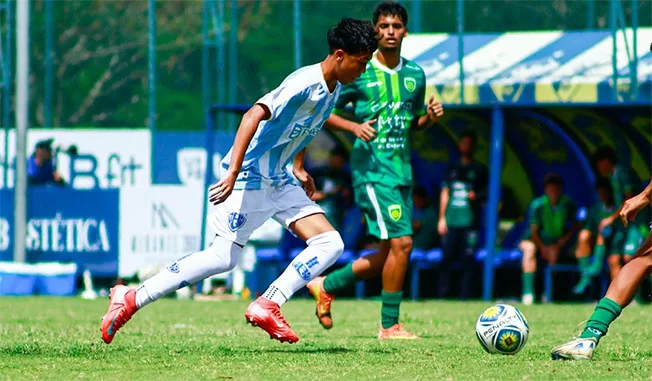
    Dimitri ‘Dimi’ Amatjasir, a promising 15-year-old football talent from Suriname, has recently completed an intensive training period with Brazilian professional club Paysandu’s U-15 squad in Belém. The young athlete, who currently plays for Transvaal U-16 and the Surinamese national U-15 team, spent September training with the Brazilian club following a successful CONCACAF tournament in Curaçao.

    The opportunity arose through connections maintained by Dimi’s father, who formally requested the training stint with Paysandu. Under the guidance of experienced former professional players—all certified coaches through the Brazilian Football Confederation (CBF)—Dimi underwent daily sessions that significantly exceeded the intensity of his regular training regimen in Suriname. After an initial adaptation period, he successfully maintained the demanding pace.

    Dimi’s performance so impressed Paysandu’s coaching staff that the club extended an invitation for him to continue training beyond the holiday period and participate as a guest player in Brazil’s premier U-15 tournament, the Aldeia International Cup. Held from December 1-7 in Recife’s state-of-the-art sports complex, the competition featured major Brazilian clubs including Santos, Palmeiras, and Vasco da Gama.

    Critical to this opportunity was the coordination between Paysandu, Dimi’s school (Johannes Vrolijk Muloschool II in Lelydorp), and Suriname’s Ministry of Education. The club provided formal written requests to both institutions, ensuring arrangements were made for Dimi to continue his academic studies remotely while prioritizing his mulodiploma. His local club, Transvaal, also supported his temporary departure.

    Returning to Brazil in late October, Dimi made his first appearance for Paysandu at the COP 30 U-15 tournament in Belém, where he scored his inaugural goal for the club. The entire experience—from training at Brazil’s highest youth level to the tournament’s organization and atmosphere—provided him with profound learning opportunities and unforgettable memories.

    The article highlights how Suriname’s national team has recently galvanized public interest in football, creating unprecedented demand for match tickets. However, maintaining this enthusiasm requires developing youth players through intensive, modern training methods. While many talented players like Dimi exist within Suriname, few receive opportunities for international development.

    Given proximity, cost considerations, cultural factors, and existing bilateral relations, Brazil presents an ideal destination for nurturing Surinamese football talent. Well-trained players could enhance the appeal of domestic leagues and potentially strengthen the national team. The author calls upon the Surinamese Football Association, Ministry of Sports and Youth Affairs, and Ministry of Foreign Affairs to establish structured programs for youth player development abroad, extending opportunities to both players and coaches.

    Following his Brazilian experience, Dimi has been selected for Suriname’s U-17 national team, which will compete in February 2026 qualifiers for the following year’s U-17 World Cup. Expectations are high that his international exposure will significantly enhance his performance at both club and national levels.

  • Eerste STEM-conventie laat kinderen spelend ontdekken hoe wetenschap werkt

    Eerste STEM-conventie laat kinderen spelend ontdekken hoe wetenschap werkt

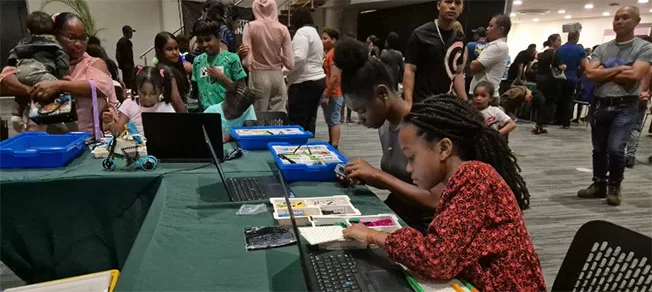
    Suriname’s educational landscape witnessed a transformative event as the inaugural STEM Convention for children aged 3-14 erupted with excitement at the Assuria Highrise this Monday. Hundreds of young participants immersed themselves in interactive experiments, engineering challenges, and technological demonstrations, marking a significant milestone in the nation’s educational development.

    Organized through a collaborative effort between Surinaams Knutselhoekje (HSKH) and Esport Suriname, the convention transformed the venue into a dynamic learning laboratory. Children engaged with diverse stations featuring homemade lava lamps using cooking oil and effervescent tablets, constructed electric propellers from scratch, and operated full-feature racing simulators with steering wheels and pedal systems. This hands-on approach provided tangible introductions to fundamental principles of Science, Technology, Engineering, and Mathematics.

    Leann Djohari of HSKH explained the pedagogical philosophy behind the event: “STEM education fundamentally revolves around experiential learning. Children achieve deeper conceptual understanding when they physically execute tasks themselves. They observe immediate consequences of their actions—performing A results in B—which reinforces knowledge retention and develops critical cause-effect reasoning skills.”

    The convention’s practical methodology manifested through multiple engaging zones. Under the guidance of young instructors and digital tutorials, participants assembled functional robots, programmed basic devices, and explored electrical engineering concepts. A chemistry laboratory attracted considerable attention with interactive experiments, while a dedicated virtual reality zone allowed children to experience immersive digital environments.

    Founded by Cherelys Dwarkasing, HSKH has spent five years democratizing STEM education throughout Suriname. The organization visits a different district each quarter to ensure nationwide accessibility. This year’s convention coincidentally aligned with HSKH’s anniversary, adding celebratory significance to the event.

    Djohari declared the initiative an overwhelming success: “We anticipated approximately 300 children, but attendance substantially exceeded our projections.” She emphasized that STEM education extends beyond technical skills: “It cultivates creativity, critical thinking, collaboration, and communication—abilities increasingly essential in our rapidly evolving technological landscape. Early exposure better prepares children for future challenges, embodying the principle that early learning establishes lasting foundations.”

    Buoyed by the enthusiastic response, organizers indicate this inaugural event will likely catalyze expanded STEM initiatives throughout Suriname. HSKH aims to foster scientific and technical proficiency at a pace matching the boundless curiosity of children who exclaimed “Waaw!” throughout Monday’s groundbreaking convention.