标签: Suriname

苏里南

  • Boek: Corruptie in Suriname

    Boek: Corruptie in Suriname

    A groundbreaking investigation into Suriname’s governance patterns has traced the roots of contemporary corruption directly to Dutch colonial administration practices. Researcher Nizaar Makdoembaks, in his comprehensive study “Corruption in Suriname,” presents compelling evidence that the nation’s current governance challenges represent an institutional inheritance from its colonial past.

    Through exhaustive archival research conducted in both Netherlands and Surinamese repositories, Makdoembaks documents how colonial governance established patterns of misconduct that persist today. The study reveals that from the earliest days of Dutch rule under Governor Van Aerssen van Sommelsdyck through the mid-20th century (1880-1956), colonial administration was characterized by systemic conflicts of interest, double standards, and self-enrichment practices that would have been unacceptable in the Netherlands itself.

    The colonial system created an institutional culture where norm violations became routine, with social position determining sanction risks rather than the severity of offenses. Lower-level officials faced severe punishment for minor infractions—sometimes culminating in tragic suicides—while influential figures enjoyed protection and even rewards for significant malfeasance. This established a fundamental inequality in law application that became embedded in Suriname’s governance DNA.

    Makdoembaks, a former physician and author of twenty studies on former Dutch colonies, demonstrates how these colonial-era practices created the administrative culture that independent Suriname inherited. While acknowledging that new autonomous forms of corruption emerged post-independence, the research establishes that these cannot be understood separately from their colonial foundations. The book provides detailed documentation of diverse corruption manifestations, showing how colonial governance established patterns of cronyism and misconduct that continue to influence Surinamese politics today.
  • Guyana onderschept kwik vermoedelijk gesmokkeld uit Suriname

    Guyana onderschept kwik vermoedelijk gesmokkeld uit Suriname

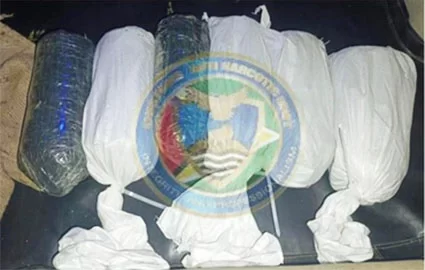
    In a significant environmental enforcement operation, Guyana’s Customs Anti-Narcotics Unit (CANU) has intercepted a substantial mercury shipment valued at approximately GY$18 million (US$86,000) near Crabwood Creek along the Corantijn River in Berbice. Authorities strongly suspect the hazardous material originated from Suriname before being illegally trafficked across the border into Guyana.

    The discovery occurred during a routine vehicle inspection conducted by CANU operatives, according to reports from Demerara Waves. Subsequent forensic examination revealed multiple packages containing the highly toxic and strictly regulated substance. The driver was immediately taken into custody and transported to CANU headquarters for intensive interrogation as part of the ongoing investigation.

    Environmental experts emphasize mercury’s severe dangers to both human health and ecological systems. The heavy metal can infiltrate ecosystems through atmospheric dispersion, water contamination, soil pollution, and bioaccumulation in fish species, ultimately entering the human food chain. Guyana has implemented sustained efforts to eliminate mercury usage in gold mining operations due to these documented public health and environmental risks.

    Following preliminary valuation procedures, the confiscated mercury has been transferred to Guyana’s Ministry of Natural Resources for specialized handling, processing, and secure destruction protocols. The suspect remains in police custody while cooperating with investigators. CANU officials indicate that additional arrests may follow as the international smuggling investigation progresses.

  • Trump waarschuwt Maduro: ‘Speel niet te hard’

    Trump waarschuwt Maduro: ‘Speel niet te hard’

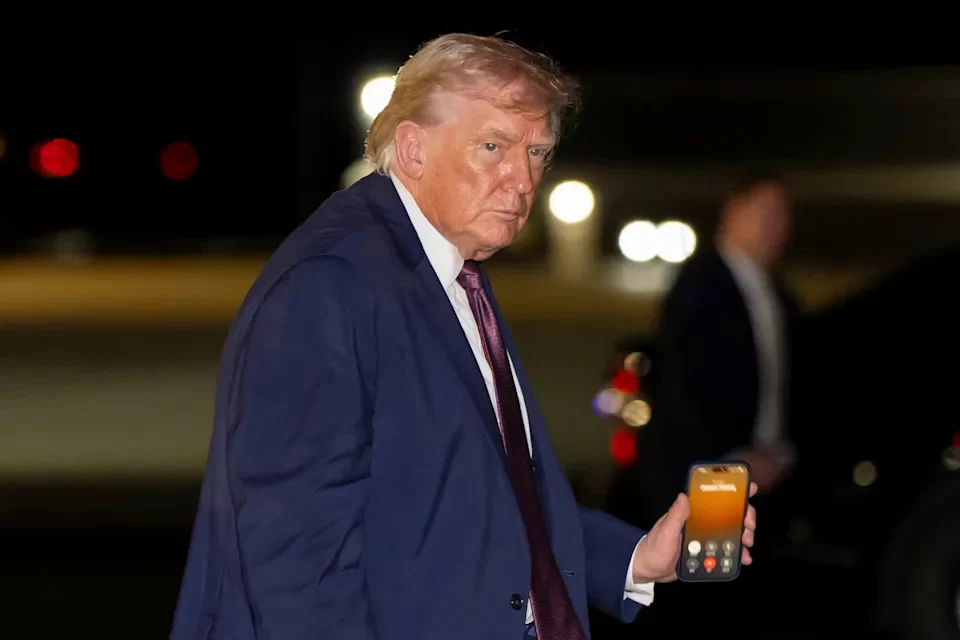
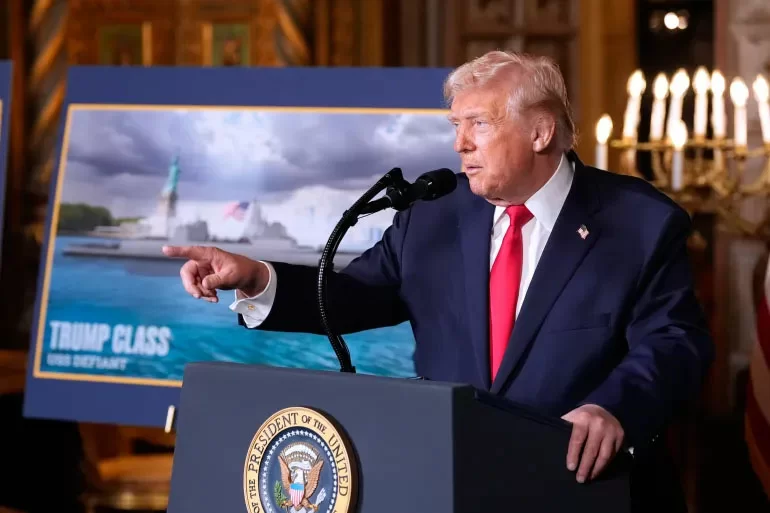
    President Donald Trump has issued a stark warning to Venezuelan leader Nicolás Maduro during a press briefing at his Mar-a-Lago resort in Florida, suggesting it would be “wise” for Maduro to step down amid escalating tensions. The December 22nd address, attended by Secretary of State Marco Rubio and Defense Secretary Pete Hegseth, signaled Washington’s readiness to intensify pressure on Caracas following months of heightened diplomatic strain.

    Trump explicitly stated that removing Maduro from power remains an objective, warning that “if he plays tough, it will be the last time he gets to do so.” Simultaneously, the U.S. Coast Guard continues pursuing a third oil tanker from Venezuela’s alleged “shadow fleet” used to circumvent American sanctions. The president confirmed the retention of previously seized vessels containing nearly 4 million barrels of Venezuelan oil, indicating potential options including sale, retention, or allocation to strategic reserves.

    Maduro responded through state television with a counterattack, urging Trump to address domestic economic and social issues rather than threatening Caracas. The exchange occurs alongside increased U.S. military operations in the region under drug interdiction missions, with over two dozen attacks on suspected drug smuggling operations resulting in more than 100 fatalities—actions whose legality has been questioned by critics.

    The escalating crisis prompted an emergency United Nations Security Council meeting convened at Venezuela’s request with Russian and Chinese support. Russian Foreign Minister Sergei Lavrov expressed “profound concern” over U.S. operations in the Caribbean, warning of risks to regional stability and international shipping while reaffirming Moscow’s support for Maduro’s government.

    China condemned American actions as “serious violations of international law,” emphasizing Venezuela’s right to independent development through its Foreign Ministry spokesperson. Venezuelan Foreign Minister Yvan Gil presented Maduro’s letter to the UN, warning that U.S. blockade measures would disrupt global oil and energy supplies, particularly affecting vulnerable nations across Latin America and the Caribbean.

  • Rechter dwingt Guillermo Samson tot correctie en excuses aan Bouva

    Rechter dwingt Guillermo Samson tot correctie en excuses aan Bouva

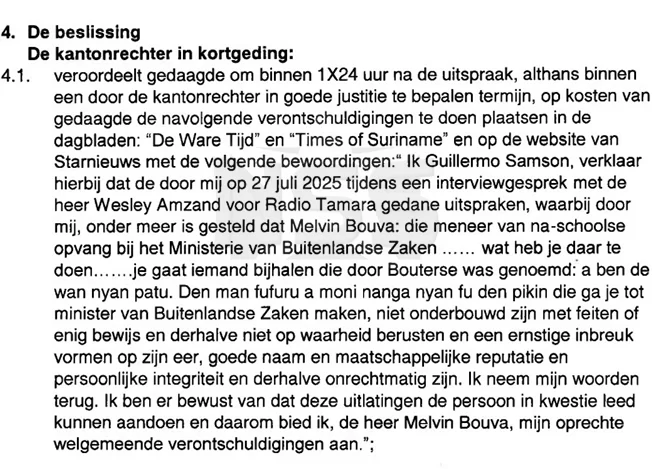
    In a significant legal ruling from the First Cantonal Court, Guillermo Samson has been mandated to issue a comprehensive public correction regarding defamatory statements made about Suriname’s Foreign Minister Melvin Bouva. The December 23rd verdict addressed unsubstantiated allegations Samson presented during a July 27, 2025, Radio Tamara interview concerning after-school childcare operations.

    Presiding Judge Deborah Haakmat-Sniphout determined that Samson’s assertions—which implied Minister Bouva’s involvement in misconduct and abuse of position—constituted unlawful defamation without factual foundation. The court found these unverified claims severely damaged the minister’s reputation and professional standing.

    The court has imposed strict rectification requirements: Samson must publish a formal retraction and apology within 24 hours of verdict notification in three major Surinamese publications—De Ware Tijd, Times of Suriname, and Starnieuws. This mandated statement must explicitly acknowledge that his previous remarks were unfounded, incorrect, and unlawful.

    Additionally, Samson must permanently remove all similar content from digital platforms and public channels. The court established substantial financial penalties for non-compliance, including a daily fine of SRD 100,000 and court costs totaling SRD 12,335. The judgment was issued in absentia as Samson failed to appear in court, and the ruling is immediately enforceable.

  • Eugène van der San benoemd tot voorzitter Administratief Beroepsinstituut

    Eugène van der San benoemd tot voorzitter Administratief Beroepsinstituut

    Suriname has taken a significant step toward enhancing its administrative justice system with the formal installation of the Administrative Appeals Institute (Administratief Beroepsinstituut) on Monday. President Jennifer Simons presided over the inauguration ceremony, appointing distinguished public administration expert Eugène van der San as the institution’s inaugural chairman.

    The newly established institute will serve as a specialized advisory body to the head of state regarding administrative appeal cases. Its mandate encompasses the meticulous preparation of government policy proposals and providing strategic direction for their implementation within existing legal frameworks. The seven-member council, including a secretary, will operate independently while advising the president based on relevant legislation including the Personnel Act, Firearms Act, and Electoral Act.

    Van der San emphasized the institute’s constitutional foundation, noting that Suriname’s governance structure incorporates both judicial and administrative legal processes. “Alongside our judiciary, our state system recognizes administrative legal proceedings where the president serves as the appeals authority,” he explained during the installation ceremony.

    The institutionalization of this body represents a crucial advancement for transparent and careful execution of constitutional duties. Van der San stated that the institute provides the president with “a specialized and structured advisory mechanism” that will ensure greater accountability in administrative decision-making.

    Established for the current government’s term, the institute is expected to become an increasingly important resource for citizens seeking legal recourse, particularly in cases where traditional judicial pathways are limited or unavailable. This development marks a substantial evolution in Suriname’s administrative justice capabilities, potentially affecting how governmental decisions are reviewed and appealed.

  • President Simons belooft structurele aanpak problemen AZP

    President Simons belooft structurele aanpak problemen AZP

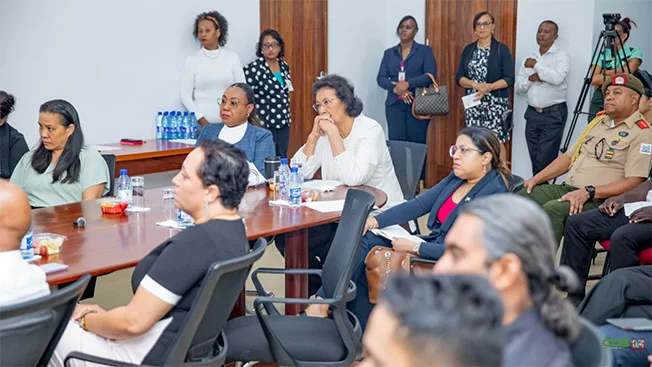
    Surinamese President Jennifer Simons has committed to addressing the chronic financial, organizational, and capacity challenges plaguing the Academic Hospital Paramaribo (AZP) during her Monday visit to the medical facility. The head of state emphasized that adequate and structural funding represents the cornerstone for resolving the institution’s operational difficulties.

    Through a series of presentations by medical specialists, President Simons gained comprehensive insight into the hospital’s daily operations and systemic constraints. She affirmed her administration’s dedication to securing essential financial resources that would enable effective problem-solving measures.

    Simons acknowledged that AZP’s challenges have persisted for considerable time, necessitating a methodical approach to safeguard healthcare quality standards. The government’s objective extends beyond hospital-specific improvements to encompass nationwide access to quality medical care for all citizens.

    AZP Director Claudia Marica-Redan characterized the presidential visit as strategically significant for collaborative planning regarding the institution’s future development. She presented the hospital’s roadmap for institutional strengthening, which commences with an acute repair phase in 2026 followed by a one-to-three-year recovery period. This transitional stage will include reinforcement of the hospital’s governance framework.

    The comprehensive briefing covered critical operational areas including emergency department services, intensive care units, neonatal care provisions, and infection control protocols. Director Redan particularly emphasized digital transformation’s role in enhancing organizational transparency and operational efficiency within healthcare delivery systems.

    “The roadmap’s final phase constitutes sustainable development, incorporating AZP’s reconstruction projects and further innovation initiatives,” Redan stated, confirming the hospital administration’s confidence in receiving full presidential support throughout implementation.

    President Simons utilized the occasion to address hospital staff ahead of holiday celebrations, expressing profound appreciation for nursing personnel’s dedication while encouraging continued commitment to patient care excellence. She confirmed that concrete structural improvements at AZP will commence implementation throughout 2026.

  • VS roept ambassadeurs terug, ook in Suriname

    VS roept ambassadeurs terug, ook in Suriname

    The Trump administration has initiated a sweeping restructuring of U.S. diplomatic corps, recalling approximately 30 career ambassadors from missions worldwide including Suriname’s envoy Robert Faucher. This strategic move replaces Biden-appointed diplomats who had previously survived an initial review during the early phase of President Trump’s second term.

    According to two anonymous State Department officials, affected ambassadors across at least 29 countries received notifications last week that their tenures would conclude in January. While these diplomats won’t lose their Foreign Service positions, they will return to Washington for reassignment to different roles within the department.

    The State Department declined to confirm specific names or exact numbers but characterized the recalls as “standard procedure during any new administration.” Officials emphasized that ambassadors serve as the president’s personal representatives, and the administration maintains the right to appoint individuals who fully align with its “America First” policy priorities.

    Africa experiences the most significant impact with 13 nations affected, including key posts in Burundi, Cameroon, Ivory Coast, Nigeria, and Rwanda. Asia faces six ambassador changes covering the Philippines and Vietnam, while additional recalls affect diplomatic missions across Europe, the Middle East, South and Central Asia, and the Western Hemisphere. Beyond Suriname, the list includes Guatemala, Nepal, Sri Lanka, Armenia, and Macedonia.

    The recalls, first reported by Politico, have raised concerns among some U.S. Congress members and the union representing American diplomats, who question the potential disruption to international relationships and continuity in foreign policy implementation.

  • Parmessar wil onderzoek uitgifte honderden hectaren grond in Nickerie

    Parmessar wil onderzoek uitgifte honderden hectaren grond in Nickerie

    In a dramatic parliamentary session on Monday, opposition leader Rabin Parmessar of the National Democratic Party (NDP) launched sharp accusations against the Surinamese government regarding the allocation of hundreds of hectares of land in the Nickerie region and surrounding areas.

    During his address to the National Assembly, Parmessar expressed profound concern over both the scale and methodology of land distributions in Nickerie and Apoera. He revealed documentation indicating individual persons and commercial entities had received allocations ranging from approximately 230 to over 450 hectares per recipient—extraordinary allocations that far exceed normal land distribution practices.

    The opposition leader presented compelling evidence to parliamentary leadership, challenging the legality of these transactions. Parmessar emphatically stated that according to Surinamese law, only the Ministry of Land Policy and Forest Management holds constitutional authority for land allocation decisions. However, he alleged that the former Minister of Agriculture, Animal Husbandry and Fisheries, Parmanand Sewdien, had unlawfully authorized these substantial land distributions.

    ‘If these allegations prove accurate, these allocations must be immediately reversed without exception,’ Parmessar declared, directly challenging the government to clarify who has been blocking corrective actions and why intervention has stalled.

    Adding environmental concerns to his critique, Parmessar raised alarms about potential land allocations within or adjacent to protected natural reserves, specifically mentioning a conservation area in Coronie. He questioned how such ecologically sensitive territories could even be considered for distribution.

    The NDP leader concluded with an urgent appeal to government officials and responsible ministers to conduct a thorough investigation and deliver concrete results, emphasizing that this matter transcends political gamesmanship and touches fundamental issues of legality, governmental transparency, and protection of national interests.

  • Column: Een wet met een prijskaartje: US$ 20 miljoen en een prullenmand

    Column: Een wet met een prijskaartje: US$ 20 miljoen en een prullenmand

    Suriname’s National Assembly has delivered a rare unified rejection of the proposed Sustainable Nature Management Act during its first reading, with lawmakers across political factions expressing profound concerns about the legislation’s fundamental flaws. The bill, which aims to regulate environmental conservation, faced unprecedented criticism for its vague power distribution, inadequate protections for indigenous communities, and questionable alignment with international funding agreements.

    The parliamentary debate revealed deep reservations about the bill’s core architecture, with legislators questioning the concentration of authority, lack of clear checks and balances, and insufficient safeguards for tribal populations. Particularly alarming to lawmakers was the timing of the legislation following a September 2025 pledge of $20 million from international environmental organizations to President Jennifer Simons for nature conservation initiatives.

    This financial commitment has raised sovereignty concerns among assembly members, who openly questioned whether the legislation serves Suriname’s interests or responds to external expectations. The debate highlighted the dangerous intersection of idealistic environmental goals, rushed legislative processes, and potential foreign influence that could compromise national autonomy.

    Despite initial assumptions that the bill could be amended into acceptability, parliamentarians concluded that the legislation requires complete restructuring rather than superficial modifications. The assembly sent a clear message that Suriname needs robust, transparent legislation developed through inclusive domestic processes rather than expedited measures potentially influenced by international frameworks.

    The rejection underscores parliament’s insistence that environmental legislation must prioritize legal soundness, social justice, and administrative effectiveness over international recognition or donor approval. Lawmakers emphasized that nature conservation cannot become a pretext for compromising national sovereignty or establishing foreign oversight over Suriname’s natural resources.

  • Danielle Veira: ‘Ik ben smalend weggezet als een ondeugd en als verdachte’

    Danielle Veira: ‘Ik ben smalend weggezet als een ondeugd en als verdachte’

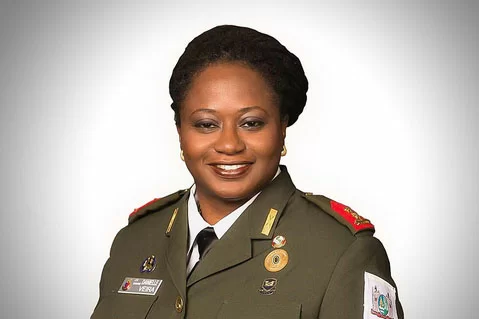
    In a dramatic courtroom scene, Danielle Veira, former head of Suriname’s Directorate of National Security (DNV), delivered an emotionally charged final statement before the Military Court on Monday, vehemently denying all charges against her while decrying what she described as a systematic campaign to destroy her reputation.

    The once-respected intelligence chief, known publicly as ‘Doewet’ and ‘Help Yourself’ for her efforts protecting citizens during the early COVID-19 pandemic, emotionally recounted her fall from grace. ‘In my worst nightmares, I never imagined having to defend myself here,’ Veira stated, her voice trembling with emotion. ‘I’ve been scornfully labeled as a villain and suspect despite my service to the nation.’

    Veira, who made history as Suriname’s first female intelligence director, highlighted the fragility of professional reputation. ‘I was appointed based on my reliability, competence, and integrity, yet here I stand today,’ she told the court, describing her recent years as ‘going through hell’ while maintaining her faith in divine justice despite being ‘portrayed as public enemy number one.’

    Addressing specific allegations regarding the Rodney Cairo hostage incident, Veira acknowledged wishing she ‘had been more alert that morning’ but maintained her decision to contact the police commissioner was intended to secure observations rather than conceal criminal activity. She revealed DNV had been monitoring Cairo for ‘considerable time’ due to indications he ‘could endanger state security.’

    Veira repeatedly asserted her innocence regarding all thirteen charges brought by the Public Prosecutor’s Office (OM), suggesting she’d been targeted by ‘a plan to bring her down’ and expressing hope for ‘a justice system not driven by ego.’

    Earlier in proceedings, defense attorneys raised substantive questions about prosecution inconsistencies. Lawyer Cedric Meijnaar questioned why other DNV leaders who authorized weapon permits before and after Veira’s tenure faced no prosecution, while Derrick Veira highlighted what he termed ‘numerous investigative blunders’ by prosecutors—including accepting Cairo’s statements without verification and failing to authenticate submitted evidence despite contradictions with camera footage.

    With prosecutors seeking a nine-year sentence, the Military Court is scheduled to deliver its verdict next week in a case that has exposed deep tensions within Suriname’s security apparatus.