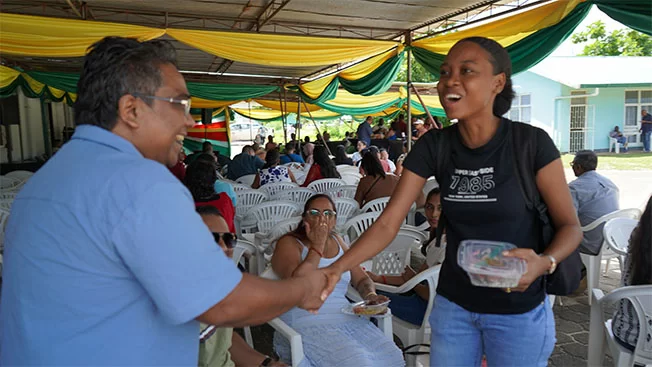
The inaugural edition of the Energy Fair, organized by the Ministry of Natural Resources (NH), has concluded on a high note, marking a significant milestone in the region’s push toward sustainable energy solutions. Claudine Saaki, the event’s project lead, highlighted the rapid growth in electricity consumption among both households and businesses. “Many are actively seeking ways to meet their increasing energy demands while simultaneously reducing costs. The fair addressed numerous queries and provided practical solutions,” she stated. The event was held as part of Caricom Energy Month, which this year adopted the theme “Invest, Innovate, Sustain. Leading the Charge in Energy Frontiers.” Held at Utopia Heritage, the fair featured 13 exhibitors from Suriname, France, and China, showcasing a diverse range of energy innovations. These included solar panels for electricity generation, household batteries, and large-scale energy storage systems for businesses and commercial buildings. With the rise of e-bikes and fully electric vehicles, the demand for charging solutions has surged. Visitors explored various options tailored to this rapidly growing user base. Additionally, powerful power banks for charging laptops and other devices on the go were also a focal point. Saaki emphasized the clear need for a repeat of the event, preferably on a larger scale. “We are very pleased with the turnout. The curiosity about alternative energy sources was immense. People are eager to manage their energy consumption more consciously and are looking for energy-efficient devices or cost-saving methods. The fair aimed to inform visitors about the latest innovations in the sector, particularly in clean and sustainable energy,” she added.
标签: Suriname
苏里南
-

Suriname verkent lidmaatschap Ontwikkelingsbank CAF
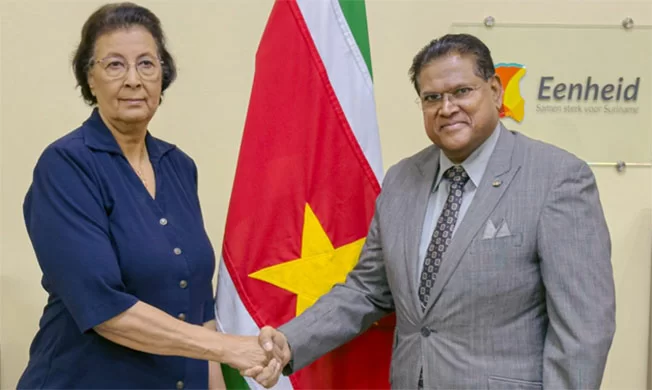
In a significant diplomatic engagement, Suriname’s Minister of Foreign Affairs, International Trade, and Cooperation, Melvin Bouva, held a productive meeting with Sergio Díaz-Granados, Executive President of the Development Bank of Latin America and the Caribbean (CAF). The discussions took place during the 4th CELAC-EU Summit in Santa Marta, Colombia, earlier this week. The talks focused on strengthening bilateral cooperation, particularly in areas of sustainable development, economic resilience, and regional integration. CAF, which recently secured an AA+ credit rating, is renowned for providing tailored financial and technical support to its member countries. The Surinamese delegation was briefed on the potential benefits of joining CAF, including access to development financing for critical sectors such as education, infrastructure, and healthcare. Both parties agreed that CAF would soon dispatch a technical mission to Suriname to develop a comprehensive business case for potential membership. Minister Bouva expressed gratitude for CAF’s open and collaborative approach, emphasizing the importance of strategic partnerships in fostering sustainable growth and inclusive development. CAF’s regional reputation as a financial institution that prioritizes the socio-economic realities of its member states further underscores the significance of this potential collaboration.
-

Visserijsector onder zware druk door illegale praktijken en hoge kosten
Suriname’s once-thriving fishing industry is now grappling with severe challenges, positioning itself as one of the most fragile links in the agricultural chain, according to the Fishermen’s Collective. The sector is under intense international pressure to meet stricter standards for sustainable and transparent fishing practices, with Suriname being closely monitored. Illegal fishing has emerged as the most significant threat to the industry’s future, prompting repeated warnings from European buyers. They have emphasized the need for stricter enforcement to avoid potential export bans to Europe and other key markets. The collective has stressed that offenders must be held accountable, as the consequences of an export prohibition would be catastrophic. Europe and North America have placed Suriname’s fishing practices under a microscope, demanding precise documentation of catch origins and measures to protect fish species and habitats. Non-compliance, including illegal fishing or mishandling of protected species, could result in severe repercussions, such as export restrictions. Meanwhile, fishermen, processors, and exporters are struggling with rising operational costs, including fuel and electricity prices, while government support remains largely absent. Although the president expressed a positive outlook during earlier discussions with the new administration, tangible measures are yet to materialize. A recent meeting between the Fishermen’s Collective and the parliamentary committee on Agriculture, Livestock, and Fisheries highlighted critical issues, including maritime safety, licensing policies, outdated legislation, and the surge in illegal fishing. Despite the grim outlook, the collective remains hopeful, citing Suriname’s rich fishing grounds that can meet local food needs and contribute to economic growth—provided the sector is protected and managed sustainably. The collective anticipates that the Ministry of Agriculture, Livestock, and Fisheries will soon introduce clear policies to address current challenges and provide meaningful support to the industry, ensuring the responsible use of the nation’s natural resources for present and future generations.
-

Bronto Somohardjo: Generationele corruptie is het echte virus in Suriname
During the second round of the General Political Debates, Bronto Somohardjo, the faction leader of Pertjajah Luhur (PL), launched a scathing critique against what he termed ‘generational corruption’ within Suriname’s political culture. Somohardjo argued that corruption has become an inherited legacy in certain political circles, passed down from one party member to another. He emphasized that some individuals believe power is perpetual, with those who rise to the top never facing accountability.
-

Simons kondigt verscherpte voorwaarden aan voor gronduitgifte
In a significant policy shift, Suriname’s government has announced stricter criteria for land allocation, as revealed by President Jennifer Simons during the first round of the General Political Considerations (APB) in the National Assembly on Thursday. The President emphasized the urgent need for a comprehensive revision of the land allocation policy to ensure transparency and accountability in land use.
Simons highlighted that the government must ensure land is utilized for its designated purposes, whether for industrial activities, housing, agriculture, or social projects. She acknowledged that past practices often allocated land with the hope of productive use, but these expectations frequently fell short. To address this, the government is drafting legislative amendments, set to take effect in 2026, which will clearly define permissible land uses and enforce stricter compliance measures.
Under the new framework, applicants will be required to demonstrate their readiness to execute proposed projects. Simons stressed that land allocated for business ventures must come with binding obligations. If no tangible results are achieved within two to three years, the land rights will be automatically revoked.
The President also pointed out Suriname’s unique regional position, noting the country’s vast unused agricultural lands despite its abundant available land. She argued that utilizing previously allocated agricultural areas could boost agro-production without encroaching on forests.
However, the Ministry of Land Policy and Forest Management (GBB) faces significant administrative challenges, including illegal land allocations and prolonged delays in processing applications. Simons underscored the necessity of a thorough policy overhaul to address these systemic issues and ensure efficient land management.
-

Suriname en Chili verdiepen economische en politieke samenwerking
Suriname and Chile have taken a significant step forward in their bilateral relations with the signing of a Memorandum of Understanding (MoU) on structured consultations. The agreement was inked on Monday by Suriname’s Minister of Foreign Affairs, International Business, and International Cooperation (BIS), Melvin Bouva, and his Chilean counterpart, Alberto van Klaveren Stork, representing the Republic of Chile. The signing ceremony took place in Santa Marta, Colombia, during the fourth Summit of Heads of State and Government of the Community of Latin American and Caribbean States (CELAC) with the European Union (EU).
The MoU aims to deepen political and economic ties between the two nations, fostering a framework for ongoing dialogue and collaboration. The consultations will cover a wide range of topics, including political, economic, commercial, and cultural issues, as well as regional and international developments. This structured approach is expected to enhance mutual understanding and cooperation across multiple sectors.
According to Suriname’s Ministry of Foreign Affairs, the agreement provides a robust foundation for advancing the country’s economic diplomacy agenda. Suriname and Chile have maintained diplomatic relations since May 7, 1977, and this latest development marks a renewed commitment to strengthening their partnership. The MoU underscores the importance of multilateral engagement and regional cooperation in addressing shared challenges and opportunities.
-

Ex-minister Kuldipsingh noemt uitspraken in DNA over dubbele salaris misleidend
Former Surinamese Minister Rishma Kuldipsingh has vehemently refuted allegations made by NDP parliamentarians Rabin Parmessar and Rosselli Cotino, labeling their statements as false and misleading. The accusations, presented in parliament, suggested that Kuldipsingh received double salaries during her tenure as Minister of Economic Affairs. She asserts that these claims were deliberately fabricated to undermine her integrity. Kuldipsingh felt compelled to respond, as her name was brought up in parliament without formal agenda or discussion, seemingly with the intent to tarnish her reputation. She emphasized that she proactively halted her official salary upon leaving the ministry, sending two official letters—first to the Minister of Economic Affairs and then to the ministry’s director. Due to bureaucratic delays, it took over three months for the administrative process to be completed, during which payments were mistakenly deposited into her account. Kuldipsingh clarified that she voluntarily returned these amounts in full, stating, ‘All evidence of this is in my possession, and I am sharing it with the public.’ She provided official correspondence to substantiate her claims. The former minister criticized the NDP parliamentarians’ actions as ‘a low point for parliament,’ arguing that such behavior erodes public trust in the institution. Kuldipsingh reaffirmed her commitment to integrity during her tenure, vowing never to act against the interests of Suriname or its citizens. She called on DNA Chairman Ashwin Adhin to correct the misinformation and ensure that parliament members adhere to established norms and conventions.
-

Zonnige vrijdag, het blijft droog
This Friday begins predominantly sunny, with occasional clouds drifting in, yet the sunshine persists throughout the day. Temperatures are expected to rise to a peak of 33°C in the afternoon, accompanied by a gentle breeze from the east-southeast. As evening approaches and night falls, the skies remain mostly clear, with the wind gradually losing its intensity. Overnight, temperatures are forecasted to drop to a comfortable 23°C. The day remains entirely dry, offering ideal weather conditions for outdoor activities.
-

Amerikaanse vliegdekschip nabij Venezuela: signaal van macht
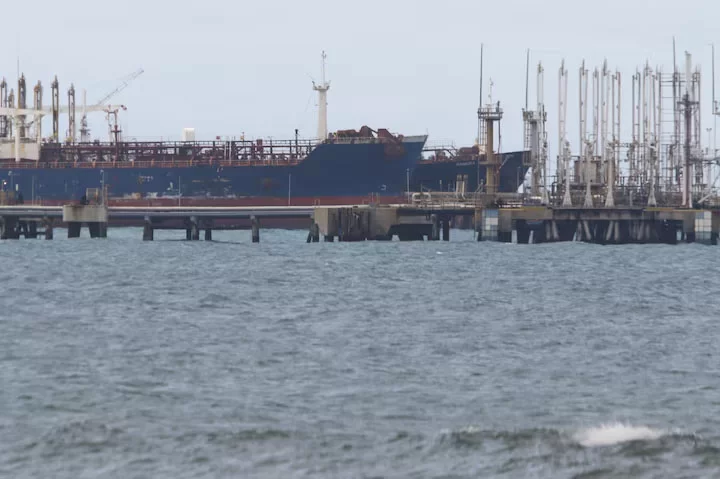
The USS Gerald R. Ford, the United States’ most advanced aircraft carrier, is set to arrive in waters off the coast of Venezuela within days, marking a rare display of American military power in Latin America. This deployment, the first of its kind in generations, has sparked widespread speculation and concern across the region. While experts are divided on whether the carrier will launch combat missions against Venezuelan targets, its presence is widely interpreted as a strategic move to pressure authoritarian President Nicolás Maduro. Some analysts suggest the carrier’s primary role is to patrol the Caribbean and support anti-drug operations, but its sheer size and capabilities send a strong message. Elizabeth Dickinson, a senior analyst at the International Crisis Group, noted, ‘This is a clear demonstration of U.S. military might in Latin America, raising concerns not just in Venezuela but across the region.’ The deployment is part of the Trump administration’s broader campaign in South America, officially framed as an anti-drug operation. However, critics argue that the move is more about exerting political pressure on Caracas than combating drug trafficking. Bryan Clark, a former naval officer and defense analyst, emphasized that the Trump administration would not deploy the carrier without the intent to use it, suggesting potential military action if Maduro does not step down. Meanwhile, the Venezuelan government has responded with a massive mobilization of troops and civilians, preparing for potential U.S. aggression. The situation has also drawn criticism from regional leaders and human rights organizations, with Colombia temporarily halting intelligence sharing with the U.S. In contrast, Mexico has strengthened its cooperation with the U.S. in combating drug trafficking. As the USS Gerald R. Ford enters the Caribbean, analysts warn that its prolonged presence could have significant global implications.
-

Column: De schuld van de boodschapper
In a recurring pattern, the Surinamese government has once again shifted blame onto journalists for miscommunication, rather than addressing its own messaging errors. The latest incident involves Vice President Gregory Rusland, who, while acting as interim president, engaged in discussions with representatives from the Chinese mining company Chinalco. Following these talks, the Directorate of Public Communication issued an official statement titled ‘Resumption of Talks with Chinalco,’ which detailed plans for renewed negotiations aimed at securing a better agreement for Suriname. This statement was subsequently disseminated by the Suriname Communication Service (CDS) under the headline ‘Government Re-enters Negotiations with Chinalco.’
However, upon her return from Brazil, President Jennifer Simons publicly contradicted the statement, asserting that no negotiations were taking place with Chinalco and that no bauxite would be exported. She emphasized that ‘the government consists of the president, the vice president, and the Council of Ministers,’ indirectly rebuking Rusland. This contradiction has left journalists and media outlets in a difficult position, as they had reported based on official government communications.
The opposition has seized upon this incident, suggesting a lack of unity within the government. The core question remains: what truly transpired? The original statement from the Directorate of Public Communication implies that Rusland either acted independently, driven by his ego as interim president, or that his office fabricated the information. Both scenarios are equally troubling. Despite the viral spread of the government’s statement, Rusland did not refute it before Simons’ remarks.
Yet, the media bore the brunt of the blame. Rusland denied any negotiations, and Simons accused journalists of ‘writing something incorrect.’ However, the fault lies not with the media but with the vice president’s office, which released the misleading information. Journalists merely reported based on official sources.
This is not the first instance where politicians have made politically inconvenient statements only to later blame the press. While journalists are not infallible, it is detrimental to democracy when those in power systematically shift the blame for their communication failures onto the media. True credibility comes from acknowledging mistakes, not denying or distorting them. A healthy democracy requires a mature relationship between the government and the press, built on mutual respect rather than distrust and blame.