标签: Suriname

苏里南

  • Regering komt burgers tegemoet bij vervallen bereidverklaringen

    Regering komt burgers tegemoet bij vervallen bereidverklaringen

    The Surinamese government has announced significant administrative reforms to address citizen grievances regarding expired land declaration documents. Minister Stanley Soeropawiro of the Ministry of Land and Forest Management (GBB) revealed the implementation of a temporary recovery period for citizens who faced expiration of their ‘bereidverklaring’ (declaration of readiness) due to bureaucratic delays beyond their control.

    Investigation revealed that numerous citizens had fulfilled their obligations correctly and timely, yet encountered expiration of their land documents due to processing delays within administrative channels, including surveyor backlogs and mapping documentation issues. These bureaucratic hurdles forced applicants to restart the entire application process while incurring additional costs.

    While maintaining the statutory six-month validity period for land declarations, the ministry now introduces a one-month recovery window. During this period, legally expired declarations can be administratively processed under strict conditions, exclusively for administrative completion rather than substantive modifications.

    The remedial measure applies exclusively when three conditions are met: the delay must be demonstrably administrative and not caused by the citizen; the term exceedance must remain limited; and the file content must remain substantively unchanged.

    Minister Soeropawiro emphasized that justice and relief for affected citizens form the cornerstone of this policy. ‘When citizens fulfill their obligations correctly but experience delays within the administrative chain, it is unreasonable to hold them accountable. This measure demonstrates our commitment to supporting citizens,’ the minister stated.

    The policy takes immediate effect and remains valid until June 30, 2026, providing temporary relief while the government works on longer-term administrative reforms.

  • President waarschuwt: olie-inkomsten vragen strikte discipline en transparant beheer

    President waarschuwt: olie-inkomsten vragen strikte discipline en transparant beheer

    Surinamese President Jennifer Simons has issued a stern warning against premature expenditure of anticipated oil and gas revenues, emphasizing that future energy earnings must not lead to fiscal complacency or irresponsible policymaking. Speaking at the New Year’s reception of the Association of Economists in Suriname on Thursday evening, the head of state positioned the oil revenue discussion within a broader macroeconomic context, noting that the country remains in a phase of fragile stability requiring continued focus on inflation control, purchasing power protection, and confidence restoration.

    President Simons highlighted that international experience demonstrates nations rarely fail due to resource scarcity but frequently collapse through weak governance, inadequate accountability, and premature spending of future income streams. With structural oil revenues not expected until 2028, she cautioned against the dangers of anticipatory expenditure, stressing that hydrocarbon earnings actually increase governmental responsibility to maintain discipline, transparency, and sound management.

    Central to the administration’s strategy is the establishment of a savings and stabilization fund, with legislation required to be finalized and operational by mid-2026. This fund will feature clear deposit and withdrawal rules, independent governance structures, and mandatory public reporting to government, parliament, and civil society. According to Simons, the mechanism must serve multiple functions: cushioning economic shocks, preventing overheating, and enabling long-term investments that enhance Suriname’s productive capacity.

    The address also addressed the recent settlement of Value Recovery Instrument (VRI) obligations, which the government executed to prevent future oil revenues from being disproportionately taxed. Simons clarified this decision only remains justified if accompanied by sustained fiscal discipline and maximum transparency, with the breathing space obtained through refinancing dedicated to structural reforms rather than additional expenditure.

    Crucially, the president emphasized that oil and gas revenues should not replace economic diversification efforts but rather facilitate reduced dependency on limited economic pillars. The government explicitly links hydrocarbon policy to investments in agriculture, agro-processing, tourism, industry, education, and healthcare. Local content policies will be legally embedded with clear participation targets and transparency requirements for contracts and decision-making.

    Notably, Simons connected resource management directly to integrity and moral leadership, referencing recent concerns regarding state-owned enterprises and emphasizing that rules must apply universally without exceptions. She characterized economic choices as fundamentally moral decisions that determine family prosperity and intergenerational opportunity.

    Looking toward 2028, the president designated 2026 as a critical preparatory year, with current choices determining whether oil revenues become a blessing for broad prosperity or a source of renewed vulnerability. The administration’s approach prioritizes saving where possible, investing where necessary, and assuming responsibility for future generations’ welfare.

  • Nieuw monument te Bakkie voor Amerikaanse slachtoffers 83 jaar geleden

    Nieuw monument te Bakkie voor Amerikaanse slachtoffers 83 jaar geleden

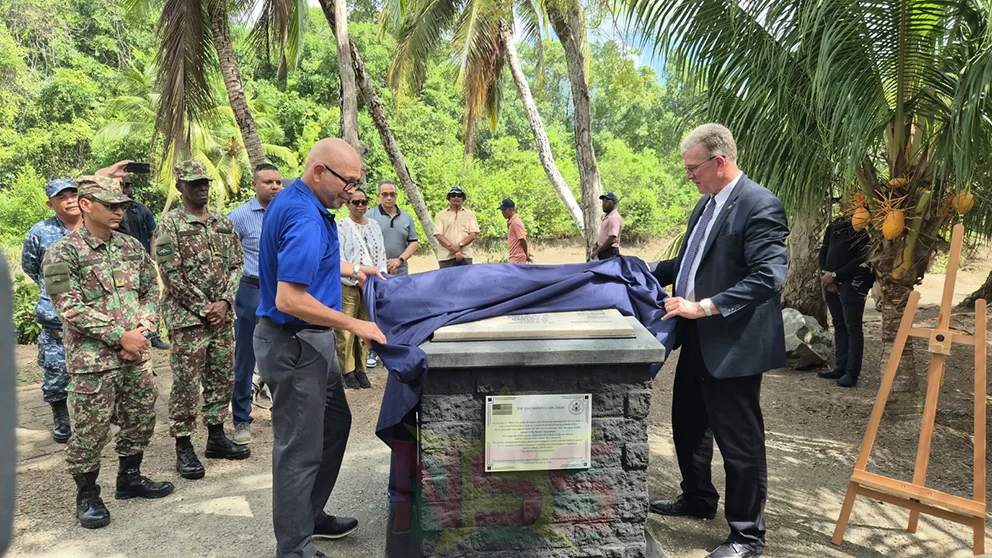
    Suriname’s pivotal role in World War II came into focus Thursday as U.S. Ambassador Robert Faucher and Education Minister Dirk Currie unveiled a renovated memorial commemorating a mysterious 1943 plane crash that claimed 35 lives. The ceremony at Bakkie Museum marked both historical remembrance and Faucher’s final diplomatic act before concluding his service in Suriname.

    On January 15, 1943, a Douglas C-54 Skymaster military aircraft plunged into the Warappakreek near Reynsdorp, known locally as Bakkie, in what remains Suriname’s deadliest aviation accident. All passengers perished, including high-ranking government officials, military personnel, and FBI agents. Witnesses reported seeing a ‘fireball’ descend, though the crash’s cause remains undetermined eight decades later.

    Ambassador Faucher revealed the flight was part of a secret three-plane mission destined for the historic Casablanca Conference, where President Franklin Roosevelt and Prime Minister Winston Churchill would strategize the Allied victory. Each aircraft departed Washington at thirty-minute intervals, following a Caribbean and South American coastal route to Africa while evading enemy warships and submarines.

    ‘Suriname held vital strategic importance,’ Faucher emphasized, noting that 80% of U.S. aluminum for war materials originated from Surinamese bauxite. The nation’s airspace also served as a critical corridor to global conflict zones.

    The ill-fated aircraft carried significant resources including gold, currency, and confidential documents. While Roosevelt ultimately traveled via modified arrangements, two planes reached Morocco successfully. The third crashed under circumstances that spawned theories ranging from onboard explosions to enemy attacks, as documented in Dave Edhart’s investigation ‘Mayday In The West’.

    The ceremony included a moment of silence for victims, among them Eric Knight, author of ‘Lassie Come Home’. Although artifacts including the propeller and personal effects reside in Bakkie Museum, most wreckage remains buried in marshland. The memorial now stands renewed, bearing names of those whose silent mission contributed to Allied success.

  • Overpeinzingen bij 77 jaar VHP

    Overpeinzingen bij 77 jaar VHP

    As Suriname’s Progressive Reform Party (VHP) commemorates its 77th anniversary on January 16, 2026, the political organization stands at a critical juncture requiring substantial internal transformation and strategic repositioning. According to prominent VHP member Henry Ori, the party confronts significant challenges despite its historical legacy of producing distinguished statesmen and exceptional parliamentary representatives.

    The recent 2020-2025 governmental term saw VHP assuming executive responsibility with a party president who initiated substantial policy measures. However, the party currently faces targeted negative campaigns aimed at undermining its public standing. Ori emphasizes that VHP inherited substantial governance challenges from previous administrations and prevented Suriname from descending into bankruptcy and economic decline, though he acknowledges that party leadership made certain miscalculations during their tenure.

    With over 40,000 registered members and extensive supporter networks, VHP represents a substantial political force rather than belonging to a select few individuals. The opposition period now provides opportunity for thorough evaluation, with the party possessing an assessment report and critical analysis from VHP Netherlands that should inform future direction.

    The emergence of political populism coincides with diminishing public trust in traditional politics, creating an environment where VHP must reestablish credibility through concrete actions. This necessitates addressing fundamental societal issues including inequality, poverty disparities, unequal access to knowledge resources, employment challenges, housing shortages, and land distribution problems.

    Ori advocates for developing self-cleansing mechanisms within the party structure, coupled with personnel renewal and ideological reinvigoration. VHP politics must demonstrate explicable policy choices connected to core party ideals while addressing Suriname’s pressing needs regarding wealth distribution, climate challenges, energy requirements, revenue generation, and investments in education, infrastructure, and healthcare systems.

    Despite securing 17 parliamentary seats in recent elections—demonstrating significant voter support for its philosophy—the party must transition from distrust to trust and from self-interest to collective benefit. This anniversary serves as both celebration and call to action for organizational renewal and democratic revitalization throughout Surinamese politics.

  • President Simons: economische stabiliteit voorwaarde voor rechtvaardige welvaartsverdeling

    President Simons: economische stabiliteit voorwaarde voor rechtvaardige welvaartsverdeling

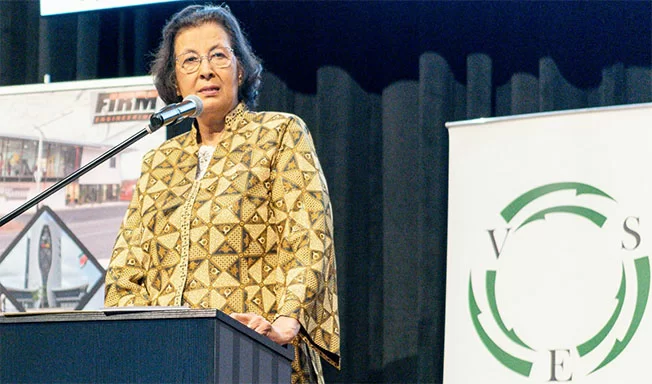
    In a pivotal address to the Suriname Economists Association (VES), President Jennifer Simons unveiled the foundational framework for the nation’s economic and governance strategy extending to 2030. Speaking at the New Year’s reception, the president articulated a vision moving beyond macroeconomic stability as an end goal, positioning it instead as the essential foundation for sustainable growth and equitable wealth distribution.

    Simons characterized Suriname’s current juncture as a decisive crossroads, emphasizing that with the IMF program concluded and the 2025 political transition completed, the nation must now assume full responsibility for coherent fiscal, monetary, and structural policies. “We commenced our term amidst scarcity, a fragile economic recovery, and limited public trust,” Simons noted. “This reality demands not grand rhetoric but clear direction, disciplined execution, and institutional strength.”

    The administration declared 2026 as both a new budgetary cycle and the launch of a comprehensive Multi-Year Development Plan (MOP) targeting 2030 objectives. This strategic framework will integrate policy priorities, investment decisions, and implementation agreements within a macro-fiscal structure featuring scenario analyses for growth trajectories, inflation control, exchange rate management, and future petroleum revenues.

    Central to the government’s approach is the “one government, one course” principle, organized around five national priorities: enhancing revenue generation capabilities, strengthening education and healthcare systems, improving public security, revitalizing the housing sector, and ensuring policy coherence and execution. The economic direction rests on three fundamental pillars: macroeconomic stability, economic diversification, and investments in human capital and institutions.

    President Simons issued stern warnings regarding inflation risks and budgetary deviations, highlighting Suriname’s import dependency which rapidly transmits exchange rate pressures to consumer prices, thereby eroding purchasing power and undermining business and household confidence. Fiscal policy must consistently support monetary measures, with no room for broad wage adjustments that could fuel inflationary spirals. Protection mechanisms, she stressed, should specifically target low-income households and vulnerable populations.

    The address extensively addressed foreign exchange challenges, emphasizing that currency earnings must actively circulate within the domestic economy rather than accumulate stagnant reserves. Economic leakages including gold smuggling, underreporting, and informal exports exacerbate exchange rate pressures and constrain budgetary flexibility. The government is collaborating with the Central Bank to establish a stable and transparent foreign exchange market, supported by analytical work from a dedicated currency commission.

    Regarding public finances, while government revenues reached approximately SRD 45.6 billion in 2025, expenditures grew more significantly due to election costs, salary adjustments, and subsidies. For 2026 onward, the administration aims to implement expenditure controls without obstructing productive investments. Education and healthcare budgets will receive explicit protection, while inefficient programs face phase-out and state-owned enterprises will undergo enhanced oversight.

    Looking toward anticipated oil revenues, Simons cautioned that additional resources cannot justify unfettered spending. The savings and stabilization fund requires strengthened legal and operational frameworks with transparent rules for deposits, withdrawals, and public accountability. International experience demonstrates that nations typically fail not from resource scarcity but from weak management and transparency deficits, she observed.

    Concluding her address, President Simons invited VES and professional associations to actively contribute to policy formulation and public knowledge sharing. Effective policy demands not only technical excellence but also societal understanding and support, she remarked, adding that “economic choices are fundamentally moral choices—they determine whether families can prosper and whether youth can envision futures.”
  • Nieuwe raden van toezicht bij SRS en STVS

    Nieuwe raden van toezicht bij SRS en STVS

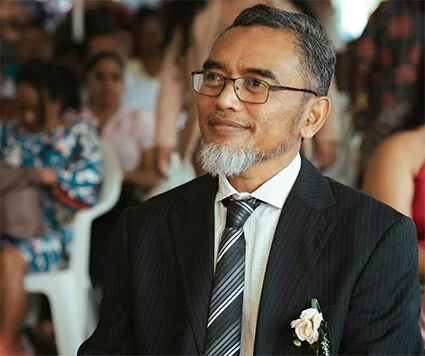
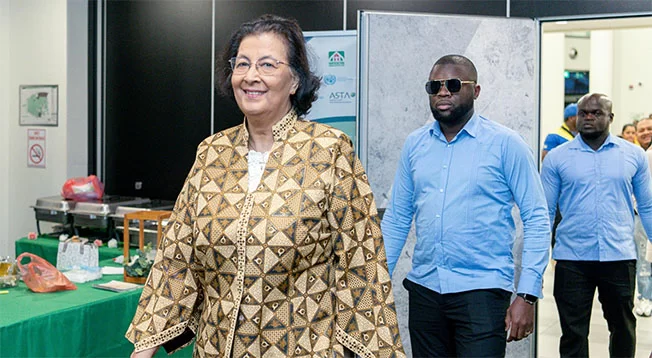
    Suriname has undertaken significant reforms in its public broadcasting sector with the installation of new supervisory boards for both Radio Suriname Foundation (SRS) and Suriname Television Foundation (STVS). Vice President Gregory Rusland presided over the installations, emphasizing the critical role these oversight bodies will play in strengthening the nation’s media landscape.

    During the installation ceremonies, Vice President Rusland confirmed that his office maintains direct administrative and financial responsibility for both broadcast entities. He committed to advocating for enhanced budgetary allocations for STVS during upcoming budget deliberations, recognizing the financial challenges facing the state broadcaster.

    The newly constituted SRS board, chaired by Kenneth Moerlie, faces the formidable challenge of restoring the broadcaster’s former prominence. Rusland urged the council to develop innovative strategies to improve competitive positioning while fulfilling public service mandates. SRS Director Earnie Eenig highlighted the board’s crucial role in upcoming challenges, particularly regarding coverage of the forthcoming World Cup football tournament. “It would be peculiar for Suriname to participate in the World Cup while we fail to broadcast it,” Eenig remarked.

    The complete SRS supervisory board comprises Moerlie alongside Roberto Banel, Raoul Swedo, Harvey Liefde, Estacio Nasa, Audrey Tjung Angie, and Newton Ali.

    At STVS, the new board chaired by Shirley Lackin will prioritize financial stabilization of the state television network. Board member Glenn Truideman raised concerns about personnel management complexities arising from varying administrative authorities, which occasionally create operational friction.

    Vice President Rusland proposed implementing project-based working arrangements to provide clearer contract duration frameworks. The STVS board includes Lackin, Truideman, Stanley Sidoel, Kenrich Cairo, and Michel Felisi. STVS Director Raoul Abisoina expressed appreciation for the government’s cooperative relationship and anticipated productive collaboration with the new oversight body.

  • VS waarschuwt Iran: alle opties open, Iran belooft reactie op agressie

    VS waarschuwt Iran: alle opties open, Iran belooft reactie op agressie

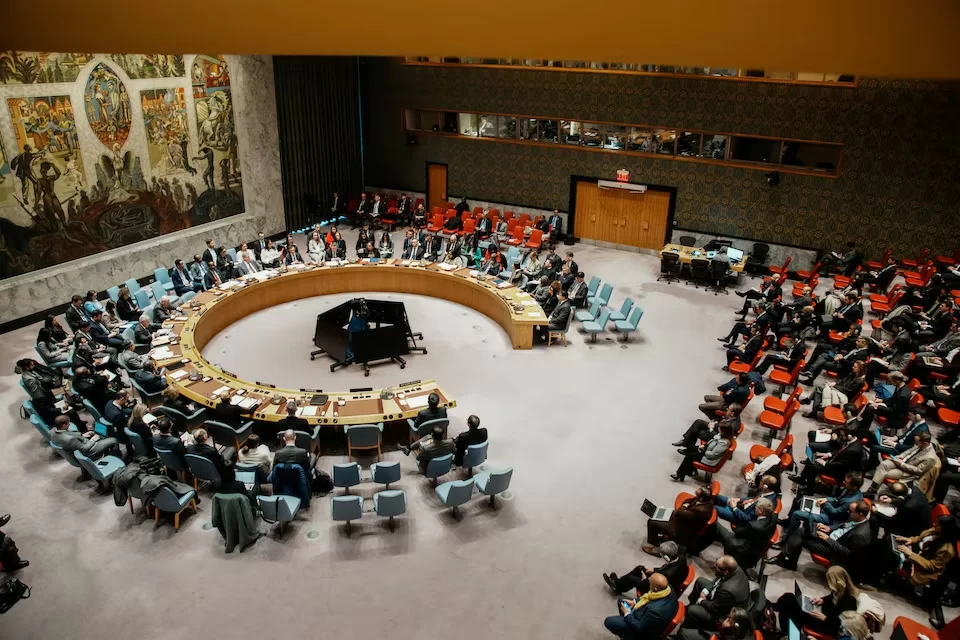
    The United Nations Security Council convened an emergency session on Thursday amid escalating diplomatic tensions between the United States and Iran regarding the handling of recent civil unrest within Iranian territories. The session, requested by the U.S., revealed sharply divided positions among global powers concerning appropriate international response mechanisms.

    U.S. Ambassador to the UN Mike Waltz asserted that Washington maintains “all options on the table” to address reported violence against protesters in Iran, reiterating President Donald Trump’s support for what he termed “the brave Iranian people.” This stance followed earlier presidential statements suggesting potential intervention supporting demonstrators, though Trump subsequently adopted a more measured position, noting decreased violence and denying plans for large-scale executions.

    Iran’s Deputy UN Ambassador Gholamhossein Darzi delivered a sharp rebuttal, characterizing American statements as “lies, factual distortions, and a deliberate disinformation campaign” designed to conceal alleged U.S. involvement in instigating unrest. Darzi warned that any direct or indirect aggression against Iran would trigger a “decisive, proportional, and lawful response,” emphasizing this constituted legal reality rather than mere threat.

    Russian Ambassador Vassily Nebenzia criticized the U.S. motive for convening the session, accusing Washington of attempting to justify “brutal aggression and interference in the domestic affairs of a sovereign state” while pursuing regime change through military means. He urged American leadership and allied nations to reconsider their approach.

    UN Secretary-General António Guterres appealed for maximum restraint during this sensitive period, encouraging all parties to avoid actions potentially leading to additional casualties or broader regional escalation. Danish Ambassador Christina Markus Lassen emphasized the Iranian people’s repeated demonstrations demanding improved living conditions, calling upon Tehran’s government to peacefully respond to its citizens’ expressed will.

    The emergency meeting concluded without consensus, reflecting persistent geopolitical divisions while underscoring the international community’s growing concern regarding potential escalation pathways in the already volatile region.

  • Column: Vragen om transparantie is geen aanval

    Column: Vragen om transparantie is geen aanval

    A burgeoning controversy surrounding the accompaniment of President Jennifer Simons’ spouse on official state missions has ignited a crucial debate about governmental transparency and accountability. What began as a simple inquiry about travel protocols has evolved into a complex discussion about the essential boundaries between private and public roles in high-level governance.

    The core issue centers on the fundamental necessity for clarity when family members join official delegations. Legitimate questions regarding capacity of participation, funding sources, and access to diplomatic meetings represent not media intrusion but essential components of proper democratic oversight. The situation escalated when social media imagery depicted the president’s husband actively participating in official engagements, despite subsequent claims of his ‘private’ attendance status.

    Concerningly, the public discourse has shifted from examining transparency requirements to questioning media motives, particularly targeting Starnieuws for raising these valid inquiries. This deflection strategy mirrors previous administrations’ approaches when similar scrutiny was applied to First Lady Mellisa Santokhi’s extensive travel with former President Santokhi—a subject that received substantial critical media coverage despite current suggestions otherwise.

    The essential principle remains unchanged: transparency operates prospectively, not retrospectively. Each administration bears independent responsibility for maintaining clear boundaries and disclosure practices. In democratic systems, transparency constitutes an obligation rather than a concession, with higher offices demanding greater clarity due to their profound impact on public trust.

    Critical journalism serves as democracy’s necessary counterbalance rather than an adversary to power. The media’s function involves ensuring governability through accountability, not maintaining official comfort. Personalizing these inquiries risks undermining press freedom’s vital role in democratic societies.

    This situation requires simple preventive measures: advance disclosure of delegation composition, purposes, capacities, and cost allocations. Such transparency wouldn’t eliminate criticism but would ensure it remains fair, measurable, and proportionate—ultimately benefiting all stakeholders, especially the public.

  • Astrid Roemer ten ruste gelegd

    Astrid Roemer ten ruste gelegd

    The global literary community gathered today to honor the life and legacy of distinguished Surinamese author and poet Astrid Roemer, who was laid to rest exactly one week after her passing at age 78. The funeral procession, attended by family, friends, and literary colleagues, proceeded from her final residence at Stichting De Mantel to her burial site at Hodi Mihi Cras Tibi in a solemn ceremony.

    Born Astrid Heligonda Roemer in Paramaribo on April 27, 1947, the writer spent over five decades living in the Netherlands and Belgium before returning to her native Suriname several years ago. Roemer established herself as a transformative voice in Dutch-language literature through her powerful explorations of identity, history, colonialism, and women’s experiences.

    Her literary career began in 1970 under the pseudonym Zamani with the poetry collection ‘Sasa: mijn actuele zijn.’ She achieved critical acclaim with her groundbreaking 1982 experimental novel ‘Over de gekte van een vrouw’ (On a Woman’s Madness), now regarded as a feminist classic that examines themes of colonialism, race, gender, power, and trauma through distinctly Surinamese and female perspectives.

    Roemer’s extensive body of work earned her numerous prestigious awards, including the P.C. Hooftprijs in 2016 and the Prijs der Nederlandse Letteren in 2021—making her the first Surinamese author to receive the Netherlands’ highest literary honor. Her international recognition continued through 2025 when the English translation of ‘On a Woman’s Madness’ by Lucy Scott was longlisted for the International Booker Prize.

    The author leaves behind a profound literary legacy that continues to influence Surinamese, Caribbean, and Dutch-language literature. Her works remain widely read, studied, and appreciated by audiences and scholars across national boundaries, ensuring her enduring impact on postcolonial and feminist discourse.

  • Vicepresident naar Zwitserland voor World Tourism Forum

    Vicepresident naar Zwitserland voor World Tourism Forum

    Surinamese Vice President Gregory Rusland is set to embark on an official visit to Switzerland this Saturday to participate in the prestigious World Tourism Forum, convened during the influential World Economic Forum week. Accompanied by a delegation of three senior officials, the Vice President will engage in high-level discussions before returning the following week.

    Mr. Rusland received a specific invitation to join an exclusive assembly of forty international decision-makers, comprising heads of state, chief executive officers, and government ministers. This selective gathering represents some of the most influential figures in global governance and business leadership.

    The central theme of his participation will focus on translating commitments into actionable strategies under the forum’s agenda: “From Pledges to Implementation: Scaling Sustainable Tourism and Hospitality.” This dialogue aims to bridge the gap between theoretical frameworks and practical execution in sustainable tourism development.

    Unlike conventional tourism conferences, the World Tourism Forum operates as a high-level decision-making platform that reconceptualizes tourism not as an isolated industry but as a strategic pillar for global economic resilience. The forum emphasizes peer-to-peer interaction and strategic alignment among participants, moving beyond traditional presentation formats to foster genuine collaboration and policy development.

    The participation of Suriname’s Vice President signals the growing recognition of small nations in shaping global tourism policies and highlights the increasing importance of sustainable tourism in national economic strategies.