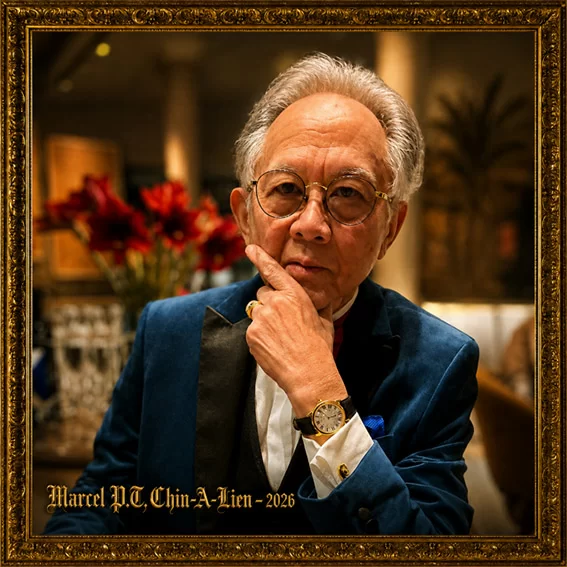
Over the past five years, Suriname’s offshore waters have delivered an energy windfall unmatched in the nation’s entire modern history: more proven oil and natural gas reserves have been discovered off its coast than were accumulated in all preceding decades combined. This geological bounty positions the small South American nation at a crossroads, where intentional policy choices will determine whether these resources translate into long-term, inclusive sustainable development, or remain a raw commodity export that delivers limited benefit to ordinary Surinamese people. In the first installment of a six-part series, veteran petroleum and energy advisor Marcel P.T. Chin-A-Lien breaks down why a new onshore refinery and a Gas-to-Shore (GtS) pipeline project are critical to unlocking the full potential of Suriname’s energy reserves for all citizens.
标签: Suriname
苏里南
-
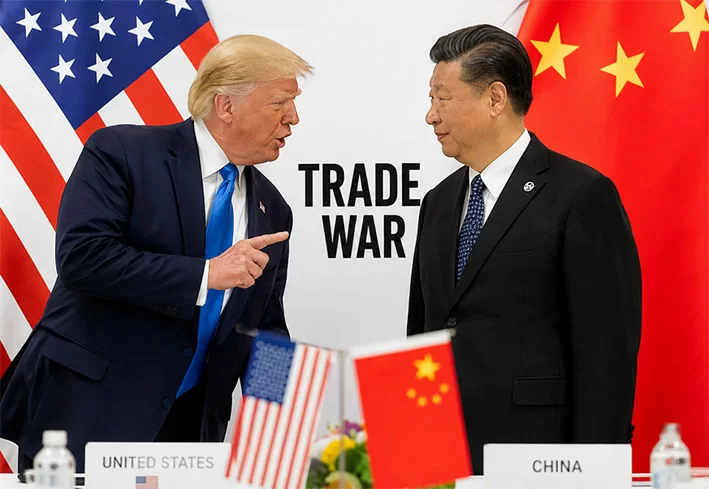
China slaat terug met sancties en strengere exportregels in handelsconflict met VS
Tensions in the long-running trade and technology standoff between the world’s two largest economies have flared once again, after China unveiled a coordinated package of countermeasures on Wednesday in response to new punitive trade actions imposed by the United States. Beijing’s response includes tightened export controls on drones and related dual-use technologies bound for the US market, alongside formal sanctions on several US entities and companies.
According to China’s Ministry of Commerce, the new measures are a direct and proportionate response to a series of recent hostile trade moves from Washington. These include new restrictions targeting Chinese technology firms, updated stringent regulatory requirements issued by the US Federal Communications Commission, and the addition of dozens of Chinese companies to Washington’s economic blacklist over unsubstantiated allegations of human rights violations in Xinjiang.
At the core of China’s countermeasures is a sweeping overhaul of export licensing rules for drones, drone components, and dual-use technologies that have both civilian and military applications. While exports to the United States will still be permitted, all new shipments will now undergo much stricter case-by-case reviews before approval is granted. In addition, Chinese firms are barred from conducting any new commercial activities with seven US organizations that Beijing says have actively participated in Washington’s anti-China sanctions regime.
Beijing has also suspended all cooperation with US certification bodies that carried out mandatory quality inspections for Chinese goods exported to the United States. A formal security probe has additionally been launched into potential risks posed by certain imported US-made office equipment.
Market and policy analysts broadly view the new set of measures as a clear escalation of the ongoing technology and trade rivalry between the two global economic powers. Unlike earlier phases of the standoff that centered heavily on broad-based import tariffs, both Washington and Beijing have increasingly shifted focus to targeting strategic sectors that hold both economic and national security importance. These cutting-edge sectors include semiconductors, unmanned aerial systems, robotics, telecommunications, and other advanced dual-use technologies.
While China’s latest countermeasures are narrowly targeted and do not amount to a full blanket trade ban on US goods and services, observers note they underscore the continued deepening of economic competition between the two powers. At the same time, both sides have signaled a continued interest in keeping tensions contained ahead of planned diplomatic engagements scheduled for later this year.
For the South American nation of Suriname, the new measures do not carry immediate direct impacts. However, a further deterioration of Sino-US trade relations could drag down overall global economic growth, analysts warn. Over the longer term, a broader slowdown would affect global demand for raw materials, and push up international prices for key export commodities that Suriname relies on for government revenue and foreign exchange, including crude oil and gold. Disruptions to global supply chains stemming from escalated tensions could also drive up costs for imported technology and industrial goods that Suriname depends on for domestic development.
-
Puerto Ricaanse steden voeren waterbeperkingen in tijdens recorddroogte
Puerto Rico is grappling with one of its worst droughts in more than a century, forcing authorities to implement strict rolling water restrictions across San Juan and multiple other major urban centers as the deepening water crisis leaves hundreds of thousands of residents without access to piped water for 48-hour rotating periods.
The drought, amplified by the ongoing El Niño climate pattern that has supercharged extreme weather events across the globe, has created an unprecedented emergency for the U.S. territory. Governor Jenniffer Gonzalez announced the new measures during a press address Tuesday evening, warning that the situation is currently beyond officials’ full control and could worsen in the coming weeks. She added that there is no clear timeline for lifting the restrictions, as meteorologists project dry conditions will persist through at least September.
Climate data confirms the severity of the event: July 2026 marked the driest July recorded in San Juan in 120 years, and also ranked as the territory’s second-hottest July on record. According to the latest update from the U.S. Drought Monitor, nearly 25% of Puerto Rico is currently experiencing extreme drought, while an additional 36% of the island is facing moderate drought conditions.
Maria Novoa Garcia, a meteorologist with the National Weather Service’s San Juan office, confirmed that rainfall over the next several weeks is expected to be at least 50% below the historical average for this time of year. She noted that El Niño, a natural climate fluctuation that shifts global weather patterns, has amplified ongoing drought and heat trends driven by long-term human-caused climate change, worsening extreme events including droughts, heatwaves, and floods across the world.
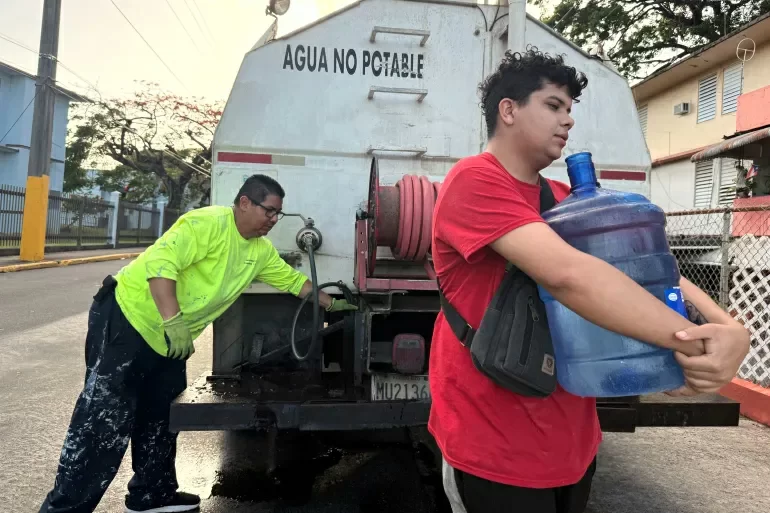
The water crisis is not a sudden development: many residential neighborhoods across the island have already endured months of severe water shortages. Marcia Soler Paris, a 61-year-old community leader in San Juan’s Villa Kennedy public housing complex, described the daily reality for residents as total chaos. She highlighted particular risks for vulnerable groups, including elderly residents who cannot carry heavy containers of water to their homes, a scene captured in associated AP photojournalism showing resident Bryan Perez hauling a 20-liter can of water to his apartment.
In response to the crisis, Luis Gonzalez Delgado, president of the Puerto Rico Water and Sewerage Authority (PRWSA), announced that the government will deploy trucked drinking water to affected communities, prioritizing access for hospitals and nursing homes that care for the most at-risk populations. Beyond San Juan, the new rolling water restrictions are also in effect for municipalities including Carolina, Juncos, Gurabo, Trujillo Alto, Canovanas, and Loiza.
Long-standing structural failures have deepened the current emergency. San Juan’s mayor has already filed a lawsuit against the PRWSA over years of unaddressed water infrastructure issues. Governor Gonzalez echoed that criticism, noting that the island’s water network has suffered from decades of underfunding and inadequate maintenance that left it ill-equipped to withstand a major drought event. This is not the first time Puerto Rico has been forced to implement broad water restrictions: similar measures were rolled out in 2015 and 2020, when hundreds of thousands of residents only received piped water once every three days.
The drought gripping Puerto Rico is part of a larger global pattern of intensifying extreme weather tied to climate change and the 2023-2024 El Niño event. While the U.S. territory faces crippling dry conditions, other regions across the globe are grappling with opposite extremes: parts of Africa and Southern Europe are battling devastating widespread wildfires, while intense monsoon rainfall across South Asia has triggered catastrophic flooding and deadly landslides that have displaced millions.
-
Column: Het onderste uit de kan
Long before the opening kickoff of the 2026 FIFA World Cup, and weeks after the final whistle was blown, a cascade of controversial decisions made before, during, and after the tournament has continued to dominate global football conversations. What was supposed to be collective decision-making across the governing body has repeatedly been carried out unilaterally by a single individual, prompting critics to question whether FIFA operates as a transparent democratic organization or a private one-man enterprise.
Despite the existence of multiple statutory advisory bodies and oversight committees designed to contribute to governance, the global football community has been repeatedly shocked by top-down decisions made without broader consultation. Committee members have repeatedly hinted that they were kept completely in the dark about key policy stances before they were announced publicly. This consistent sidelining of mandated governing bodies has gradually eroded public and institutional trust in FIFA, creating a rift between leadership and the core stakeholders of the sport.
Where players, national coaches, and member associations once accepted rulings handed down from FIFA leadership without public pushback, the 2026 tournament has seen widespread public expression of discontent. For example, players and coaches openly aired frustration over last-minute scheduled water breaks, accusing FIFA of prioritizing commercial interests over the flow and integrity of the game. Another major point of contention was FIFA’s deliberate silence when tournament hosts denied entry to multiple participating players and supporters on what have since been revealed as questionable grounds. Even the mother of Cape Verde’s star goalkeeper Vozinha, who gained global fame during the tournament, was initially barred entry before the decision was reversed following public outcry, and she was ultimately welcomed to the host country publicly.
To date, it remains unclear why FIFA’s top leader made so many unreciprocated concessions to the tournament’s lead host nation, but missteps have continued to pile up. The leadership’s position already looked untenable after a controversial late decision to reverse a red card issued to an American player following a phone call from senior U.S. football officials. While widespread calls for the leader’s resignation emerged immediately after the incident, the incumbent managed to weather the immediate storm. Many observers hoped the backlash would prompt more careful governance going forward, but those hopes were quickly dashed. During the tournament final, halftime was extended to twice its standard length to accommodate entertainment performances favored by American commercial partners, a change that drew widespread criticism for disrupting the rhythm of the deciding match.
After the FIFA chief survived the wave of criticism to retain his position and wrap up the tournament, missteps reached a climax when he unveiled a controversial plan to list shares of FIFA’s flagship tournaments in a separate commercial entity and sell the stake to private investors. Critics immediately slammed the scheme, saying it amounted to a global bribery scheme: member associations that supported the proposal would receive generous financial rewards, while those that opposed it would be sidelined and receive far fewer benefits. While the FIFA president has insisted he would not personally profit from the plan, public investigations have confirmed that he would personally earn up to $30 million if the plan went through — 10 times his current annual salary of $3 million. Although the proposal has since been withdrawn in response to public pressure, the damage to the leadership’s credibility has already been done. The president’s position is now widely considered untenable, after overreaching to extract maximum personal and commercial gain from the world’s biggest sporting event, he now faces near-certain removal from office.
-
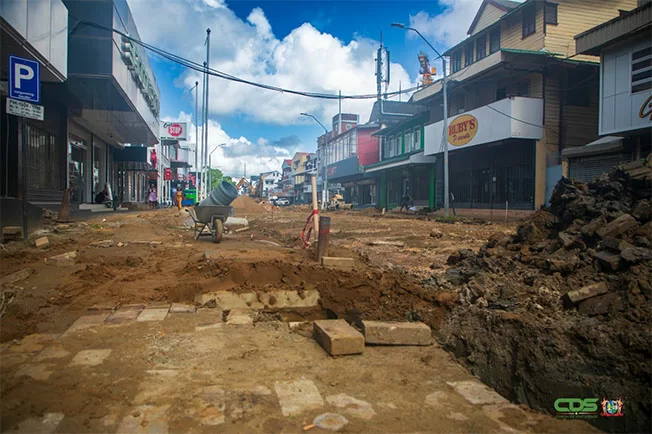
Domineestraat mogelijk al binnen twee weken weer open
Infrastructure rehabilitation work on Suriname’s Domineestraat is moving ahead with a revised timeline that will cut the full road closure period by half, bringing relief to local commuters and businesses that rely on the key roadway. The country’s Ministry of Public Works and Spatial Planning (OWRO), in partnership with lead contractor Tjongalanga NV, has confirmed the adjusted schedule: what was initially projected as a full month-long full closure will now only last roughly two weeks, provided no unexpected complications arise during construction.
The rehabilitation project, which is being executed by Tjongalanga NV under a formal contract with OWRO, targets critical upgrades to Domineestraat, a major thoroughfare that serves significant local and through traffic. After early consultations between ministry officials and the construction team, both sides agreed that accelerated work schedules would allow for an earlier completion without compromising safety or construction quality.
To keep the accelerated timeline on track, construction crews will extend working hours into evenings for the duration of the project. The Suriname Police Corps’ Motor Surveillance Service is overseeing traffic management around the construction zone, and a joint monitoring team made up of OWRO staff, contractor representatives, and police officers will remain on-site to identify potential bottlenecks as they emerge. If issues arise that threaten to disrupt traffic flow or the construction schedule, the team will implement additional traffic management measures quickly to minimize disruption.
Officials are urging all road users to plan alternate routes in advance, allow extra travel time for journeys near the construction zone, and follow all directions from police and traffic control personnel strictly to avoid accidents or unnecessary delays. OWRO has issued a public statement expressing gratitude to the Surinamese public for their understanding and patience as the infrastructure upgrade work progresses, noting that the completed project will deliver long-term improvements to road safety and connectivity for the community.
-
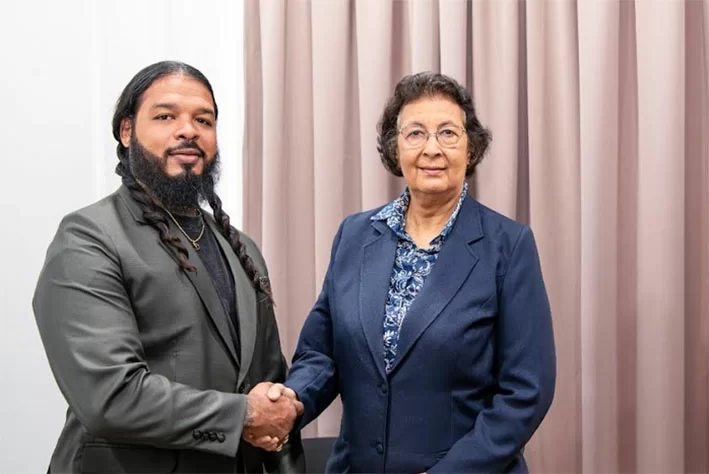
Tyrone Spong wil bijdragen aan ontwikkeling Surinaamse jeugd
Tyrone Spong, the Surinamese-Dutch decorated kickboxing and MMA world champion, has announced a commitment to leverage his decades of international experience, deep industry expertise, and global professional network to accelerate sustainable development in his home country of Suriname, with youth empowerment at the core of his new initiative. The champion made the announcement Wednesday during a courtesy meeting with Suriname’s President Jennifer Simons, where he outlined his vision for unlocking the nation’s abundant untapped athletic potential.
Spong emphasized that organized sport serves as a transformative catalyst for the personal growth, confidence building, and long-term success of young people, but warned that current gaps in Suriname’s athletic infrastructure are holding emerging talent back. To address this barrier, he is calling for targeted public and private investment in updated sport infrastructure, accessible training facilities, and local gym spaces that create consistent opportunities for young athletes to develop their craft. “Options have to be created for these young people. We need proper facilities, training spaces, gyms – these are the foundational building blocks we have to put in place,” Spong said during the meeting.
As a former global world champion who emerged from Suriname, Spong says he is convinced the nation holds a wealth of unrecognized athletic talent across multiple disciplines. Nurturing that talent, he argues, requires both a shift in mindset and intentional, long-term investment from stakeholders. “We have to be willing to think outside the box and work together to turn these plans into results,” he added.
Beyond expanding sports opportunities, Spong made clear that his engagement with national development will extend far beyond the athletic sector. He plans to advocate for progress on public health, nature conservation, and environmental protection, noting that these issues are deeply interconnected to the success of youth and sport development. “Health, native flora and fauna, environmental protection – nothing is possible without a healthy society. We have to maintain balance between our communities and the natural world that sustains us,” Spong explained.
The combat sports legend also expressed unwavering confidence in the ability of Suriname’s youth to compete and succeed on the global stage, noting that countless gifted young athletes are already waiting for the right support and opportunities to break through internationally. “I worked hard to get where I am, and I know there is so much incredible talent here in Suriname. These young people can achieve the same success I found, if not more,” he said.
In a direct message to the nation’s youth, Spong encouraged young people to stay persistent in pursuing their goals: “Quitting is never an option. Keep pushing forward, because I was once a small boy from Suriname too.” During his talks with President Simons, the two sides discussed concrete pathways to leverage Spong’s international experience and professional connections to advance youth-focused and sports-led development initiatives across the country.
-
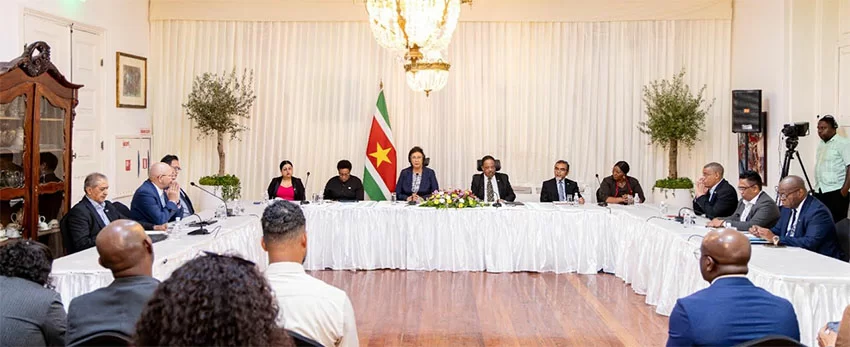
Simons kondigt bescherming woongebieden en strengere aanpak illegale activiteiten aan
Suriname’s President Jennifer Simons announced a series of ambitious new environmental and land protection measures during a government press conference on Monday, framing the defense of indigenous territorial rights and critical ecosystems as one of her administration’s top policy priorities. The core of the new policy push is a draft state decree designed to block the sudden granting of land and mineral rights within and around the traditional residential and livelihood territories of the country’s indigenous and tribal communities, a longstanding grievance for marginalized groups across the nation.
-
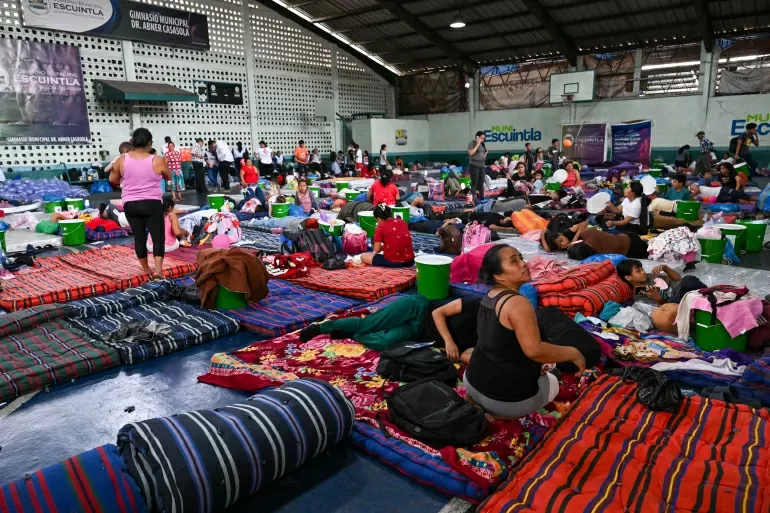
Fuego-vulkaan in Guatemala blijft as en modder spuwen; 1.700 mensen geëvacueerd
One of Central America’s most consistently active volcanoes, Guatemala’s Volcán de Fuego, continues to spew toxic ash and debris-driven mudflows weeks after its latest eruption, leaving approximately 1,700 evacuated residents stuck in temporary emergency shelters with no clear timeline to return home. Guatemalan national disaster authorities have warned that the next 72 hours will be a critical period for the region, as forecasted heavy rainfall is projected to amplify the risk of catastrophic new mudslides across surrounding communities.
The Guatemalan National Coordination for Disaster Reduction (Conred) has elevated the alert level to its highest red designation for three high-risk departments neighboring the volcano: Sacatepéquez, Escuintla, and Chimaltenango. Roughly 29,000 residents across these affected areas are already enduring ongoing exposure to hazardous ash fall, and mandatory evacuation orders remain in full effect for all at-risk zones until volcanic activity eases and conditions are deemed safe for return.
To date, mudflows stretching up to 7 kilometers have continued to flow down Fuego’s slopes, and incoming rain is expected to destabilize loose volcanic debris, worsening existing flows and creating new hazards for nearby settled areas. The volcano first erupted Monday, unleashing a powerful mix of toxic gas, volcanic ash, molten lava, and fast-moving pyroclastic flows. Volcanic activity persisted into Tuesday, with new secondary eruptions launching additional mud and ash plumes into the atmosphere.
As a preventative public health measure, Conred has issued guidance for local residents: advise covering all open drinking water stores to prevent ash contamination, and wear well-fitted face masks to reduce inhalation of fine volcanic ash. As of the latest official update, no mudflows have reached populated village centers, and no reports of structural damage to residential or public infrastructure have been confirmed.
The eruption has already upended daily life across the region. National Route 14, a major transportation artery that runs close to the volcano’s slopes near Alotenango, roughly 65 kilometers southwest of Guatemala City, has been fully closed to traffic. Additionally, all schools in nearby affected municipalities have been temporarily shuttered to avoid putting students and staff at risk.
Geographically, Guatemala sits within the Pacific Ocean’s geologically active “Ring of Fire”, a region marked by frequent tectonic activity that makes volcanic eruptions and earthquakes a regular natural hazard. Volcán de Fuego has a long history of disruptive and deadly eruptions that have forced mass evacuations in past decades. The most devastating recent event occurred in 2018, when a large-scale eruption killed 194 people and left more than 230 others unaccounted for, after hot pyroclastic flows and ash buried the villages of San Miguel Los Lotes and El Rodeo under meters of volcanic debris.
-

Hakrinbank verkoopt 18% belang in DSB via openbare inschrijving
Suriname-based financial institution Hakrinbank has announced plans to sell nearly 18 percent of its existing stake in De Surinaamsche Bank (DSB) via a public digital offering, opening a new opportunity for both domestic and international investors to acquire shares in one of the country’s established banking players. The offering, which includes 6,775,859 currently held DSB shares corresponding to 17.96% of DSB’s issued and fully paid share capital, will run for three weeks starting August 10 through August 31, with no new shares being issued by DSB as part of this transaction. All shares included in the offering are currently owned outright by Hakrinbank, marking a strategic portfolio adjustment rather than a capital raising move for DSB itself.
In a statement accompanying the offering announcement, Hakrinbank explained that the decision to divest the stake comes as part of a regular strategic review of its entire investment portfolio. The bank emphasized that the divestment is intended to allow Hakrinbank to reallocate resources and focus more intently on its own core business priorities and long-term strategic objectives. Importantly, the institution stressed that the sale does not reflect any negative judgment on DSB’s current financial standing, operational performance, or future growth prospects.
The public offering is open to both individual private investors and institutional corporate investors from Suriname and across the globe, so long as all participants meet the published offering terms and comply with relevant local legal and regulatory requirements. Unlike traditional fixed-price offerings, Hakrinbank has opted for an open bidding structure, with no set minimum or maximum price per share. When the offering opens on August 10, the current trading price of DSB shares on the Suriname Stock Exchange will only be listed as a reference point, and investors are free to submit bids either above or below this benchmark price.
Once the offering window closes at 4:00 PM local time on August 31, all submitted bids will be evaluated in accordance with the pre-published eligibility and allocation rules. Shares will be allocated starting from the highest qualifying bids received. In the event that total investor demand exceeds the number of shares available in the offering, Hakrinbank will implement either a proportional allocation system or another weighted distribution model to fairly distribute shares. The bank also noted that submitting a bid does not guarantee an allocation of shares to any participant.
The digital subscription portal for the offering will go live on August 10, the same day the offering opens. From that date forward, all relevant offering documents including the official subscription form, full terms and conditions, and additional background information will be available to interested investors via Hakrinbank’s official website and its authorized communication channels.
-
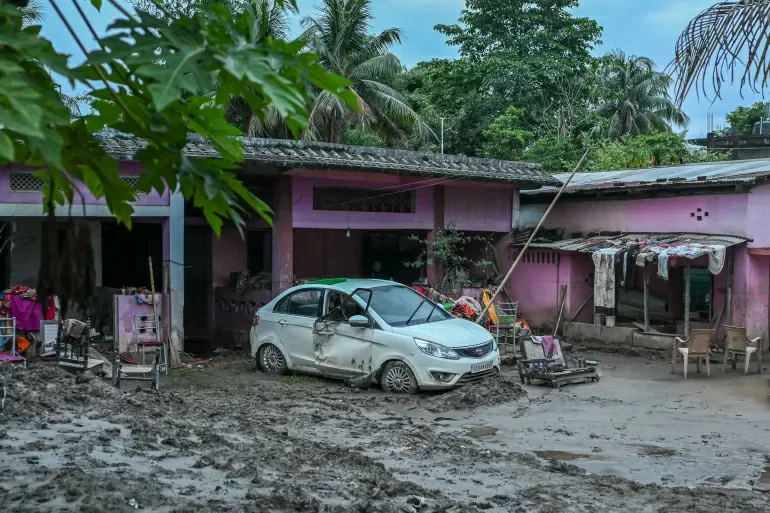
Zware moesson in India eist meer dan 100 levens
Extreme monsoon-driven flooding and landslides have claimed more than 100 lives across India since the start of July, as climate change and the El Niño weather pattern supercharge deadly weather events across South Asia and beyond. The northeastern Indian state of Assam has borne the brunt of the disaster, recording at least 87 confirmed deaths – 47 of which came from the hard-hit Sivasagar district, where receding floodwaters left entire neighborhoods and homes damaged in early August 2026. Kerala has reported 15 additional fatalities, with thousands of displaced residents now sheltering in emergency evacuation camps. At least 31 people have been killed by extreme rainfall in Indian-administered Jammu and Kashmir, and 14 more people died from lightning strikes in Jharkhand, a hazard that killed hundreds across the country just one year prior.
While the annual South Asian monsoon is a critical resource that sustains billions and supports the region’s $500 billion agricultural sector, scientists warn rising global temperatures are upending traditional precipitation patterns, turning predictable seasonal rains into increasingly erratic, deadly events. Climate change amplifies the atmosphere’s ability to hold moisture, leading to far more intense downpours when storms do form, while El Niño – a periodic warm ocean weather event in the Pacific – further disrupts global climate systems to worsen these extremes.
The extreme weather has not been confined to India. Neighboring Sri Lanka is currently facing a dual climate crisis: flash floods triggered by heavy monsoon rains have killed eight people and displaced more than 12,000, while other regions of the island nation are simultaneously grappling with severe drought that has forced authorities to deliver clean drinking water via truck to affected communities. This stark contrast of simultaneous flood and drought conditions in a single country highlights the growing volatility of weather patterns tied to global warming.
The crisis unfolding in South Asia comes as other regions of the world face their own unprecedented climate-driven extremes. In Europe, 2026 has already seen record-breaking heatwaves that pushed temperatures above 40 degrees Celsius across Spain, France, and Italy. The prolonged extreme heat has sparked destructive wildfires, drained critical water reserves, and caused widespread public health issues that disproportionately impact elderly, low-income, and other vulnerable populations.
Leading climate experts have repeatedly warned that as global average temperatures continue to rise due to fossil fuel emissions, events like the South Asian floods and European heatwaves will only grow more frequent and more severe. The 2026 extreme weather events serve as the latest reminder of the uneven and deadly impacts of climate change, with heavily populated, low-income regions in South Asia facing disproportionate risks even as they contribute the least to global greenhouse gas emissions.